



By: David Shoombe
With uranium exportation recorded as the best export commodity in Namibia in 2025, The Villager reached out to experts in the mining and economics fields to discuss the long-term sustainability of uranium.
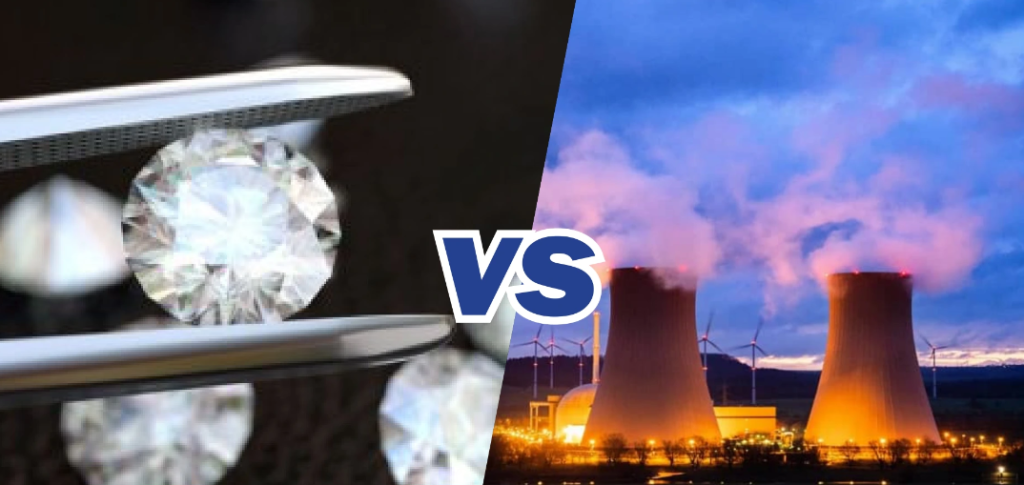
One of the main purposes of these discussions was to establish whether the country ought to pursue nuclear energy or go forth with its interest in a stake in De Beers.
Bertha Iitana, a mining engineer and an independent mining consultant, has supported the idea of a nuclear energy plant for domestic energy consumption in Namibia, apart from the continuity in the export of the raw materials.
Iitana acknowledged the mining sector’s developments over the past 10 years, with a particular focus on uranium. To that, she noted that the idea of a nuclear energy plant in Namibia could come to fruition if done on a smaller scale with long-term sustainability in mind, adding that the establishment of such a facility would require industrial patience of about 10 to 15 years.
Moreover, she cautioned that “You need to consider factors such as the investment and the output you get from that particular plant and how you are going to deal with the waste.”
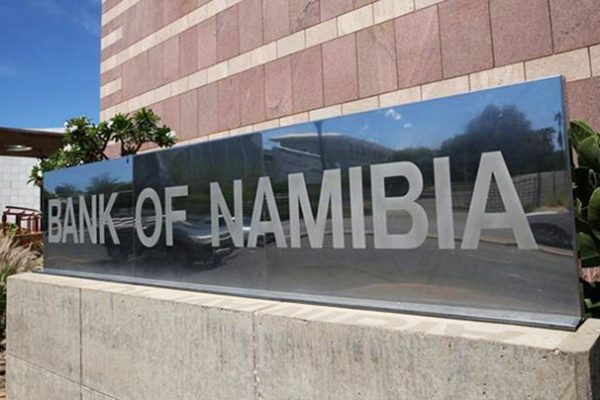
As the Bank of Namibia (BoN) shared that the 2025 annual merchandise trade hit a deficit of 35.4% to N$25.0 billion, Iitana highlighted the role of uranium (U308) in narrowing said deficit as a result of its rising price.
“The uranium spot price moved up from below US$30/lb in early 2021 to over US$100/lb by early 2026, mainly driven by the strong uranium demand for nuclear energy and shortages of supply in the uranium market,” stated Iitana.
Namibia, like other diamond-trading nations in the world, has negatively been affected by the decline in global diamond demand, which is expected to drop even further in 2026.
In this regard, Iitana suggested that the diamond industry could only see positive momentum if the government reduced heavy taxes on the diamond sector and focused on other minerals such as uranium.
Namibian minerals trade analyst Andrew Nghishitile echoed the sentiments that a nuclear plant could be a feasible project for long-term energy generation in Namibia. He, however, cautioned the government against embarking on multiple projects while struggling to gain results from existing ones.
“A nuclear energy plant is a feasible project which can power Namibia, however, the project has risks which can lead it to be shut down completely and waste investment before results,” Nghishitile noted.
He indicated that although energy drives development, Namibia must focus on existing projects, such as those in the agriculture and fishing sectors to expand the economy, and then invest in nuclear energy at a later stage.
“You cannot gamble when you do not have money,” Nghishitile stated.
Speaking on the decline in diamond demand, he indicated that the downward trend is likely to continue due to competition from lab-produced diamonds. On that note, he said that the idea of purchasing shares in De Beers may be risky, as it is equivalent to “backing a dead horse.”
Nashilongo Amunime, a small-scale miner, added that “Namibia should back the right horse,” sharing that a nuclear uranium plant is a long-term strategic initiative that has economic turnaround potential.
“The right time to start a nuclear energy plant is now, and we cannot be Eskom clients forever. We must take a calculated risk and start now,” expressed Amunime.
The Namibia Statistics Agency (NSA) states that in November 2025, Namibia’s domestic electricity generation contributed 40.1% of the total electricity supplied to the domestic economy (154,551 MWh), while 59.9% (230,926 MWh) was imported.