


By: Lukas Mandema
As an agricultural expert with over 15 years of experience consulting for prestigious organisations such as the African Development Bank (AfDB), the Food and Agriculture Organisation (FAO), and the United Nations Development Programme (UNDP), I am compelledto address the urgent need to revitalise Namibia’s Agricultural Business Development Agency(AgriBusDev) and its 11 Green Scheme projects.
My extensive background, underpinned by various qualifications on agricultural matters and natural resource management, has equipped me with the insights, thus I propose a transformative path forward for Namibia’s agricultural sector.
Drawing on international best practices, I advocate for a semi-autonomous AgriBusDev with a stakeholder-driven board and a robust strategic plan to enhance efficiency, boost food
production, and reduce Namibia’s reliance on food imports.
The challenge: Unlocking the potential of Namibia’s green scheme projects – created to harness the country’s abundant water resources along perennial rivers for irrigation-based agriculture – and realising the significant potential to achieve food self-sufficiency and boost economic growth.
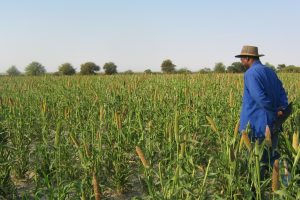
Spanning 11 projects – Orange River, Hardap, Etunda, Musese, Sikondo, Uvhungu-Vhungu, Ndonga-Linena, Mashare, Shadikongoro, Kalimbeza, and Shitemo – these schemes aim to produce high-value crops like rice, wheat, maize, and horticultural products.
However, chronic challenges, including lengthy procurement processes, underfunding, inconsistent policies, and limited technical expertise, have hindered their productivity. For instance, AgriBusDev received only N$490 million of the required N$1.2 billion from 2013 to 2021, leading to equipment shortages and missed planting seasons.
These inefficiencies have contributed to Namibia’s heavy reliance on food imports, with N$340.8 million spent on rice alone from June 2022 to June 2023, despite the country’s potential to produce these crops locally.
The recent dissolution of AgriBusDev as a standalone entity in 2023 and its proposed integration into the Ministry of Agriculture, Water, and Land Reform (MAWLR) has sparked debate about the best governance model to address these issues. While integration aims to centralise resources and align with national policies, it risks perpetuating bureaucratic delays that have long plagued the sector.
My global experience, from advising on Ethiopia’s Agricultural Transformation Agency (ATA) to supporting climate-smart agriculture in Zambia, underscores the need for a more agile, focused approach to transform Namibia’s Green Schemes into engines of agricultural productivity.
A VISION FOR REFORM: A SEMI-AUTONOMOUS AGRIBUSDEV
Drawing on successful models from across Africa and beyond, I propose that AgriBusDev be restructured as a semi-autonomous state-owned enterprise (SOE) under MAWLR oversight, governed by a diverse board and guided by a five-year strategic plan.
This hybrid model balances operational flexibility with alignment to national goals, such as Vision 2030 and the Harambee Prosperity Plan, ensuring both efficiency and accountability. My work with the AfDB in Sierra Leone, where public-private partnerships (PPPs) increased rice yields by 40% through Operation Feed the Nation, and with FAO in Ghana, where farmer training boosted adoption of sustainable intensification technologies by 60%, informs this recommendation.
KEY PILLARS OF TRANSFORMATION
Streamlined Procurement and Digitalisation. Lengthy procurement processes have delayed critical inputs, such as seeds and fertilisers, undermining green scheme productivity.
Ethiopia’s Agricultural Transformation Agency offers a model, having reduced input delivery times by 30% through digital procurement platforms and pre-approved supplier lists. Namibia should invest N$20 million in a similar system, establishing regional input hubs near schemes like Mashare and Ndonga-Linena to cut transport times.
Local suppliers, contrary to past claims, can meet demand, as evidenced by the Namibian Agronomic Board’s refutation of AgriBusDev’s import reliance.
Digital tools, such as AI-driven pest management apps used in Nigeria’s Cassava Disease Surveillance program, can further enhance efficiency by enabling early interventions.
PPPs have been chronically underfunded and crippled green schemes, with AgriBusDev unable to cover operational costs or replace outdated equipment, such as Brazilian tractors at Kalimbeza.
My experience with UNDP in Zambia, where PPPs funded climate-smart irrigation systems, highlights their potential.
Namibia should secure N$500 million in private investment over five years to upgrade infrastructure and lease underperforming schemes to private operators.