


By: Kandjengo kaMkwanyoka
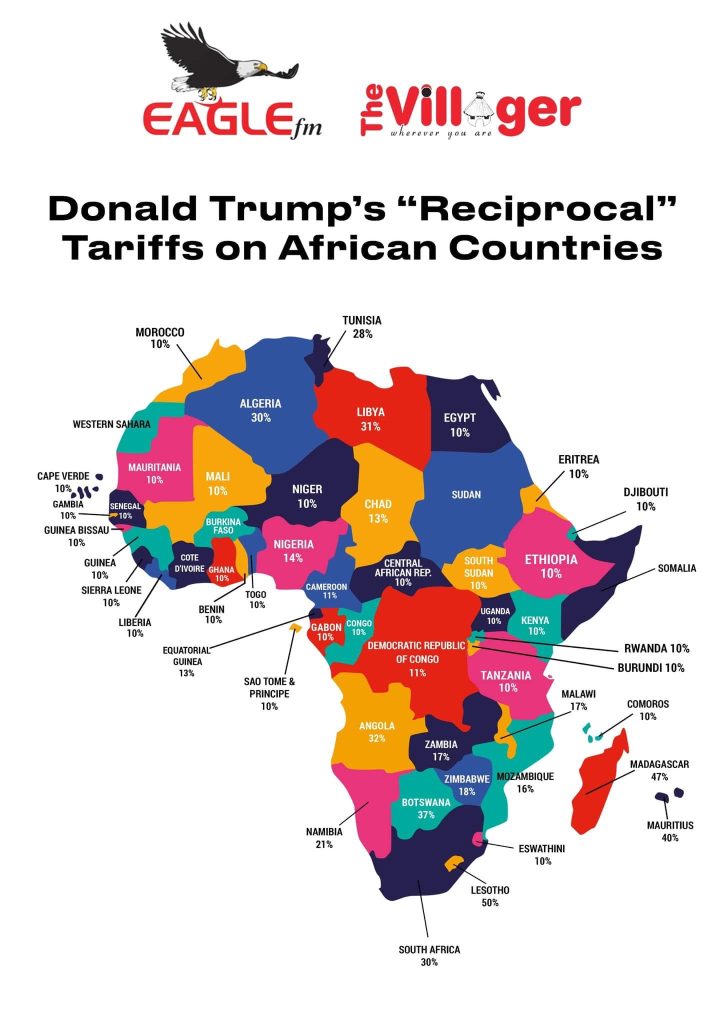
A bunch of African countries are being punished for supplying the USA with goods and also for not procuring more from the USA.
Echoes of cries are heard from all corners of the African countries as they receive their tariffs from the US based on a formula that the USA devised outside the usual approaches.
Outside the African countries, the tone and the approach are different, though; Europe and Asia are threatening to reciprocate with their measures against USA goods.
The difference is here: Africans are crying and begging for mercy; other continents are planning countermeasures or strategies to cushion their economies.
It is quite peculiar that African leaders don’t learn anything – a number of countries were removed from AGOA, and a number of them are not eligible for some reason known to the USA.
The most important factor that has been cited is undermining USA foreign policy.
One thing African leaders and their economic advisors need to do is to unlearn that no global trade agreement or protocol was centred on their progress, perhaps as the supply of inputs.
More importantly, they need to learn that every country is protecting and safeguarding its national interest.
Once they unlearn and learn those two realities, then they can approach things differently, putting the African interest above everything and developing stomachs to suck up to any economic bullying or agreement that does not support the continent’s aspirations.
Thus, African leaders’ approach and response to the geopolitics, trade measures, and other global decisions that are made in the absence of Africa should be evaluated against the continent’s interests.
The response and approach should be collective and unified, and this is where the AU is supposed to shine or be the voice.
Now we have individual countries jumping and responding at individual levels, highlighting the fragmentation and lack of coordination on the continent.
The fragmentation and lack of a common voice are what those outside the continents have been using to advance their agenda, and it keeps working over and over again.
This is because African leaders and their advisors are failing to grasp that in division they have no economic or advocacy strength.
Europe announced its climatic and forest rules or policies (CBAM and EUDR), but Africa barely had a position.
Now another economic powerhouse just imposed aggressive tariffs on around 20 African countries.
Africa needs to learn and start uniting against external pressures that intend to impact the continent’s internal interests and growth.
They are being punished for responding to the USA’s massive demands.
In January, 80% of Namibia’s export value to the USA was uranium, which is what led to a deficit, and that deficit is what is problematic to the USA.
Understanding such dynamics by the economic advisors is crucial; running to hold diplomatic engagements with little insight and begging won’t help in this case.
Because you export fewer goods, and the other exports more to you, you are still punished because 2 of your goods are more valuable.
Also, if global trade principles need to be followed but some are breaking them, it also means Africa needs to start being selfish and look out for the continent’s interests.
The realisation is reaching Africa too slowly or not at all; thus, the continent’s response hasn’t changed, still fragmented and uncoordinated.
As a result, least-developed countries like Lesotho get a 50% tariff, with no regard for their socio-economic dynamics.
It is clear every country is protecting its interests; however, given the African context and less progress due to various factors, some are self-made. One will think they will be united now.
African leaders need to approach things differently and more collectively.
The AU, the regional blocks, and economic blocks such as SADC, SACU, and COMESA – what are the plans or strategies to cushion the African economies from various trade bullets?
Individual responses are not sustainable; they just deepen fragmentation within the continents.
It is up to the leadership to develop some economic audacity and put the continent first by relying on one another to hedge against various economic confrontations, alienation, and bullying.
The strength of the continent is its unity, population, and leadership.
This column does not reflect the opinion of the editorial board or The Villager and its owners.
To contact the author of this piece, you may email him here: gerastus16@gmail.com