


By: Dwight Links
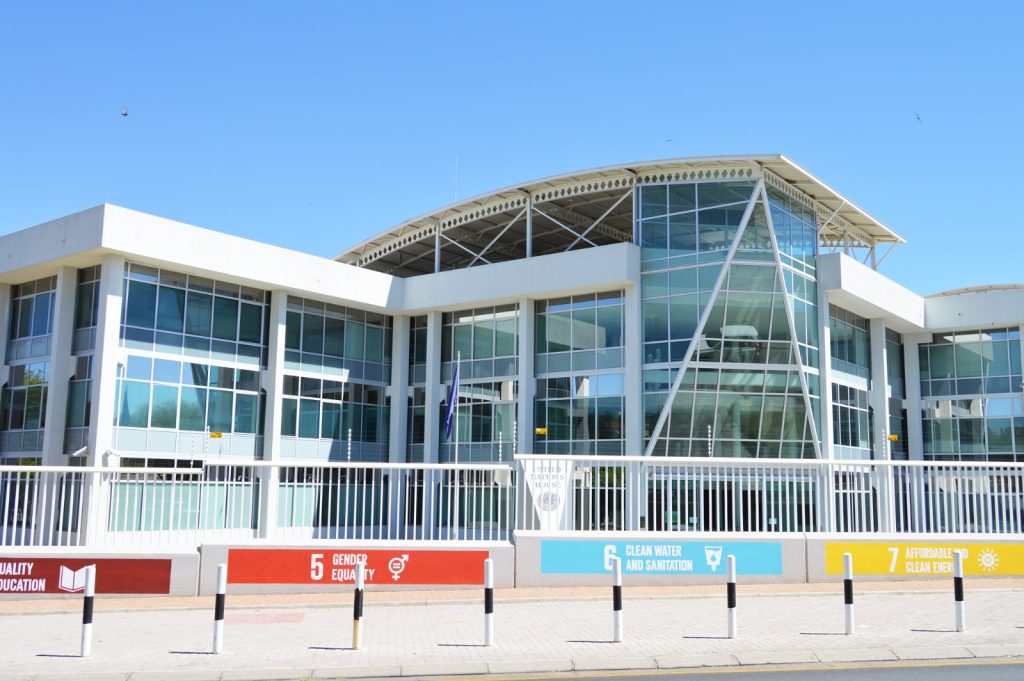
As the uncertainty regarding the utilisation of one of the world’s most critical points in maritime transport continues, the UN Namibia Office and the National Planning Commission held a Sustainable Development Dialogue series.
The dialogues were themed around navigating what is transpiring in the Middle East, as well as Namibia’s economic outlook.
Presenting during the series, Eunice Ajambo, an economist from the UN Namibia office, outlined that the economic outlook for Namibia – after the Middle East conflict began in February this year – will have to be centred on shock resistance going into the rest of the year.
She also outlined that adequate responses to the conflict may be the only pathway.
Much of the series was on seeking the resilience factors needed to navigate the conflict area impacting global shipping of fuel and other industrial products passing through the Strait.
“This matters to Namibia for the importation of petroleum into the country, the high transport intensity over distances, and the element of fiscal space, which, for us in Namibia, we have analysed and agreed on how constrained this is,” Ajambo expanded.
The inflation exposure in food, transport, housing, and utilities were also worth mentioning.
The UN Namibia analysis sought to provide a flow of how a large-scale issue cascades to the lowest household level.
“When a political issue becomes a highly individualised issue, how constrained is it at the household level? Again, the context in which Namibia finds itself makes it very vulnerable to whatever is going on at the Strait,” Ajambo added.
She noted that the effect of the geopolitical tensions can be felt through fuel and energy price hikes, in turn affecting transport and logistics.
“We also have the food and fertiliser costs emanating from the inability to transport them. Then there’s shipping and insurance costs affecting our logistics,” she highlighted.
According to the UN Namibia office, the global slowdown is currently posing a risk to inflation and growth as a result of fiscal pressures.
“A total of 38% of global oil is shipped through the Strait of Hormuz. Petroleum gas 29%, liquefied gas 19%, chemical fertiliser at 13%, and then other products. This data comes from the UN Conference on Trade & Development,” Ajambo noted.
Some of the data is also drawn from the African Union’s Development Bank, the UN Economic Commission for Africa (UNECA), and the UNDP.
Earlier this month, the Bank of Namibia indicated that Namibia’s risks are similar to an extent.
“The domestic economic outlook remains subject to several downside risks from both external and domestic developments,” shared the central bank in the country’s April Economic Outlook.
According to the regulator, the global picture can become more insecure because of the US’ global engagements.
“Globally, ongoing geopolitical tensions, as well as evolving United States policies, may contribute to volatility in commodity prices, exchange rates, and the cost of key imported inputs such as fuel,” indicated the outlook.