

By: Annakleta Haikera
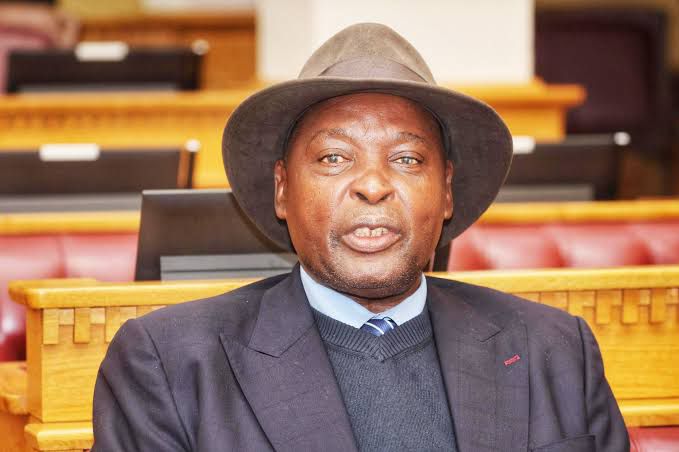
Urban and Rural Development Minister, James Sankwasa, warned regional and local authorities against the misuse of budgetary allocations, noting that funds intended for infrastructure and developmental projects are often diverted for travel, subsistence allowances, or personal enrichment in Rundu, Kavango East Region.
“Some regional and local authorities have become ATMs for known tenderers, which must stop immediately,” he remarked, expressing frustration over mismanagement that has slowed development and eroded public trust.
Speaking during the official opening of the five-day Local and Regional Authorities Induction Training held in Rundu from 19 to 23 January 2026, Sankwasa painted a stark picture of corruption, financial mismanagement, and operational inefficiencies in councils; some arising from staff incompetence, others from misguided political interference.
“Complacency and negligence in governance cannot be tolerated,” he said, calling on councillors and administrative officials to act decisively and responsibly.
He reminded officials of their legal and constitutional obligations under the Local Authorities Act, Regional Councils Act, and State Finance Act, calling for the recovery of misused funds and for responsible parties to be held fully accountable.
He warned that councillors and administrative staff who caused financial damage to government institutions would be required to compensate the state.
Sankwasa also underscored the role of accountability in effective governance and service delivery.
“From now on, regional and local authorities will be held strictly accountable for delivering housing, clean water, sanitation, and all other essential services to residents. Public funds are meant for projects that improve people’s lives, not for personal gain or political expediency,” he added.
He urged participants to move beyond slogans, invest in institutional integrity, and rebuild the social contract between the government and its citizens.
“We must lead with solutions, not excuses,” Sankwasa added, stressing that the Ministry will closely monitor compliance with policies and legislation to ensure that all resources are used for their intended purpose.
Sankwasa instructed all institutions with unpaid municipal accounts to settle them immediately or during the 2026/2027 financial year to avoid service disconnections, which will be enforced on all overdue accounts.
He further warned that newly elected councillors who owe their local authorities will have these debts deducted directly from their allowances until the balances are fully settled.
“If we ran to be councillors to avoid paying for municipal services or believed that election would exempt us from settling outstanding water or service bills, then that is very unfortunate,” Sankwasa stated.
He called on chief executive officers to ensure that all outstanding bills under their management are fully settled, urging them to lead by example.
“Local authorities rely on these funds for development[al] projects and improved service delivery to residents. It cannot be business as usual,” he added.
Sankwasa also reminded councillors that, while they may have entered Council through political parties, they are not party functionaries once sworn in.
“We took an oath to serve as leaders in government. Party politics must remain outside the Council chambers. We must perform our duties collectively with a new approach,” he concluded.
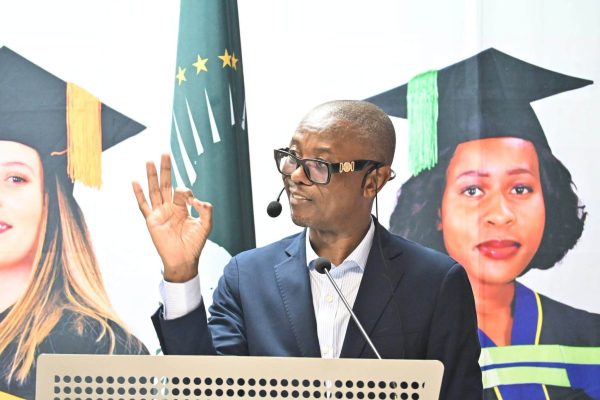
Meanwhile, Kavango East Region governor, Julius Hambyuka, described the ongoing induction workshop as both timely and necessary, highlighting that it is “ imperative that councillors and management cadres are adequately equipped with the knowledge, skills, and shared understanding required to carry out their mandates effectively and efficiently.”
Hambyuka explained that the workshop would help “clarify roles and responsibilities, strengthen working relations between political leadership and administration, and promote compliance with the legal and policy frameworks.”
He also emphasised that effective governance requires more than technical knowledge, noting that “our people expect progress in service delivery, land servicing, infrastructure development, housing, local economic development, and social cohesion.”
Hambyuka encouraged active participation, knowledge sharing, and learning from one another.
“The diversity of perspectives in this room is a strength that should be harnessed to improve governance practices across our regions and local authorities,” he added.
Sankwasa and Hambyuka’s remarks come amid ongoing governance challenges at the Katima Mulilo Town Council, which has in recent years faced allegations of internal disputes, poor accountability, and administrative instability.
The Council has on occasion drawn attention over service delivery shortcomings and strained relations between councillors and management, prompting increased oversight from the Ministry of Urban and Rural Development.