



By: Helmut Mahongo
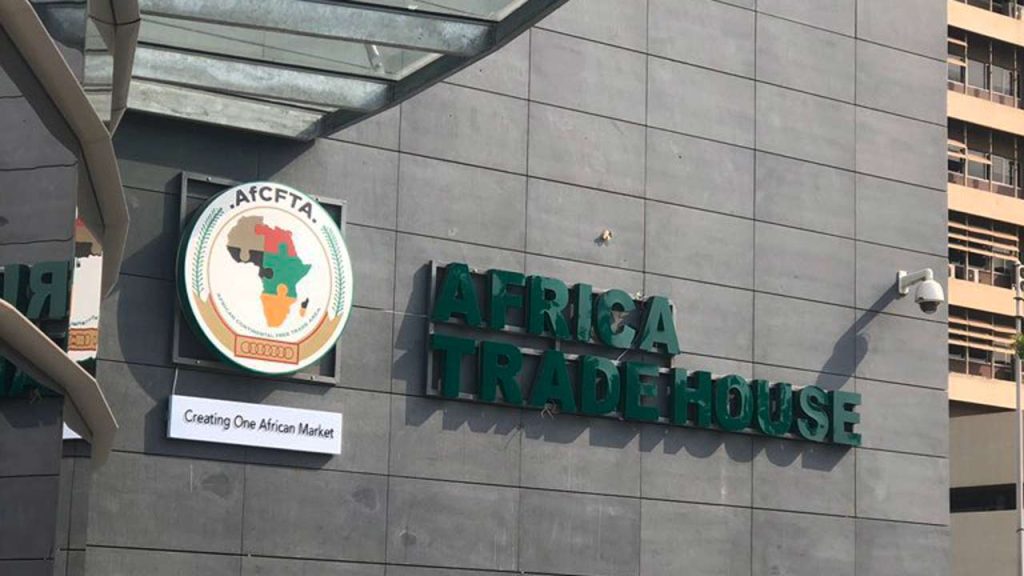
The African Export and Import Bank (Afreximbank) shared that the value of Nigeria’s trade with the continent grew from $7.47 billion to $9.02 billion in 2025, leveraging the African Continental Free Trade Area (AfCFTA) to expand market access and lower trade costs for domestic exporters.
This is according to the bank’s Africa Trade Report of 2026.
The report indicates that the gazetting of the country’s Provisional Schedule of Tariff Concessions in April was one of the key milestones that enabled Nigerian goods to qualify for preferential tariffs across AfCFTA member states, which in turn also grated reciprocal access for African goods into its markets.
The report also found that Nigeria’s new logistics initiatives such as a dedicated air cargo corridor to East and Southern Africa are reducing transportation costs for Nigerian intra-African trade.
In Central Africa, the Democratic Republic of the Congo (DRC) was a key player in intra-African trade with its total trade rising from 4.74 percent in 2024 to 6.74 percent in 2025.
South Africa remained the DRC’s primary bilateral trade partner within the region, accounting for the bulk of the DRC’s imports on the continent.
As Africa’s largest producer of copper and the world’s top producer of cobalt, the DRC exported significant volumes of refined copper to South Africa, primarily transported via the National Railway Company network to the port of Durban.
As of 2025, however, the Central African nation has been pivoting its mineral logistics strategy towards the Lobito Corridor.
According to the United Nations Conference on Trade and Development (UNCTAD), logistics costs in Central Africa remained among the highest globally, hindering a deeper regional integration.
In North Africa, Egypt accounted for 4.5 percent of intra-African trade, reaching $9.31 billion in 2025. Egypt’s core export markets included Algeria, Libya, Morocco, Sudan, and Tunisia, while principal import sources included the DRC, Kenya, Nigeria, and South Africa.
The dominant Egyptian exports to the continent were cement and other construction materials, plastics, and milled products such as flour and starch.
Egypt’s main imports were copper and copper products, fuel and mineral oils, coffee, tea, and other agricultural commodities.
In Southern Africa, imports remained concentrated in mineral fuels amid persistent energy constraints, precious metals, textiles, and processed foods from countries such as Mozambique, Zambia, and Eswatini.
According to Afreximbank, intra-African trade volumes have grown by around 5.5 percent in 2025. This was largely due to the improvements and implementation of the AfCFTA, rising regional demand, and enhanced trade facilitation.
Mineral fuels, metals, and primary commodities continued to account for a large share of intra-regional trade value. There was also evidence of deepening regional value chains, particularly in agro-processing, cement, fertilisers, and light manufacturing across the continent.
South Africa’s exports continued to grow rapidly, with data from the International Trade Centre showing that machinery, vehicles, electrical equipment, and processed materials are the main exports to the rest of the continent.
Processed food products and chemicals were two important growth sectors for South African exports, particularly within the SADC region.
Blessing Chipanda, a Senior Research Consultant in the African Futures and Innovation (AFI) programme at the Institute for Security Studies (ISS) said Africa’s lack of connecting physical infrastructure between neighbouring countries increases transport costs and creates delays.
The poor infrastructure and bad maintenance reduce the competitiveness of businesses and undermine much needed investment flows, stated Chipanda.
That said, Afreximbank’s report highlights how the extractive industry dominates not just extra-African trade, but also intra-African trade. Sectors such as physical transport infrastructure still need significant investment to bring the AfCFTA into full swing.