


Photo: Contributed
By: Hee-Dee Walenga
Various players in the electricity supply sector have agreed that digital tools can play a critical role in the supply of electricity in Namibia.
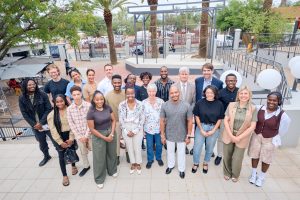
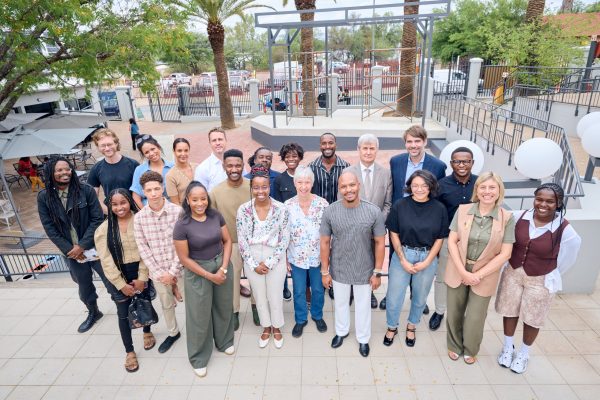
Electricity supply stakeholders met and discussed how digital tools can lead to electricity becoming cheaper for Namibian citizens at the 2026 Namibia Electricity Supply Industry Forum in Windhoek late last week.
The forum was hosted by the Electricity Control Board, in tandem with the Ministry of Industries, Mines and Energy (MIME), NamPower, NORED, CENORED, Erongo RED, and Oshakati Premier Electric (OPE) under the theme ‘Driving Affordable Energy Transformation Through Digital Innovation, Collaboration and Investment.’
NamPower Chief Operating Officer, Ben Mingeli, explained that NamPower’s existing digital capabilities consist of network & asset systems as well as energy & market systems that assist with asset management, grid operation and energy trading.
Mingeli explained how artificial intelligence (AI) could improve upon the existing infrastructure to help NamPower predict failures, assess grid performance, detect network irregularities, highlight supply overloads and supply shortfalls, and simulate operating scenarios, among several other improvements.
Mingeli told The Villager that the utility currently makes minimal use of AI.
“It’s still one of those things that we are investigating. We have a system for forecasting renewables in our energy trading, but we can do a lot more in terms of embedding AI in our operations,” Mingeli said.
Adding that the aim is to have reliable supply with fewer avoidable emergency purchases and overlapping commitments at the lowest feasible overall cost.
He also stated that 44% of Namibia’s electricity supply comes from Nampower, 47% from Import Power Purchase Agreements, 2% from the Southern African Power Pool (SAPP), and 7% from Independent Power Producers (IPPs).
The Minister of Energy, Modestus Amutse, emphasised that any digital innovations in Namibia’s energy industry have to contribute towards making electricity cheaper for the citizens of Namibia.
“For each investment, let us ask what it will change for the user. How much cost will it remove? How many services will it improve? Can a person without digital tools still obtain help?” Amutse asked.
Nelson Sheya, the Chief Executive Officer of OPE, spoke on digitalisation as a strategic enabler for utility sustainability.
“Digital transformation in our view is two fold . You need to break it up in your normal enterprise resource planning systems and the electrical infrastructure digitalisation,” Sheya said.
Sheya explained that OPE has a digitalisation strategy that consists of the three “horizons.”
The horizons include scoping an Enterprise Resource Planning (ERP), an AIpowered WhatsApp chatbot, website revamping, compliance dashboards, strengthening cybersecurity, and electronic customer satisfaction surveys.
OPE also has a mobile application that allows customers to buy prepaid electricity as well as unlock account-related services. OPE also has a mobile application for field services for job card management.
“It improves our operational services,” Sheya said, adding that soon customers will be able to provide feedback before the job card is closed on the work that has been carried out.
Sheya also touched on the need to use AI for predictive analysis using weather data for day-ahead solar market scheduling.