




By: Loise Shiimi
Ndatulumukwa Haikali, owner of Roof Tech Company, dedicated nearly five years researching how to enter the manufacturing industry in a manner that would benefit Namibians and stimulate economic growth.
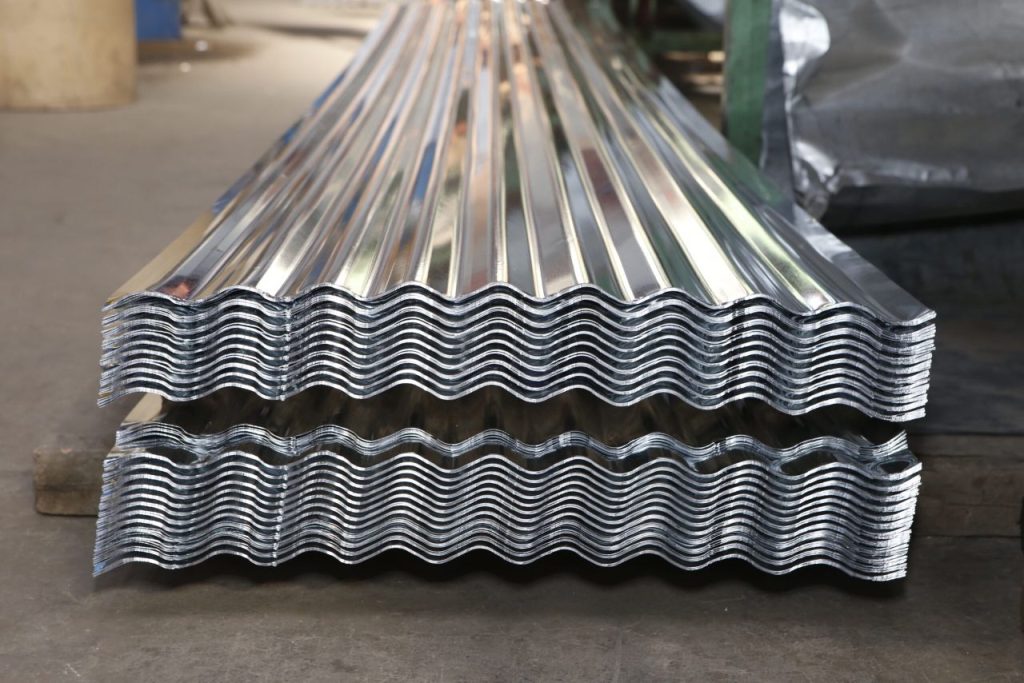
In an interview with Eagle Media House, Haikali revealed that his company currently produces about 800 tons of corrugated iron each year.
Speaking on his transition into business, Haikali acknowledged the numerous challenges he encountered in the establishing phase, mentioning that it took him five years to achieve progress.
“The biggest challenge was the lack of financial resources to purchase machines and raw materials. I spent years saving from my previous salary. With that, I was able to buy one machine, which marked the beginning of my journey to acquire additional machines and raw materials for producing corrugated iron and other building materials,” he explained.
He also faced difficulties in sourcing raw materials, as he had to import them from China. Due to financial constraints, he was unable to qualify for a loan and yet again relied solely on his savings to purchase materials.
To better understand market demands, Haikali conducted surveys to determine which types of corrugated iron were most needed, focusing on what hospitals, schools, and other buildings commonly used, as well as what low-income earners could afford.
Reflecting on the company’s progress, Haikali noted that it has grown significantly since its inception when it had just one machine.
“Now, we import more raw materials and supply corrugated iron and other metals to building material stores across the country. In December, we began exporting to Angola and Botswana, which will benefit our economy,” he stated.
From January 2025 to February 2026, Haikali reported that the company exported approximately 38 tons of corrugated iron, making it one of the leading exporters in the sector. Angola imported 30 tons, while Botswana imported 8 tons.
He pointed out that many building material stores previously sourced their supplies from South Africa, but now they are purchasing locally, which helps reduce costs, though some still choose to import.
On future expansion plans, Haikali confirmed that three additional branches would be opened in Oshakati, Okahao, and Endola by June 2026.
In terms of employment, Haikali underscored that as the company grows, so too will the need for more employees. “So far, we have 18 permanent employees, having started with only four in January 2025. We are actively working towards hiring more as the company expands,” he said.
Regarding marketing, he noted that many Namibians are looking to build homes and businesses, which guarantees a steady demand for reasonably priced building materials rather than imported options.
In addition to corrugated iron, the company also manufactures nails, lip channels, and other steel products. Haikali explained that they ensure the quality of their materials by obtaining certifications from the Namibia Statistics Agency (NSA), confirming the quality of raw materials used in their production.
“Our company has a dedicated department that guarantees quality, ensuring that no product enters the market without proper quality assurance,” he shared.
He encouraged Namibians interested in the manufacturing industry to conduct thorough research and start small, aligning their efforts with their available budget.
“This is the best industry to join, as it can create opportunities for young Namibians who are currently unemployed,” he advised.
According to the NSA, in December 2025, the country imported corrugated iron valued at N$6 million, primarily sourced from South Africa and China. In contrast, the country only exported corrugated iron valued at N$251,100 in the same month.
Haikali suggested that the government revises laws to encourage building material stores to source supplies locally rather than relying on imports. “Why are they importing when there are companies supplying those materials right here in Namibia?” he queried.
To that, on the question of whether Namibia could meet the demand for building materials if imports were banned, he confidently stated that local producers could.