


Nghiinomenwa-vali Hangala
The country’s treasury has announced that it will move some of the implementation of capital projects to various State-Owned Enterprises (SOEs) to avoid a reduction in its allocation operation expenditures.
This was announced by the state’s treasurer, Ericah Shafudah in the national budget tabling last week.
The development budget for FY2026/27 is set at N$6.5 billion for state-funded developmental projects, as guided by the execution capacity of ongoing projects in FY2025/26.
The capital budget is also expected to receive N$4 billion in grant- and loan-funded projects to improve infrastructure across various ministries.
In the next financial years, FY2027/28 and FY2028/29, the ceilings are set at N$7 billion and N$7.7 billion, respectively.
Shafudah indicated that to “mitigate the significant reduction in the development budget ceiling, which may adversely affect the implementation of capital projects and government priority initiatives, several projects are proposed to be funded by State-Owned Enterprises and other non-budgetary state revenue sources.”
These include housing, road, and water infrastructure projects. As a result, SOEs with these mandates, such as the Road Fund Administration (RFA), National Housing Enterprise (NHE), and Namwater, will be at the forefront of public infrastructure.
Shafudah noted that Namibia is dedicated to fostering sustainable and inclusive economic growth by making strategic investments in key growth sectors.
“Enhancing the role of State-Owned Enterprises is crucial for advancing the country’s developmental agenda. To this end, some key strategic projects will be assigned to SOEs with the necessary technical expertise and implementation capacity to improve execution, shorten delivery times, and enhance efficiency and value for money,” the treasurer assigned in her budget.
Shafudah explained that the strategy directly fosters economic growth by easing infrastructure bottlenecks.
The government’s fiscal strategy also confirms the strategic plans of State-Owned Enterprises to align with NDP6.
The government, through the national budget, has announced that it will commence with two state-owned enterprises, namely the NHE and RFA.
This is to boost the provision of affordable housing.
NHE has secured N$1.5 billion in loan financing over the Medium-Term Expenditure Framework (MTEF) period.
This funding, according to the treasurer, will facilitate the expansion of housing development by delivering approximately 2,300 houses.
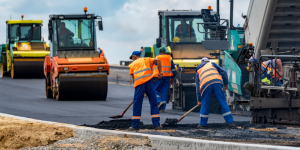
The government will also allocate fuel levy revenues to the Road Fund Administration to finance the construction and rehabilitation of priority road infrastructure, ensuring sustained investment in transport networks while preserving fiscal discipline.
The government will also enforce stronger development-budget execution. The National Planning Commission and the Ministry of Finance were directed to prohibit virements from development to operational spending to safeguard capital allocations and ensure funds serve their intended purpose.
The government, through the treasury, has also allocated some capital to the development budget focusing on agriculture, forestry, tourism, mining, and energy.
Throughout the current MTEF period, the economic sector is set to receive a total of N$2.3 billion.
Out of this total, approximately N$1.1 billion is earmarked for the Ministry of Mines and Energy, while agriculture and land reform follow closely with an allocation of around N$903.1 million.
The Industry, Mining, and Energy sector aims to enhance agro-processing infrastructure and promote mining diversification, electrification, and the establishment of manufacturing facilities.
In Agriculture and Land Reform, the Land Management Project focuses on developing the National Spatial Data Infrastructure and upgrading essential infrastructure for livestock and crop production. In tourism, efforts will target improvements to road networks in key attraction areas.
In the upcoming budget, 2026/27, is set to receive around N$2.4 billion, accounting for 36% of the development budget.
This allocation is expected to rise to N$2.8 billion, representing 41%, in 2027/28, and then increase further to N$3.2 billion while maintaining the same 41% share in 2028/29.
The government has also increased guarantees to SOEs, which support strategic investments and public entities, are projected to increase from N$7.6 billion in FY2025/26 to N$11.8 billion in FY2026/27, before moderating to N$10.6 billion in FY2027/28 and rising again to N$14.1 billion in FY2028/29, equivalent to between 2.8% and 4.3% of GDP.
In addition, the government will embrace blended finance, public-private partnerships (PPPs), and private sector participation to deliver resource-intensive but strategically important infrastructure projects.
This approach enables the government to harness private sector efficiency and funding while protecting fiscal space.