


By: Annakleta Haikera
Traditional seed varieties are found to be essential for strengthening climate resilience, preserving agricultural heritage and ensuring sustainable food production.
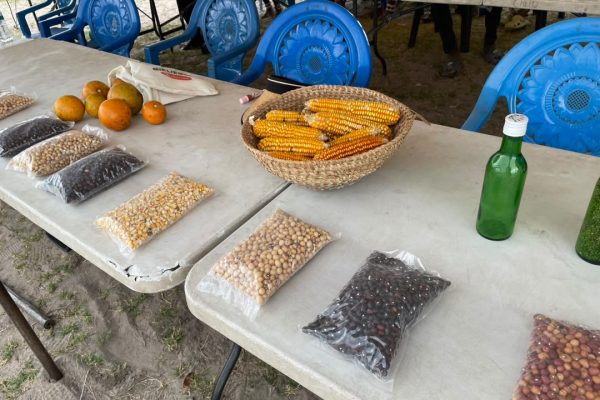
This is according to the country deputy director for Forestry and Botanical Research, Esmerialda Klaassen, who reminded the public during the traditional seed fair on Thursday at Sarukwe in Kavango West Region.
Klaassen explained that unpredictable rainfall, prolonged dry spells and other environmental pressures continue to challenge agricultural production, making it important for farmers to adopt practices that improve resilience.
She said traditional seed varieties often possess characteristics that enable crops to perform under local conditions, making them valuable for climate adaptation and food security.
Klaasen also stressed the importance of preserving elders’ knowledge of seed selection, storage and cultivation for younger generations.
Highlighting the role of forests and trees in maintaining soil fertility, protecting water resources and supporting sustainable agriculture.
She said the Directorate of Forestry has committed to planting one million trees by 2030 to restore degraded landscapes, strengthen climate resilience and support community livelihoods.
The deputy Minister has described the establishment of the Sharukwe Community Seed Bank as a significant achievement, providing a facility for storing traditional seed varieties and making them available for future planting seasons.
Klaassen said the seed bank was established in 2023.
Although the 2024 season did not produce a good harvest, the community recorded a better harvest in 2025, which participants were expected to see during a tour of the gene bank.
She encouraged farmers, traditional authorities, schools and development partners to support tree planting and sustainable agricultural practices to strengthen community resilience.
Meanwhile, Benjamin Chomo Peter, a farmer and seed grower from Kauti Village, said farmers were selling various traditional seed varieties at prices ranging from N$30 to N$50.
Peter said he and his wife cultivate four hectares of land, where they grow maize, pearl millet, groundnuts and Bambara nuts.
He added that they also take fresh seeds to the community seed bank for sale and storage.
However, Peter said farmers faced challenges, including a shortage of oxen for ploughing and a tractor that had been broken down for years.
He appealed to the government to provide a new tractor to help farmers prepare their fields and improve agricultural production.
The Sharukwe Community Seed Bank in Kavango West was officially inaugurated on 9 November 2023, becoming Namibia’s first community seed bank.
The project was funded by the Environmental Investment Fund (EIF), Mobile Telecommunications Limited (MTC) and the German Agency for International Cooperation (GIZ), with an investment reported to exceed N$500,000.