


By: David Shoombe
The completion of the N$164 million investment 5-year Climate Resilient Project by the Environmental Investment Fund (EIF) has revealed that success and challenges vary from farmer to farmer.
The Improving Rangeland and Ecosystem Management Practices (IREMA) project is an initiative meant to support farmers in climate-prone areas such as Fransfontein, Sesfontein, and Warmquelle in the Kunene Region.
The Villager observed that the main question raised during IREMA project personnel visits to various farms in the Kunene Region was why only some farmers succeeded.
Sith Murorua, a smallholder farmer with goats and a beneficiary of the IREMA project, indicated that regardless of receiving 21 goats in 2024, drought has been an impacting factor in maintaining his herd, leading to lower production rates. To this, however, Murorua noted that “farming needs resilience and smallholder farmers must invest time and effort in the farms regardless of the climate.”
Ingrid Heigan, a smallholder farmer operating about 7 kilometres out of Fransfontein, serves as an example of said resilience, having gone against all odds and produced over 100 goats. Heigan, also a beneficiary of the EIF climate-resilient project, shared her success in goat farming as a result of being a beneficiary.
Having received 20 goats in 2020, she indicates that through various efforts to survive dry seasons, she managed to return the initial investment to the EIF as her herd multiplied in size. She mainly attributed her success to collaboration with neighbouring farmers, especially during said seasons.
“My farming survival strategy is working with neighbours and sharing grazing areas in the times of drought,” indicated Heigan.
Also speaking to The Villager, Joseph Anton, an agricultural technician from the Ministry of Agriculture, Fisheries, Water and Land Reform, highlighted that farming in Fransfontein depends on various factors to beat climate change.
“The success of farmers does not depend on the financial support alone, but on patience, resilience, and also their ability to respond to sudden changes in climate,” said Anton.
He also noted that farming near an urban settlement is risky, as farmers face cases of animal theft.
“We give them the same training, however, the productivity is based on their seriousness and patience in agriculture and food production,” Anton highlighted.
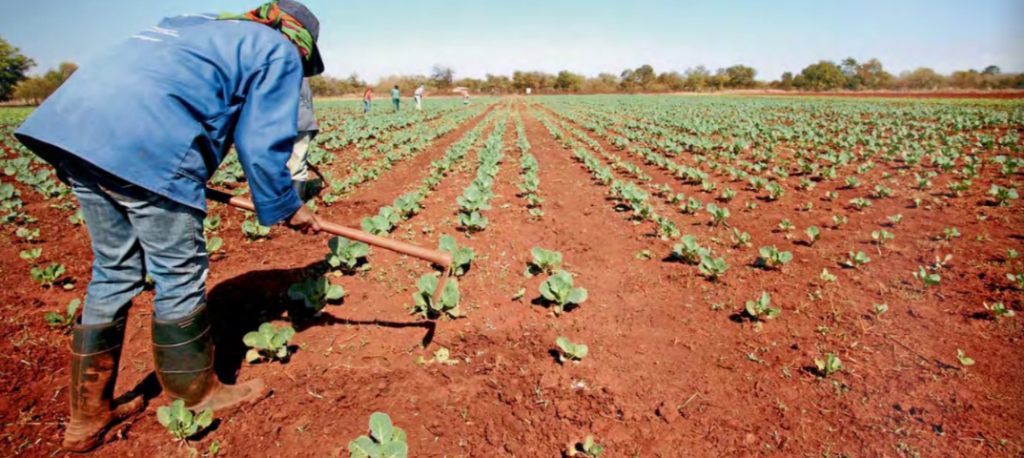
Johannes Swanepoel, farm manager of the Warmquelle Green Scheme in the Sesfontein Constituency – also funded by the IREMA project, employing over 30 people – shared that the scheme produces a variety of products weekly, such as green peppers and butternuts, benefitting the surrounding communities with an affordable supply of fresh produce.
Speaking to some of the challenges faced in production, Swanepoel shared the high costs of agricultural equipment such as tractors, which he indicated cost significantly more than some luxury vehicles.
Bennie Gannuseb from Sesfontein also shared how despite IREMA’s sponsorship of 180 banana seedlings, his dream of becoming a banana supplier has been negatively impacted by the low water supply in semi-desert areas, bringing his production to a halt.