


By: Loise Shiimi
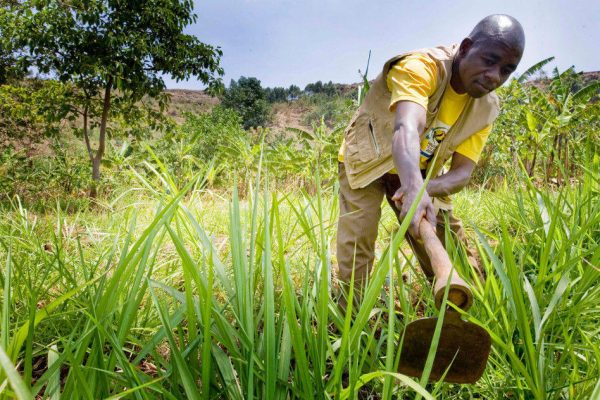
As the planting season approaches, farmer Tomas Kanime has encouraged subsistence farmers to begin incorporating vegetables into their fields, shifting away from the traditional focus on millet, maize, and beans.
“There is a need to move away from solely growing millet in the northern regions. Many of our fields have several hectares, so why not plant a variety of vegetables? It starts with doing research and attending training sessions. I can guarantee that our fields are rich in nutrients and can accommodate many types of green vegetables,” he stated.
He shared this during an interview with Eagle FM, where he also shared tips on when farmers need to begin their preparations to avoid last-minute planting.
Regarding the optimal time for preparing for the planting season, Kanime noted that the time to act is now, as subsistence farmers ought to have prepared their seeds by early November.
“To make it easier, during the harvest, you should select your planting seeds and store them in a secure container so that when the next season comes, you already have your seeds ready,” he advised.
He also observed that many farmers do not practice crop rotation, which he indicates can deplete soil nutrients. “I urge farmers to apply crop rotation; for instance, if you planted maize last year, consider planting beans this year for a more successful harvest,” he shared.
In terms of applying compost, Kanime advised farmers to focus on areas where the soil lacks nutrients, rather than random application. He also expressed optimism about this year’s rainfall, urging farmers to put in the necessary work and adopt proper farming practices.
Another farmer, Maria Nangolo, underscored the importance of studying one’s own field to understand which crops are suitable for specific areas.
“We often neglect to observe and try new methods to boost our yields. Imitating other farmers can be misleading because land differs in nutrient quality,” she noted.
She encouraged fellow farmers to work hard and strive to reduce their reliance on drought relief food, stating that “We can achieve this ourselves. Let’s prove to the government that when the rain is good, we can thrive.”