


By: David Shoombe
With Africa positioned between the world’s two major economic powerhouses – the West and the Global South – China has introduced a continental trade agreement that came into effect on 1 May 2026.
The trade agreement, which allows all African countries other than Eswatini to access the Chinese market at zero-tariff cost, is seen as a golden opportunity for Namibia to diversify its economy and address its domestic challenges such as slow domestic growth and energy.
Speaking at a media engagement on the implementation of the agreement, the Ambassador of China to Namibia, Zhao Weiping, indicated that China is Namibia’s main trading partner and one of its biggest export destinations, with products including uranium and beef.
Weiping stated that the zero-tariff agreement will provide an opportunity for Chinese investors to add value to Namibian products and refine them for the international market.
“For example, Namibia trade raw beef to China and value can be added in making varieties such as dry meat biltongs,” he said.
Responding to China’s willingness to collaborate with Namibia on the development of a nuclear energy sector, Weiping stated that such production requires technical experts – which China has – and moving forth would be dependent on Namibia, as the nation has sovereign rights to use its uranium for energy generation.
Wei Jinming, Chinese Embassy Economic and Commercial Counsellor indicated that “Previously, tariffs on beef and mutton imported from Namibia to China ranged from 12% to 25%, but these tariffs have now been reduced to zero, indicating significant potential for future exports to China.”
Additionally, Jinming indicates that other Namibian products such as wild aquatic products, grapes, and blueberries are undergoing export procedures to China.
He stated that the two governments are expected to sign formal agreements in the near future, enabling exports to China. He indicated that such products, previously under 7%, 13%, and 20% tariffs respectively, will also be reduced to zero.
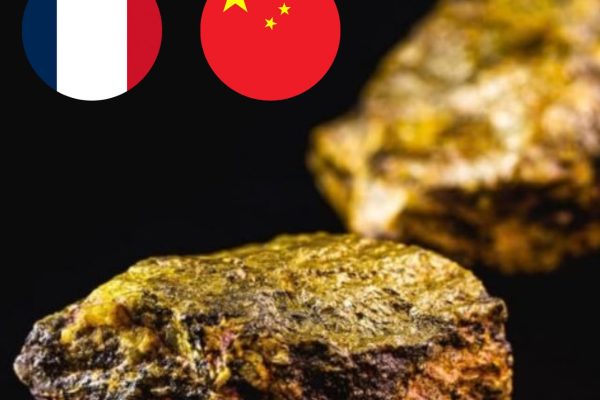
March international trade statistics on Namibia show that uranium was Namibia’s largest exported commodity, accounting for 26.7% of the total exports, mostly absorbed by China.
Moreover, the statistics indicated that when it came to re-exported commodities, part of the top five commodities were nickel ores and concentrates, occupying the first position with a share of 33.9 percent of total re-exports, mainly to China and Canada.
Andrew Smith, international development practitioner, stated that “China is a better investor to Africa, but not without fouls. It is therefore for the African leaders to talk to Chinese partners to invest in long-term domestic projects that create employment rather than open up free trade.”