


By: David Shoombe
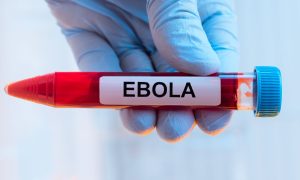
African governments have been informed that the continent needs US$1.4 billion to end the Ebola outbreak in central Africa.
This was revealed during the African Union (AU) Extraordinary Session Assembly on Ending AIDS by 2030 by the Director-General of the Africa Centres for Disease Control and Prevention (Africa CDC), Dr. Jean Kaseya.
Kaseya highlighted the continent’s financial needs in the fight against HIV/AIDS and other disease outbreaks.
In addition to the US$1.4 billion needed to end the Ebola outbreak, there is a US$12 million funding gap for ongoing clinical trials.
He called on African governments to contribute to the emergency fund and prioritise domestic funding.
He noted that Africa needs to manage its resources well, as money meant for development is often lost through corruption and mismanagement.
Dr. Kaseya added that with good governance and proper resource management, Africa can succeed in fighting diseases with its own funds without looking outside.
He also warned that, in addition to Ebola, Africa continues to face numerous disease outbreaks, including cholera and measles, which continue to claim lives across the continent.
Referring to the current Ebola outbreak, he said that more than 1,000 people had died and that over 2,000 confirmed cases had been recorded within 55 days of the outbreak.
“If we do not stop this outbreak today, it will become one of the worst Ebola outbreaks the world has ever documented,” Dr. Kaseya said.
Contact tracing in DRC has become extremely difficult. Health officials noted that, on average, each confirmed Ebola case has about 40 people on its contact list.
With 2,443 confirmed cases, more than 97,000 contacts need to be traced.
However, only about 10,000 people have been identified, meaning that less than 8% of the required contacts are currently being monitored.
Conflicts and violence that involve emergency medical professionals have exacerbated this.
The 2026 International Crisis Group Report warns that “large parts of the continent remain engulfed in violence”, with wars in Sudan, the Democratic Republic of Congo, and the Sahel killing tens of thousands and dislocating millions in 2025.
International travel restrictions affecting people who have been in Ebola-affected areas continue to be implemented in some developed countries.
Beginning 20 July, foreign nationals who have travelled to the Democratic Republic of Congo within the previous 21 days will be denied entry into Canada.
Officials said the temporary measure is intended to reduce public health risks, although Canada’s Public Health Agency has stated that the risk to Canadians remains low.
The United States Department of State has indicated that travellers returning from the Democratic Republic of Congo and Ebola-affected areas must undergo screening and be monitored for Ebola symptoms for 21 days.