



By: Nghiinomenwa-vali Hangala
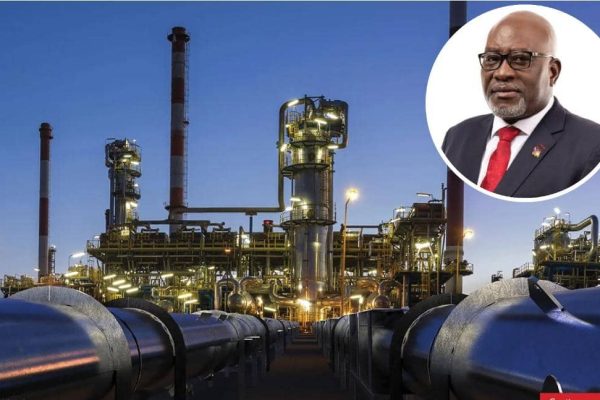
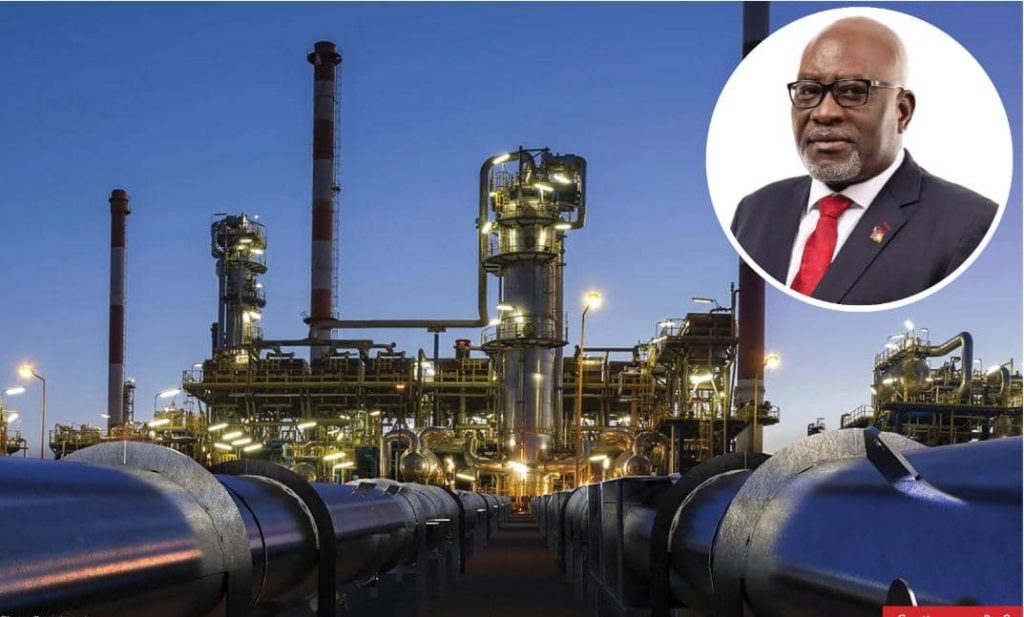
The government of Namibia, through the Minister of Mines and Energy, Modestus Amutse, has an understanding that it cannot command geology to become commercial or ask capital to ignore economics.
Amutse expressed this at the Occasion of the Offshore Northern Seas (ONS) Programme that was held in Norway.
This comes at a time when the country is preparing for a final investment decision at some of the appraisal wells.
The government’s stance is also coming out as developers seek government support and clarity before they start to develop the wells.
For the Venus well, the partners have defined a development concept centred on a floating production system of approximately 160,000 barrels per day and are working towards a potential final investment decision.
Amutse has also assured investors and partners about the country’s localisation approach amid calls on local participation and value creation.
He said the country will approach the localisation pragmatically.
“Namibia will not localise every component from the first day, and it should not pretend that it can,” Amutse noted.
While adding that local participation must deepen as the industry matures, “and early investment in people and institutions must begin before first production – not after it.”
He told the internal community that the Namibia framework will, however, protect the national interest while allowing responsible investors to earn a competitive return.
Amutse indicated that Namibia does not intend to reinvent a wheel that others have spent decades improving.
“Here in Norway, we see the value of strong institutions, long-term thinking and national capability. We will learn from that experience while building a model suited to Namibia,” he said.
The country has recently approved the National Upstream Petroleum Local Content Policy, which aims to create a practical pathway for jobs, local procurement, enterprise development, skills, technology and meaningful Namibian participation.
Commenting on Amutse’s Norway comments, Luther Mostert, Managing Director of Daron Namibia supported the government’s stance and approach.
He said some people won’t like what Modestus Amutse said in Norway this week, that Namibia is unable to localise every component of the oil industry from the first day.
“I think he’s right. And I think it’s the most useful thing a Namibian supplier could hear.
Deepwater doesn’t care about our feelings,” he stated.
Mostert explained that rigs, floating, production, storage, offloading, subsea kit, and specialist crews mostly come from abroad.
Adding that the minister was honest about it, “government cannot command geology to become commercial or ask capital to ignore economics.”
He said local participation must grow as the industry grows. That’s not a promise of business. It’s an invitation to earn it.
“I started Walvis Bay Ship Chandlers in 2012 with no oil boom in sight. We got the work by delivering at 03:00 when the vessel needed it, invoicing cleanly, and doing it again the next week. Fourteen years later, that’s still the whole model,” Mostert narrated.
He also advised Namibian entrepreneurs and those aspiring to enter the oil and gas sector to not wait for a policy to hand them a contract, but to be the supplier the operator can’t afford to replace.
Mostert highlighted that service provisions, husbandry, crew logistics, technical supply, coatings — are for the locals to win, but only if the service standard is world-class.
“Pragmatic localisation means the door is open. Walking through it is on us,” he stated.
Namibia’s oil discoveries began with Graff and Venus in 2022, followed by Jonker, Mopane and further finds, which have confirmed a working petroleum system and placed Namibia on the global deep-water map.
For now, only the Venus well is about to be developed using floating production.
At Mopane, Galp and TotalEnergies have set out further exploration and appraisal.
erastus@thevillager.com.na