

By Kandjengo kaMwaanyoka, an Economic Observer
One of the fears we had of the emergence of Artificial Intelligence (AI), was the loss of jobs.
Many repetitive every day tasks are done by AI today, and for those who are not reskilling fast, they will become redundant.
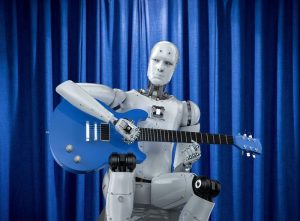
However, nobody told musicians, aspiring singers, and all those employed in the music production value chain that AI could sing and generate songs.
If you go on YouTube today, AI is prevalent, particularly with house music and love songs.
Analysts and economists failed the music industry; they didn’t predict and provide insight into what is coming, as they did with other industries.
Last year in the USA, there was a conversation about an AI artist who emerged and how she would be treated. After that, we have seen AI generate songs by replicating human artists’ voices and redoing existing man made songs.
Currently, YouTube labels AI songs. Many slip through the cracks as well though.
Observations from the local front are that we have a number of artists that have started to utilise AI in their songs.
The key questions are now on the sustainability of the sector and the talent to sing, which now has to compete with machine-generated voices.
Lyrists who have to compete with AI’s lyrical ability.
Furthermore, for individuals to differentiate between human songs and AI songs and to price them.
The music industry and value chain is not about artists alone but all those who depend on it.
A song’s production involves a number of people: producers, instrumentalists, studio hiring, labeling and promotion, all represent transactions – money changing hands.
AI songs require one individual coding and teaching a machine/programme the relevant language to sing.
It has the potential to wipe out an entire value chain in music production.
The Namibian music sector has not been the most supported sector, with only a few musicians making a living from it, faces stiff competition from AI-generated songs.
How do we cushion our talented artists? How do we support them to be relevant and adapt?
Or perhaps, given that they sing in vernacular languages, they aren’t threatened?
Yes, there is no Kwaito AI-generated song yet, but the way machine learning is changing, AI is learning fast and can create an Oshakati Kwaito artist soon.
The lessons are clear: domestic analysts and economists need to be more proactive in analysing global trends and ringing the bell to domestic economies on what is coming.
The AI threats have been about jobs, but little was said on the specific sector, and domestically the country paid little attention as always.
The music industry was caught off guard, making local artists more vulnerable to competition and potential replacement.
Hard conversations need to be held; resources need to be mobilised to position all sectors for the AI boom.
The machines are learning to do many things faster, and as a country we need to position our workforce and artists for such disruptions.
The graphic designers and writers have survived for now since we cannot use AI well to create quality posters and AI stories have no souls, but that is just temporary.
Can local artists beat AI songs and artists? Can they use the technology as part of their growth and embrace new trends? It is up to us to enable them and support them.
Namibia does not have a strong track record of supporting local musicians, which makes them even more vulnerable to AI-generated song competition.
The fear of AI replacing workers is now upon us; the music industry is one of the key sectors currently affected. Other sectors are next.
The conversation about AI impact needs to be spoken in a language all can relate to, and it needs to be elevated from conferences to household and policy level.
Our preparation and utilisation depend on the conversations we have today.