
By: Dwight Links
A public consultation process on the Climate Investment Funding (CIF) Industrial Decarbonisation Program (IDP) began on Monday in Windhoek, hosted by the Namibia Green Hydrogen Program (NGH2P) and the National Planning Commission (NPC).
The aim, according to the NPC and NGH2P, is to provide a menu of projects that are going to shape Namibia’s draft sectoral Transformation Investment Plan(s) (TIP).
These are plans to transform a targeted industry with the funding from the IDP program.
The IDP initiative is currently geared towards a handful of nations, which include Namibia, Brazil, Egypt, South Africa, Turkiye, Mexico and Uzbekistan.
Namibia received an invitation to be part of this program last year.
The CIF is an organisation that exists out of multilateral climate finance partnerships that channels concessional financing through six Multilateral Development Banks (MDBs) for both upstream advisory and downstream investment activities to support climate action.
Nikol Hearn, head of transactions at the NGH2P, explained that in the Namibian context, accessing funding is still at early stages as a lot of the background work is still in the planning phase.
“Since these projects will be approved by the Trust Fund Committee – which is a level at the CIF part – and today we will look at what these targeted areas are. This s-TIP is being assessed by the Trust Fund, which gives a response back in the last week of September to the first week of November,” Hearn noted.
Hearn described the path that led to Namibia being invited into the IDP cluster of initial countries, which will also determine whether this financing will be allocated or not.
“Namibia applied at the start of 2025, and we were invited to become part of the process that will supply a full S-TIP,” she added.
Hearn explained that the S-TIP will allow the multilateral development banks to channel approved financing to the nations and the projects they listed as interventions. This financing also includes blended financing products.
COUNTRY GOALS
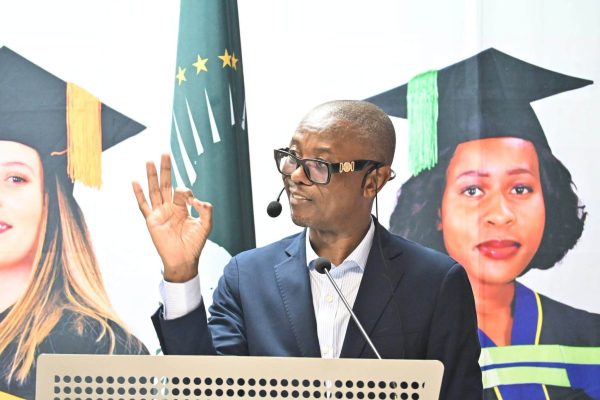
Acting executive director from the NPC, Sylvester Mbangu, said that this allows Namibia to reach its targeted goals of green industrialisation.
“Namibia is preparing an investment plan that could position the country to access up to US$250 million in concessional CIF capital.
If properly structured, this catalytic capital can help reduce investment risk and crowd in substantially larger financing from multilateral development banks, development partners and the private sector,” Mbangu indicated.
Mbangu says the value of the process is not limited to the CIF allocation itself, but that its wider purpose is to build a credible national platform through which Namibia can mobilise investment for green industrialisation at scale.
“The draft s-TIP must consequently be more than a catalogue of projects. It must demonstrate how a connected package of interventions can resolve shared constraints and advance an entire industrial ecosystem,” Mbangu added.
He explained that the draft must reflect how Namibia will convert its renewable-resource advantage into bankable industries, which will enable infrastructure development, install competitive local value chains, develop skilled employment and allow for the measurable benefits for communities to be realised.
“It is the point at which we test whether the draft plan is sufficiently clear, practical, inclusive and financeable to represent Namibia before the CIF Trust Fund Committee at the end of September,” Mbangu added.
AIMS
NGH2P, on behalf of the Namibian government and in partnership with the Environmental Investment Fund, is the lead agency on this process.
According to them, the s‑TIP forms the backbone of Namibia’s proposal under the CIF Industry Decarbonisation Programme, a global initiative designed to help countries shape the emissions profile of new industrial investments before carbon‑intensive pathways become locked in.
“For Namibia, the s‑TIP showcases a practical, financeable roadmap to unlock concessional capital – which potentially can go up to US$250 million in CIF resources and over US$1 billion in blended multilateral development bank finance – to accelerate green industrialisation, shared infrastructure development, MSME growth, and inclusive community benefits,” the NGH2P says.
The NGH2P says this is based on other public engagements in the country that informed the public consultation for the s-TIP.
“This reflects the outcomes of the June 2026 Joint Mission, where government, SOEs, MDBs, private developers, financiers, academia, and civil society refined the plan into a coherent system‑level intervention which took into account findings from stakeholder consultations held in April and May in the Erongo and //Kharas Regions as well as the illustrative pipelineʼs bankability needs,” the program explains.