



By: Peneyambeko Jonas
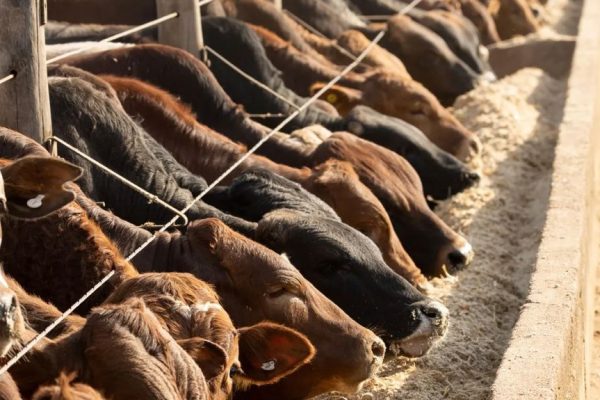
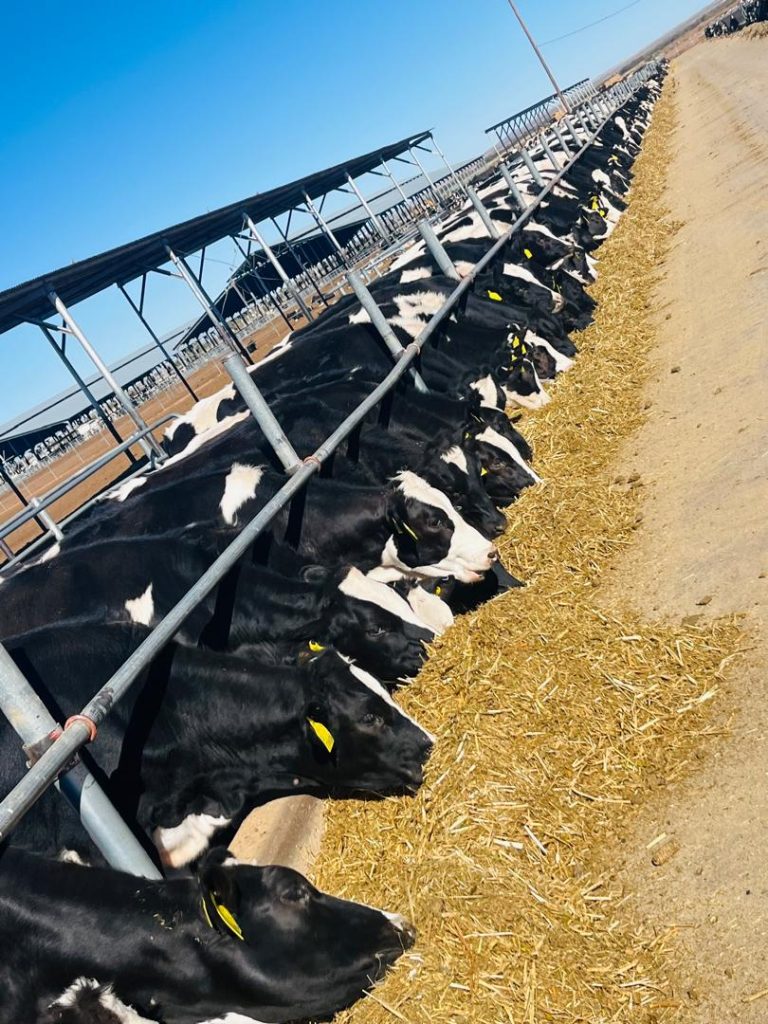
Beyond crop production at the Etunda Green Scheme, the government is investing in livestock value addition through the construction of the Etunda Feedlot Project.
The construction is expected to be completed in September this year.
The feedlot is expected to enhance the quality and market value of cattle while strengthening the country’s beef industry.
This was revealed during President Netumbo Nandi-Ndaitwah’s recent visit to the Green Scheme, where progress was assessed on several agricultural projects.
This includes grape and banana plantations and the ongoing construction of the Etunda Feedlot, all of which are expected to contribute to economic growth while reducing Namibia’s dependence on imported food products.
Agricultural investments at the Etunda Green Scheme in the Omusati Region form part of Namibia’s efforts to strengthen food security, create jobs, and diversify the economy through increased local production and value addition.
Engineer Nangolo Betuel from the Ministry of Agriculture explained that the feedlot project was specifically designed to support livestock farmers and improve national beef production.
“The Etunda Feedlots Project was established to strengthen livestock farming and improve beef production in Namibia,” Betuel said.
He explained that cattle would be placed in feedlots before marketing and slaughter, enabling farmers to improve the quality and value of their livestock before entering the market.
According to Betuel, the project will also contribute to improved animal health management through strict screening procedures before livestock enter the feeding facilities.
During the briefing, the President was informed that construction of the feedlot began in June last year and is currently 32 percent complete. The facility is expected to be completed in September this year.
Once operational, the feedlot infrastructure will include veterinary services, equipment maintenance workshops, a feed processing room, staff accommodation, and a livestock post-mortem section.
The investment also represents a step towards expanding agricultural value chains within Namibia, allowing producers to generate greater returns from livestock while creating new economic opportunities in rural areas.
Agricultural economists have long argued that increasing value addition within the livestock sector is essential for Namibia to maximise returns from one of its most important industries.
The Etunda Feedlot is expected to support this objective by improving the quality of animals entering the market and strengthening the competitiveness of Namibia’s beef products.
The visit formed part of the President’s broader agricultural tour aimed at evaluating the performance of strategic farming projects and identifying opportunities to strengthen agricultural productivity across the country.
At the heart of the developments is the Etunda Green Scheme’s growing horticulture sector.
The project currently operates 15 hectares of grape production, supplying the domestic market and supporting employment opportunities in the region.
Grape farm manager Sybrand Potgieter said the existing production capacity demonstrates Namibia’s ability to meet local demand through domestic farming.
“Etunda has 15 hectares of grapes, which is enough for the Namibian market without importing from other countries,” Potgieter told the President during the site visit.
However, he highlighted pest management as one of the challenges affecting production and export prospects.
“We just need pest control specialists to assist in controlling insects like fruit flies on the grapes. We need to work together with the government so that we can get insect control workers from private companies, and they are expensive,” he said.
Potgieter noted that further expansion of grape production would not only improve food security, but create more employment opportunities for young Namibians.
The President also inspected the scheme’s banana plantation, where 2,200 banana trees were planted in January 2025 as part of a pilot project aimed at exploring the viability of local banana production.
This achievement added to bananas being the second-most widely consumed fruit in Namibia; locally produced and available for purchase in local retail stores, according to a report from the Namibian Agronomic Board (NAB).
Beyond crop production, the government is investing in livestock value addition through the construction of the Etunda Feedlot Project, which is expected to enhance the quality and market value of cattle while strengthening Namibia’s beef industry.
Nangolo Betuel, an engineer from the Ministry of Agriculture, explained that “The Etunda Feedlots Project was established to strengthen livestock farming and improve beef production in Namibia.”
He explained that cattle would be placed in feedlots before marketing and slaughter, enabling farmers to improve the quality and value of their livestock before entering the market.
According to Betuel, the project will also contribute to improved animal health management through strict screening procedures before livestock enter the feeding facilities.
During the briefing, the President was informed that construction of the feedlot began in June last year and is currently 32 percent complete. The facility is expected to be completed in September this year.
Once operational, it will include veterinary services, equipment maintenance workshops, a feed processing room, staff accommodation and a livestock post-mortem section.
The investment represents an important step towards expanding agricultural value chains within Namibia, allowing producers to generate greater returns from livestock while creating new economic opportunities in rural areas.
Agricultural economists have long argued that increasing value addition within the livestock sector is essential for Namibia to maximise returns from one of its most important industries.
The Etunda Feedlot is expected to support this objective by improving the quality of animals entering the market and strengthening the competitiveness of Namibia’s beef products.
Throughout the visit, President Nandi-Ndaitwah reaffirmed government’s commitment to supporting agricultural development and ensuring that public investments translate into tangible economic benefits for communities.
She encouraged management and employees at the green scheme to make effective use of available resources and zero in on achieving productive harvests.
The President also welcomed plans to expand production at the scheme, noting that increased agricultural output would contribute to national food security while creating more employment opportunities.
The developments at Etunda reflect a broader national strategy to position agriculture as a catalyst for economic transformation.
Through investments in irrigation, horticulture and livestock infrastructure, Namibia seeks to strengthen domestic food production, reduce import dependence, create jobs and stimulate growth in rural economies.
As the country pursues economic diversification beyond mining and other traditional sectors, projects such as Etunda are increasingly being viewed as practical examples of how agriculture can contribute to sustainable development, food self-sufficiency and long-term economic resilience.