
By: Nghiinomenwa-vali Hangala
The Ministry of Industries, Mines, and Energy (MIME) has confessed that the country lacks adequate geological knowledge and baseline data on its natural resources.
As a result, affecting understanding and managing Namibia’s resources and environmental processes, and socio-economic advancement.
MIME revealed this in its Ministerial 5-year Strategic Plan, which was released last month.
“There is a lack of comprehensive mineral reserves and resources data to support informed strategic decision-making,” the Plan read.
The lack of geological knowledge has also made the country unaware of its mineral reserves, also causing a dependence on private exploration and geological assessments.
Adding that the data problem is a result of the slow production of baseline geoscience data due to limited funding and capacity to conduct field observations, geological surveys, and research.
As a result, the Ministry has committed to establishing a mineral reserves and resources database to promote better resource management, formulation, strategic planning, and monitoring and evaluation.
Even though the Ministry has allocated funds to other geoscience-related work to be undertaken, nothing is allocated to the Mineral Resources and Reserves Database Project itself.
The reserve database is critical in the country’s pursuit of attracting investors, auditing its mineral revenue, and allocating mining licences.
“This data and information form the foundation for understanding and managing Namibia’s resources and environmental processes, thereby facilitating the country’s sustainable socio-economic advancement,” the Plan read.
In the strategy, the Ministry has committed to strengthening the foundational knowledge base and enhancing the technological capacity within the mining and energy sectors within the Ministry.
It said “this approach provides knowledge of Namibia’s geology, including the continental shelf, to support the exploration and management of natural resources sustainably, while mitigating environmental impacts.”
The Strategy has also revealed that Namibia is endowed with abundant geological resources. Significant gaps in geological data, especially in remote and underexplored areas, continue to hinder the country’s ability to fully harness the potential of these assets.
As a result, MIME has committed to increasing nationwide coverage of geoscientific surveys to increase the production of baseline geoscience data and mineral resources information.
To actualise this endeavour, the Ministry has indicated in its Strategy that it will conduct a cost estimate study for geoscience surveying, enhance technical and financial capacity in geoscience surveying, and explore multiple avenues for resource mobilisation.
The baseline data and information are expected to enhance Namibia’s geological understanding and knowledge, foster resource discovery, and contribute to sustainable national development.
Some of the key performance indicators in the strategy are to upgrade geoscientific infrastructure (such as Seismic stations, GIS & RS Labs, Geochemistry Labs, the Tsumeb Core Shed, and Geoscience Database Infrastructure).
Such geoscientific infrastructure upgrades fall under an allocation of around N$7,2 million for the next 5 years.
Under the programme of geoscience surveying and research is the project of establishing a Mineral Resources and Reserves Database. However, no funds have been allocated for it.
The key performance indicator, however, shows that the attainment of the specific objective will be measured by the percentage progress in the development of a mineral resources and reserves database.
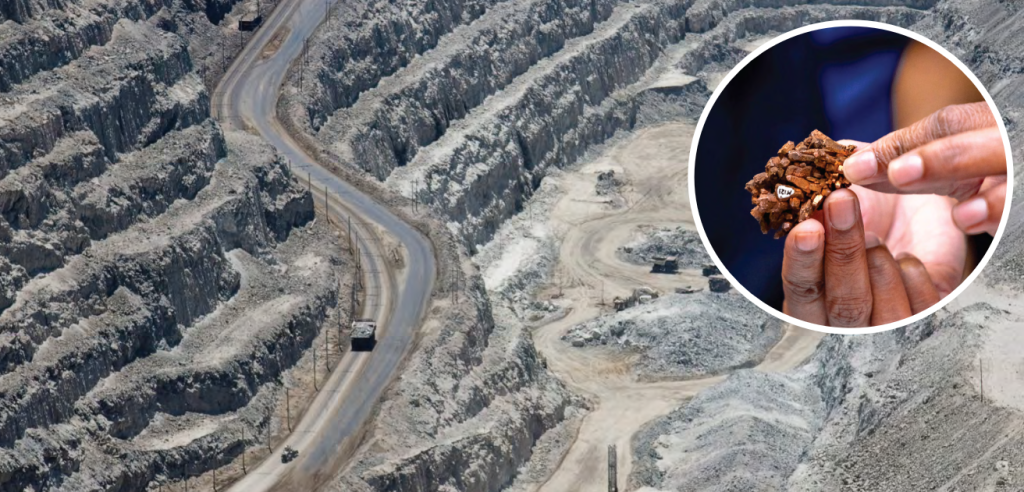
Currently, Namibia has around 26 active mines with some more being developed to mine a variety of minerals across the country. And in the Namibia ocean water, however, the country has no mineral database.
erastus@thevillager.com.na