


By: Stephanus Pombili
One of the fastest-growing higher education institutions in Namibia is Welwitchia University (WU). With more than seven campuses nationwide, WU continues to expand its academic footprint while maintaining a strong commitment to quality education.
The university comprises seven dynamic schools: the School of Nursing, School of Allied and Public Health, School of Pharmacy, School of Agriculture, School of Education, School of Social Work, and the School of Law and Commerce.
The School of Education offers a range of accredited programmes, including the Bachelor of Education in Senior Primary Education (Honours) (Grades 4–7, NQF Level 8), the Bachelor of Education in Secondary Education (Honours) (Grades 8–12, NQF Level 8), and a Postgraduate Diploma in Higher Education.
These programmes are designed to equip future educators with both theoretical knowledge and practical teaching competencies.
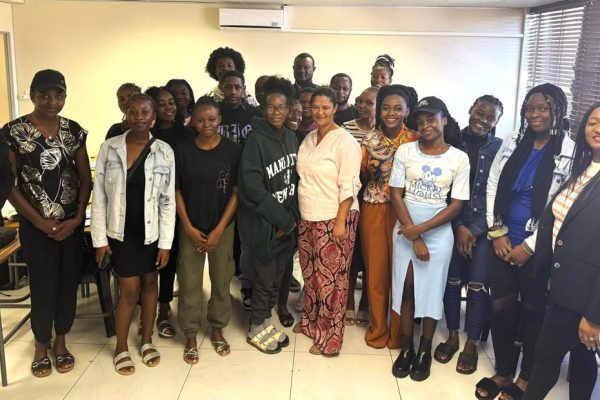
During a recent visit to the Walvis Bay campus, we engaged with both first-year and third-year students to gain insight into their academic experiences at WU.
Caroline Pefinde, from Omafa Village in the Ohangwena Region, shared her inspiring journey:
“To be honest, my parents initially made the decision for me to enrol at WU because they had heard about its education programmes. I accepted the challenge; and today, I am truly grateful. What makes my experience even more enjoyable is the strong support system. The lecturers are highly supportive, and senior students; especially third years, are always willing to assist us. The lecturers ensure that we fully understand the material. I am proud to be a WU student, and I strongly encourage Grade 12 learners to consider WU, especially because of its flexible subject combinations.”
Caroline is currently pursuing a Bachelor of Education in Secondary Education, majoring in Mathematics and Physical Science.
Jamaima Sheluna, a third-year student from the Kunene Region, highlighted the academic excellence at WU:
“At WU, lecturers are always available and highly committed. The quality of education is exceptional, and students receive personalised attention. If a student struggles with a topic, lecturers go the extra mile to ensure understanding. Peer support is also very strong. My advice to prospective students is to work hard and ensure they meet the required admission points.”
Alfred Luti, a third-year student from Ongwediva in the Oshana Region, emphasised the university’s practical approach:
“I was impressed by the programme structure and curriculum design. What stands out most is how the university assists students in securing School-Based Studies (SBS) placements. They follow up consistently to ensure students gain meaningful practical experience. The environment at WU is inclusive, bringing together students from diverse backgrounds. The institution even reaches out when students are absent, showing genuine care for both academic progress and personal well-being.”
These testimonies reflect a powerful reality: WU students come from diverse backgrounds, yet they share a common experience of academic support, practical training, and a nurturing learning environment. What truly distinguishes WU is its teaching philosophy; they do not simply lecture; they actively teach, mentor, and develop students holistically.
Admission Requirements
Bachelor of Education in Senior Primary Education (Honours)
(Grades 4–7, NQF Level 8)
To qualify for admission, applicants are required to meet the following criteria:
- Selection of two major subjects within a chosen specialisation:
Languages: English combined with Oshikwanyama, Oshindonga, Afrikaans, Otjiherero, or Khoekhoegowab (KKG)
Sciences: Mathematics together with Natural Science and Health Education
Social Sciences: Environmental Studies and Social Studies
- A minimum of 25 points obtained across six (6) subjects
- At least a D symbol in English at NSSCO/NSSCAS level
- A minimum of a D symbol in the chosen specialisation subjects
Bachelor of Education in Secondary Education (Honours)
(Grades 8–12, NQF Level 8)
Prospective candidates must satisfy the following admission requirements:
- Selection of two major subjects within a specialisation area:
Languages: English, Oshikwanyama, Oshindonga, Afrikaans, Khoekhoegowab (KKG)
Commerce: Accounting, Economics, Business Studies, or Entrepreneurship
Science: Mathematics, Physics, Chemistry, Biology, or Agriculture
Social Studies: History, Geography, Development Studies, or Life Skills
- A minimum of 27 points in six (6) subjects
- At least a D symbol in English at NSSCO/NSSCAS level
- A minimum of a C symbol in the relevant specialisation subjects
Join a Leading Private University in Namibia
Become part of a fast-growing and reputable private university where “everyone is an achiever.” Visit your nearest WU campus today to begin your journey.
WU programmes are funded through the Namibia Students Financial Assistance Fund (NSFAF), and the university’s dedicated support team is ready to assist you with your application process every step of the way.
Your future starts here. See you at WU!
Stephanus Pombili is an author, consultant, and independent researcher. He has appeared on television, radio, and in newspapers discussing contemporary issues. The opinions expressed here are his own.