



By: Mathias Hangala
Dominic Wilhelm of the Global Trust Foundation in South Africa says the global investment fund holds approximately $290 trillion in capital annually, all seeking viable investment opportunities.
He made these remarks while addressing an Urban Mobility Workshop in Windhoek on Wednesday.
The workshop organised by the City of Windhoek (CoW) aimed to suggest solutions facing urban public transportaion challenges.
“For economists and the audience in general, you are probably aware that there is, in fact, no shortage of capital on the planet,” said Wilhelm.
Wilhelm added that investments – particularly in public transport – can yield economic returns, noting that a $20 million investment in public transport can generate up to $5 in economic value for every dollar spent.
Additionally, each $1 invested can support approximately 4.1 jobs, while improved access to jobs, schools, and services, combined with enhanced safety measures, can reduce pedestrian fatalities by up to 80%.
He emphasised that the real challenge lies not in funding, but in the availability of bankable projects.
“There is money in the world looking for investable returns. It’s not the money that is lacking, it’s the demand, not the supply. We must move away from the idea that funding is a challenge. It is an opportunity. It is up to us to make opportunities fundable,” he remarked.
Wilhelm stressed the importance of collaboration and trust among institutions, noting that high-trust nations outperform low-trust nations by over 1,000%, while high-trust organisations exceed their counterparts by more than 400%.
“Does Windhoek aspire to perform 400% better than it does today? You won’t find the strategy in an income statement or from a consultant. It lies in how trust is built and experienced between people,” he added.
Meanwhile, Pierre van Rensburg, Strategic Executive for Urban and Transport Planning at CoW, highlighted the need for improved public transport systems.
He said the majority of residents do not own cars, with about 87% classified as low-income earners, earning below N$4,600 per month.
He warned that without investment in mass transit systems, commute times could nearly double by 2032.
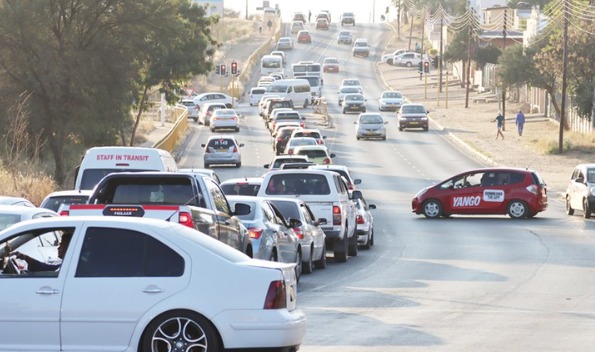
“If we do not act to create effective public transport, the same trip could take almost an hour by 2032. We are already seeing increasing congestion. This morning, traffic along Robert Mugabe Avenue was backed up all the way into town, something that was not the case before,” he indicated.
He added that urban transport plans also include non-motorised transport options such as cycling and walking. A proposed network of approximately 315 kilometres would provide safer routes for commuters opting for healthier or shorter trips, through cycling lanes and paved sidewalks.
Van Rensburg further noted that transport planning is not the responsibility of a single institution. It involves multiple stakeholders, including the Roads Authority, Road Fund Administration, and the Ministry of Transport and Works, all operating within the framework of the Public Passenger Transport Act.
He revealed that the Act was not implemented due to inflation, initially estimated at N$5 billion. Adjusted for inflation since 2012-2013, the cost would now be approximately N$8 billion.
“As a local authority, we are not alone in facing this challenge. Other towns such as Ongwediva, Ondangwa, and Oshakati are also experiencing rapid growth and increasing transport demands,” he noted.
Speaking at the same event, Hans Haikali, Deputy Minister of Works and Transport, outlined the government’s role in supporting transport development.
He said the ministry is responsible for providing oversight, strategic direction, and coordination among stakeholders, as well as ensuring the effective implementation of national transport policies.
“The public passenger transport bill is designed to strengthen the regulatory framework governing the sector. It addresses service regulation, the establishment of national and regional transport boards, and the promotion of integrated transport planning across all levels of government,” he explained.
Haikali added that the bill has received ministerial comments and is scheduled to be tabled before the Cabinet Committee for further consideration.
“This process is a critical step towards finalising the framework and aligning it with national transport objectives. The bill is essential for ensuring a coordinated, efficient, and user-focused public transport system,” he said.