



By: Mathias Hangala
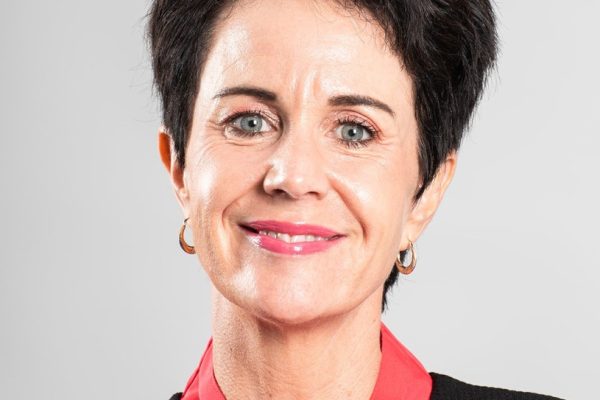
Aina Sheya, founder and owner of Aina Sheya Properties, shared her real estate journey with The Villager.
Sheya traces her entrepreneurial roots back to her childhood in Oshakati, where she partly grew up with her aunt. There, she was involved in daily chores such as selling milk and vegetables.
With her aunt having introduced her to street vending while attending Ngolo Primary School, Sheya would push a wheelbarrow through the streets of Oshakati in search of customers.
“She would send us, the kids, me and my cousins into the streets with wheelbarrows. We would shout, ‘We are selling milk!’ That experience took away my fear and gave me the boldness to speak to people,” Sheya recalled.
She added that although the experience exposed her to rejection and even ridicule from peers, it played a role in shaping her resilience and entrepreneurial spirit.
“Facing rejection, people laughing at you at school, but that gives us bread. It instilled in me the desire to do business, including real estate,” she said.
In 1994, Sheya moved to Windhoek with her mother. At the time, she barely spoke English, having been primarily taught in Oshiwambo in the north. She enrolled at Namutoni Primary School, later attended Van Rhyn Primary School, and completed her secondary education at Centaurus High School.
Her interest in real estate began during this period when her mother acquired a house in Windhoek West and built backyard rental rooms.
“Every time a tenant moved out, I would paint the rooms, and my mother would reward me. That’s where my interest in real estate started,” she explained.
Sheya later enrolled in software engineering at the Polytechnic of Namibia, now the Namibia University of Science and Technology (NUST). During her studies, she developed an interest in entrepreneurship through self-motivation and personal development books.
“While studying software engineering, I also decided to study to become a real estate agent. I registered for the Namibian Estate Agents Board exam, wrote it while studying, and passed,” she recounted.
She held onto her certification for several years while working as a software engineer. In 2014, after nearly a decade in the software engineering field, she made a decision to resign and fully pursue real estate.
“I decided to quit my job and go into real estate. It’s broader than just selling houses. I thought, I’m still young; if I fail, I fail. If I succeed, I succeed. It’s been about 10 years now, and I’m still going strong,” she expressed.
Her passion for property investment dated back to observing her mother manage rental units.
“I saw my mother collecting rent every month, and I thought, this is a good business. You don’t have to sweat too much. That’s when I started learning more about property investment,” she said, noting that her mother still owns several rental rooms at the same property.
In the same breath, Sheya emphasised that success in real estate requires hard work, resilience, and persistence.
“Nothing comes for free, and nothing is cheap. This industry is challenging. Clients often prefer working with people they already know, so rejection is common. Negative comments, especially on social media, can also discourage those who are not strong,” she noted.
She highlighted how the industry evolved, particularly with the shift from traditional advertising to digital platforms.
“In the past, we relied on newspapers to advertise properties. Today, people use social media and online platforms. It’s important to learn how to use these tools effectively,” she said.
Sheya went on to share that in order to become a real estate agent, one needs to “write an exam with the Namibian Estate Agents Board, which costs around N$2,500. You don’t need Grade 12, just the ability to read, write, and understand the material.”
However, she cautioned that experience is essential before starting a business in the industry.
“There are many legal aspects involved. It’s important to gain experience in sales and marketing and to work under a mentor for at least one or two years. You’re dealing with people’s biggest assets, so you must know what you’re doing,” she advised.