



By: Mathias Hangala
The City of Windhoek (CoW) says it will need about N$900 million annually to service 67,000 plots in an effort to address the 65,000 housing backlog.
This was revealed by Theunis Heunis, CoW’s section head responsible for housing, during a media engagement at Von Bach Dam on Friday.
Heunis explained that data from the previous Housing and Population Census indicate that Windhoek has about 495,000 residents, 231,000 of whom live in informal settlements.
“So, the statistic is that 46.1% of Windhoek’s population stays in informal settlements; that equates to a backlog of close to 65,000 houses,” he said.
He added that, according to the sixth National Development Plan (NDP 6), Windhoek alone has 150 informal settlements.
“Obviously, this is a long-term process. We cannot develop 67,000 houses at once. To service 67,000 plots over 10 years, we would need at least N$900 million annually from government to achieve this target. During the last financial year, government promised a certain amount which was later reduced, and ultimately we did not receive the funds. Windhoek’s housing crisis is not new, but we are working on initiatives to address it,” Heunis explained.
He further stated that the City’s budget proposal submitted to government outlines a 10-year development plan, but inadequate funding means the City is addressing the problem in a piecemeal approach, while migration continues to increase housing demand.
“For this financial year, based on our backlog and the Ministry of Urban and Rural Development’s approved budget, we were allocated only N$50 million. To truly solve Windhoek’s housing crisis, we need close to a billion dollars annually,” he added.
Windhoek’s housing backlog is one of the most notable in the country, contributing to the national backlog which requires over N$75 billion to be addressed effectively.
Also sharing remarks at the engagement, CoW chief executive officer Moses Matyayi said that many residents living in informal settlements are non-ratepayers, yet still expect essential services such as water and sanitation facilities to be provided for them. With this, he raised the question of who ought to bear the cost.
Matyayi explained that, for this reason, the City makes provisions to allocate funds collected from ratepayers to support services for non-ratepayers. “They are Namibians. They are our cousins and brothers, and we have a responsibility to care for them,” he said.
Acting strategic executive for infrastructure, water, and technical services, Rowan Adams, shared a presentation highlighting the City’s maintenance challenges.
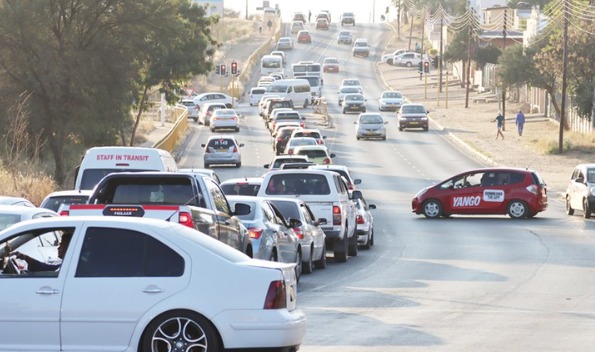
“We usually don’t pay attention to scheduled maintenance, which is essential to extend the operational life of roads. If we had to replace all black-top roads in Windhoek, it would cost N$15.4 billion,” Adams illustrated.
He revealed that the City currently faces a maintenance backlog of N$2.67 billion, evident from deteriorating road conditions.
“We see cracks and potholes because maintenance has not been done. We need to catch up. This requires at least N$384 million annually to fix potholes, cracks, and seal roads,” Adams explained.
The CoW officials went on to explain that part of the funds allocated to covering operational costs is generated through billing.
According to Elcia Mweshixwa, head of property, rates and taxes, the City has begun billing property owners who own properties on farms within the City’s boundaries.
“We requested them to provide their title deeds. While some complied, others didn’t. For those who complied, we have started issuing bills, with charges calculated based on the value and size of the properties they own,” stated Mweshixwa.
According to her, this prompted the City to reconsider its rates as many residents were initially unable to meet their payment obligations.