



By: Dwight Links
Institute for Public Policy Research (IPPR) economist Robin Sherbourne applauded the Ministry of Finance for manoeuvring a difficult budget, and for maintaining fiscal discipline and the confidence of the bond market whilst trying to prioritise the President’s visions in the midst of revenue pressure.
Sherbourne motivated that the minister had to ensure that policy promises of 2025 needed to be maintained while balancing various aspects shared in the address of 26 February.
“This was a difficult budget given that the minister had to square the circle between maintaining fiscal discipline and the confidence of the bond market whilst at the same time demonstrating she was meeting the policy priorities announced by President Nandi-Ndaitwah at a time when revenue growth is likely to be extremely limited,” explained Sherbourne.
Sherbourne added that the minister may have had to undertake considerable efforts to work on the latest budget submission, considering expected limitations placed on it.
“Shafudah accepted the constrained economic outlook and announced she would achieve a very small primary budget surplus by limiting operational and especially the development expenditure while allowing the highest budget deficit and the level of public debt she could get away with,” remarked Sherbourne.
With the released budget, it is clear that the minister aims to sustain the free tertiary education commitment, make provision for the pre-approved pay rise of public servants, and the N$100 increment to the pensioners’ grant.
A notable change pointed out by Sherbourne was that the valuable support from government to state enterprises will be done away with as they will be encouraged to raise their own financing.
THE ESSENCE OF THE BUDGET
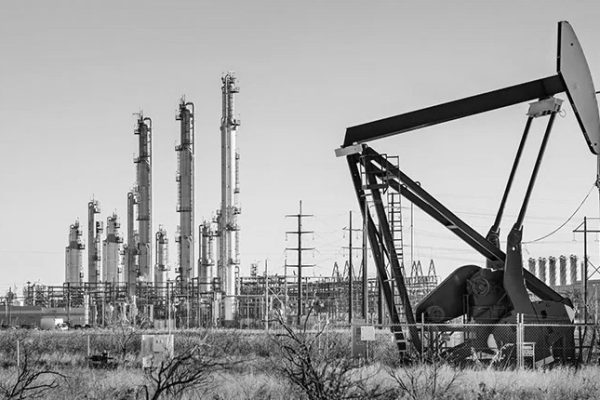
Sherbourne indicates that the budget and its theme ‘People, Productivity, Prudence’ reflects what the minister might be holding out for: The much-anticipated Final Investment Decision in the oil and gas industry.
His analysis notes that “This would signal better times ahead for revenue growth, for the country’s creditworthiness, and for the economy in general.”
On the GDP growth estimates supplied by the minister back in her maiden budget speech of 2025, Shafudah had forecasted a 2.9% and 3.1% growth for 2025 and 2026 respectively.
“These have been steadily revised downwards since her first budget of 27 March 2025 when she forecasted 4.5% and 4.7%. A realistic assessment of growth prospects as the foundation for the revenue forecast contained in the budget is to be welcomed although it is in striking contrast to the NDP 6 ambition to achieve growth of 7% by 2030,” expanded Sherbourne’s analysis.
OTHER HIGHLIGHTS
On revenue observations stated by the minister, Sherbourne indicated that the total revenue and grants were expected to be higher for the 2026/27 financial year than the previous one.
“It is estimated to be 2.5% higher than the revised estimate of FY25/26 which was N$87.4 billion, but lower than the N$89.1 billion of FY24/25 that was collected. For this financial year it is estimated to be N$89.6 billion,” Sherbourne notes.
This will translate to 31.3% of GDP if this revenue materialises.
On tax policies, the analysis report by the IPPR notes that Shafudah made mention of various tax changes that would be contained in the Income Tax Amendment Bill. However, this was the same bill that was said to be completed by the end of the last financial year.
“At the last Mid-Year Budget Review, the minister anticipated the bill would be passed into law ‘by the end of the financial year,’ but she now says it is still under legal review and will be presented to Parliament in the second quarter of 2026,” states the analysis.