




Loise Shiimi
According to Ondangwa Town Council chief executive, Ismael Namgongo, the ongoing developments at the Ondangwa Sports Stadium are projected to require between N$60-70 million this year.
Namgongo explained that this funding will cover several key enhancements, including the construction of toilet facilities, concrete work, a pavilion, an athletic track, grass planting, and the installation of floodlights.
“The construction of the initial pavilion is just the beginning, as it will be designed to accommodate future expansions when additional funds become available,” he stated.
He further indicated that once this initial phase is completed, local competitions can be hosted at the stadium, eliminating the need for teams to travel elsewhere for suitable facilities. This initiative is expected to generate revenue that can be reinvested into developing other amenities within the stadium.
Speaking on the overall financial commitment to the stadium development, Namgongo noted that the Council has multiple obligations, including road and housing projects. He acknowledged that while no specific budget has been allocated for the stadium, funding is being sourced from utilities such as water and electricity bills, a strategy that has proven effective.
“Additionally, we have partners and organisations, like the Road Fund Administration, that have pledged support. They will assist in constructing a road from the main thoroughfare to the stadium, and NamPower has expressed its willingness to contribute as well,” he added.
Namgongo indicated that the Town Council is actively seeking partnerships with more organisations. Regarding government support, Oshana governor Hofni Iipinge and Deputy Minister of Sports Dino Ballotti visited the site and echoed that they will explore funding options for the stadium.
Namgongo affirmed that the stadium will meet international standards, noting the potential for a state-of-the-art facility in the northern region.
“Our focus extends beyond sports alone; this stadium will host a variety of activities, including conference halls, a gym, and recreational facilities, offering numerous opportunities,” he said. He further elaborated that by accommodating diverse activities, the stadium will remain operational throughout the year, generating additional income.
To the potential of commercial use, Namgongo stated that generating revenue through rentals is part of their vision to ensure the facility is well-maintained.
Moreover, he shared plans for the area surrounding the stadium to serve as a hub for all sports-related activities, stating that the current development is just a portion of the overall vision.
“This initiative will not only benefit the economy of Ondangwa, but will also serve the broader northern region and the nation. The community will have opportunities to develop and market projects aimed at the anticipated inflow of visitors to the stadium,” he added.
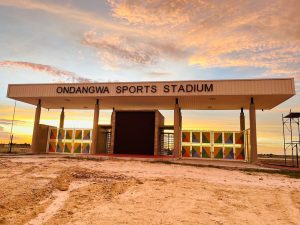
The completed sections in the stadium include the underground system installation, the area where the grass will be planted, and the underground pipes for watering the field. Additionally, the gate and the location for the pavilion have also been prepared.
Construction of the Ondangwa Sports Stadium officially commenced in 2023, following discussions by the Council that began in 2017 on how to bring the project to fruition.


