



By: Mathias Hangala
Emerging livestock farmer, Blasius Stephanus of Karasburg can finally call a piece of land his own. This came after benefiting from a resettlement programme.
Stephanus was resettled on the Retreat Farm in the Karasburg district about two years ago, a time in his life he described as a notable milestone, especially after several unsuccessful resettlement applications.
For him, the resettlement is more than just land allocation; it represents a long-awaited opportunity to create jobs, boost Namibia’s agricultural output, and build a legacy for future generations.
Speaking to the media over the weekend, Stephanus said that within the next two to four years, he aims to become an impactful economic contributor, especially since he is surrounded by established commercial farmers. He noted that he studies and emulates their farming techniques, adding that it would be “a disgrace” to the government if he failed to produce meaningful results.
Stephanus currently employs three workers on his farm.
He shared his commitment to turning his operation into a fully-fledged commercial enterprise, producing livestock for both domestic and export markets.
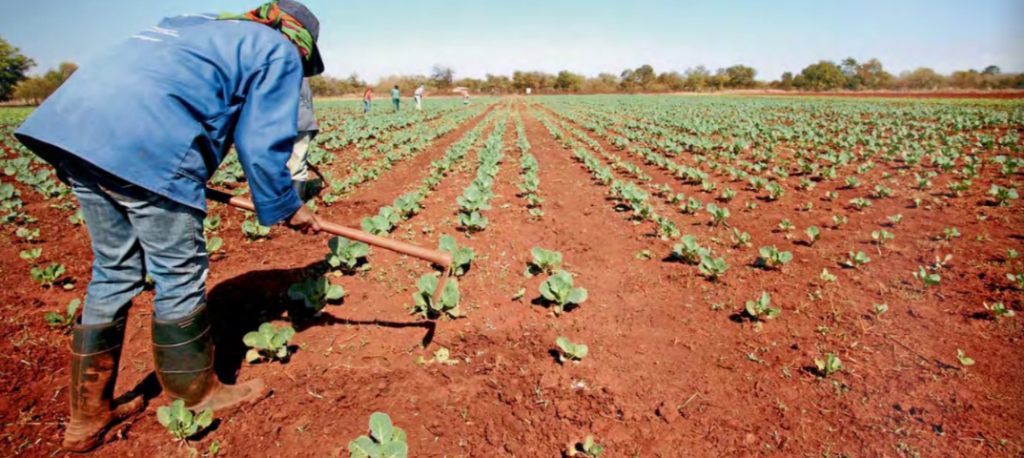
“It is important to understand that farming is not just about livestock. As you can see, we are also involved in agronomic activities. We have a gardening system for household use, and we are planning to expand into larger-scale production for the market,” he mentioned.
Sharing some of his progress, Stephanus explained that he had installed a solar power system to electrify the farm, while urging fellow resettled farmers not to rely entirely on government support.
“This farm is worth almost N$5-6 million if you consider its value. After receiving such opportunities, people still expect the government to do everything for them, and that is not fair,” he stated. In addition to small and large livestock, Stephanus plans to expand into horticulture and pig farming.
Land reform remains a significant political and economic issue in Namibia. The programme consists of two main strategies, resettlement and the transfer of commercially viable agricultural land. Resettlement aims to improve the livelihoods of displaced or previously disadvantaged Namibians.
Farms acquired by the government for resettlement are typically subdivided, with several families settled on what used to be a single commercial farm. Previously disadvantaged Namibians apply for farmland or through affirmative action loans, under the “willing buyer, willing seller” principle. Namibia has approximately 12,382 commercial farms, many of which have been acquired by previously disadvantaged Namibians through purchases or government-supported financing.
Last week, the government also allocated various farm segments of Farm Fiesta as it continues to promote equitable access to land and address long-standing community needs.
These initiatives form part of various policy commitments made at the national level, including the resolutions of the Second National Land Conference and ongoing directives to relieve pressure in overcrowded communal areas.
Speaking at the handover of the farm segments last week, Omaheke Region governor, Pijoo Nganate, acknowledged that many communities across Namibia continue to face land shortages, insecure tenure, and limited opportunities for agricultural development.
“The government must continue to address these cases, guided by the same political commitment that brings us together today,” he stated.
He explained that communities in the Omaheke Region have been heavily affected by land congestion, limited grazing, and increasing pressure on already stretched resources. Nganate noted that farmers are doing their best under difficult circumstances, “but without land for some and adequate land for others, their efforts cannot translate into meaningful production.”
He said the situation has resulted in declining herds, strained household incomes, and uncertainty about the future.
“These cases demonstrate that land pressure remains one of the most persistent obstacles to rural development and improved livelihoods,” Nganate added.