
By: Dwight Links
Governors Kadiva Hamutumwa and Johannes Khamuseb both wish to harness the untapped potential of their regions to increase the tourism sector’s presence in their respective regions.
Otjozondjupa governor Khamuseb noted that his region should be considered as an unprocessed tourism gem that has been discovered, but not fully leveraged for true economic purposes.
“The region is a rough, uncut diamond that needs to be cut and polished, and then put forward as a final product,” he said.
The governor cited that the region boasts a wealth of natural and man-made installed sites that provide tourists with the opportunity for variety. Citing the present-day facilities and installations in his region, Khamuseb noted that these have been legacy facilities that are meant to generate the necessary tourism activity in various parts of the region.
“Starting from the Okahandja area, where we have the Gross Barmen [hotsprings], which has shaped into one of the best tourist destinations. Alongside all our rivers in the region, even at the Von Bach Dam, we have all the facilities to facilitate the needs of visitors when they are in the Otjozondjupa Region,” the governor expressed.
National parks are notable attractions that the governor identified in terms of other options in the region.
“If you come to the Otjiwarongo area, the Waterberg Plateau Park allows visitors to observe and enjoy the variety of birdlife, fauna, and flora that is unique to the region. This also provides the opportunity of seeing the various antelope species present,” Khamuseb added.
The governor noted that a historic abandoned German fort is also in the works of being repurposed into an attraction of sorts for visitors to the region. He added that more effort has to be made in tapping into or converting sites in his region, which would in turn play a pivotal role in enhancing tourist activity.
“I want to focus on Otavi, which has a significant historic value in that it is the place where the South African (British) forces and the colonial German forces signed and concluded the surrender of the latter occupying authority. The exact location is in the Khorab area where this aspect occurred,” the governor noted.
Ohangwena governor, Hamutumwa, outlined in a media briefing that her region has placed the tourism sector as a strategic sector to capitalise on.
“We have looked at how we can create environments for tourists to come into. Ohangwena should not be a region whereby tourists and people are just passing through, but should be a region where travellers from anywhere in the country should be able to enjoy what is on offer in the region, heading towards the rest of the SADC region,” the governor said.
Hamutumwa also noted that the region plays a part in conservation with its own conservancy that can play a role in attracting tourism activity. The conservancy that is present in the Okongo constituency can be complemented with the installation of world-class infrastructure. “We can create an oasis of cultural experiences and historic sites as well,” Hamutumwa observed.
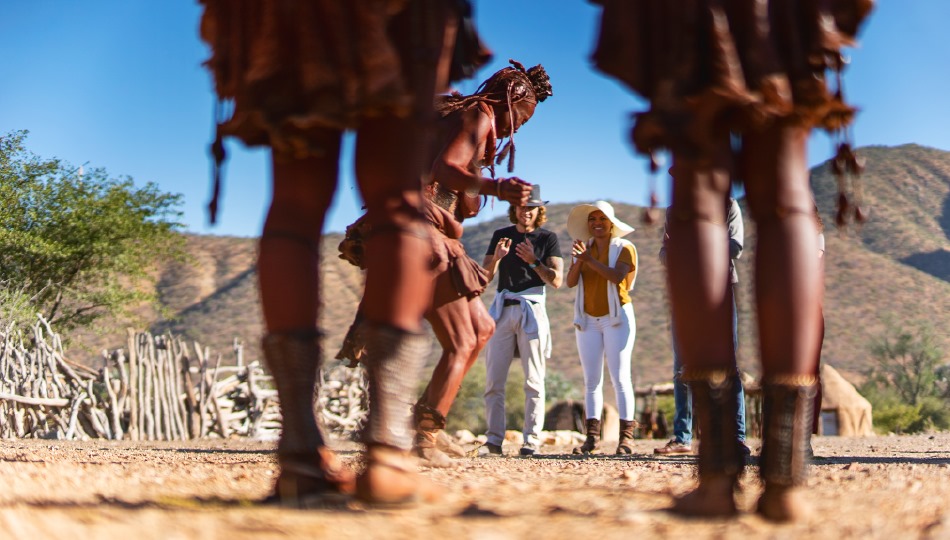
On the dimension of cultural experiences and possible diversification of tourism activities in the region, the governor noted that iconic sites in the region would be plausible for local tourism activity to be harnessed.
“This would entail the designation of the various historic sites where the Liberation Movement was planned – under the trees and more sites of similar import – that can help create further value in Ohangwena’s cultural product,” the governor mentioned.
She noted that young people would have the opportunity to occupy roles in the sector in terms of employment and further economic participation.
“There are many hospitality installations that are present in the region, and also the natural conservancy that can play a part. The conservancy itself boasts a few animal species that can help with the development of localised tourism in the Ohangwena Region,” she added.
Namibia’s aim is to transform and enhance the tourism sector so as to achieve the best possible outcomes for further economic diversification. The sixth National Development Plan (NDP 6) states that the aim is to enhance investment in tourism infrastructure to improve the country’s competitiveness.
On another note, the plan also states that community wealth has to be unlocked through heritage tourism, which speaks to cultural tourism.