By: Dwight Links
Peter Warren and his team from the UN’s Industrial Development Organisation (UNIDO) said that Namibia does have the potential to become a major player in the world’s Rare Earth Minerals industry.
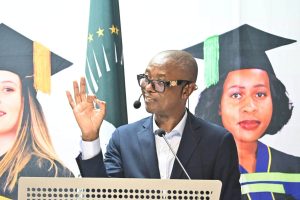
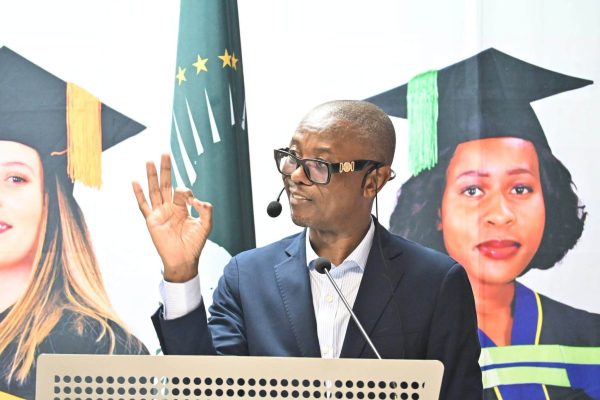
He was speaking at a public lecture at the Namibia University of Science and Technology (NUST), titled “Unlocking Namibia’s Critical Minerals Potential: Green Technologies, Value Addition and the Future of Rare Earth Elements.”
UNIDO is a special organisation that aims to help developing nations like Namibia achieve industrial development. The entity focuses on the development of green and sustainable industrialisation and sustainable supply chains.
Namibia has a number of projects that are prospecting and working on developing Rare Earth Elements in the country.
Warren indicated that his team is specifically focused on innovation and how to help to demonstrate that through the UNIDO initiative Accelerate to Demonstrate (A2D). The A2D initiative accelerates the commercialisation of innovative clean energy solutions.
“How do you accelerate industrial growth to sustainable levels? We found out that 35% of emission reduction potential actually needs to come from technology that is stuck at the demonstration phase,” he added on the vision of the facility.
On the same note, Warren described that this sector is usually one that requires a great gamble to be taken.
According to the presentation by Warren, a lot of projects come from institutions of research and development. And the next step for them is to go into the pilot phase.
“You would require a large-scale demonstration project, often capital intensive, often hard to get private financing, which is a real core gap. That’s why we set up the Accelerate to Demonstrate facility to unlock and address that issue,” he explained.
Warren described that financiers will have an opportunity to understand what these technologies and developments would deliver if the demonstration technology is maintained through sustainable financing and developments.
“It will make a case for blended financing, for grant financing, for partners to come together to accelerate critical minerals and other resources in this area,” Warren indicated the potential funding strategies.
According to him, the World Bank has a Smart Mining Initiative, the Asia Development Bank also began one, and the UNIDO A2D is the third major program.
POTENTIAL
Warren’s team outlined that Namibia has great potential for Lithium processing.
“Namibia is one of the deep-dive countries that we looked at. It has great potential for lithium processing and recycling, and mineral extraction and processing,” the presentation by Warren noted.
One detail was indicated that signals a current situation of dependency that came about from the Critical Mineral Market Assessment indicators.
“Technological innovation in midstream and downstream segments of the value-chain in developing countries rely primarily on technology transfer from developed countries, even though local innovation is slowly emerging,” UNIDO indicated as a current diagnosis in the developing world.
The A2D facility has a timeframe of running from 2023 to 2029, which is predominantly developing world focused.
Projects from developing nations can access grant financing of up to US$5 million per demonstrable project for a period of three years.
Namibia currently has two projects active under the A2D facility – one was selected in the first cohort of countries in 2024 and the second in 2025.
Warren indicated that the agency launched an alliance on green minerals in 2025, and that UNIDO hopes that Namibia joins this alliance.
Namibia is currently partnered with the European Union in developing raw materials supply chains and renewable hydrogen.
UNIDO’s alliance is titled as the ‘Global Alliance for Responsible and Green Minerals.’
“The Global Alliance promotes fair, sustainable and inclusive mineral supply chains, from extraction to recycling. It aims to enable fair benefit sharing, support local value creation, generate job opportunities, enhance transparency and safeguard human rights and the environment,” the alliance website describes.