



By: Nghiinomenwa-vali Hangala
Namibia’s triple challenges of housing, energy insecurity, and water can be addressed through unlisted investment in the private sector by leveraging local capital.
This is according to Christoff Bauernschmitt, senior investment professional at Old Mutual Investment Group Namibia (OMIGNAM).
Namibia boasts N$474.1 billion in savings for retirement pensions, medical aids, insurances, and unit trusts – this money is deployed in the domestic market, regionally, and also outside the continent.
Bauernschmitt explained that Namibia is faced with various infrastructural gaps, which he indicates cannot be solved by government budgets alone. He said such gaps can be filled by private sector investment.
“That’s where alternative investments, private capital working shoulder‑to‑shoulder with public funds, come in,” he noted.
Bauernschmitt stated that Namibia’s pension funds and insurers are required to invest a minimum share of their assets in-country, and to allocate a portion to unlisted investments through regulated Special Purpose Vehicles (SPVs) and Unlisted Investment Managers (UIMs).
He said if the domestic asset requirement can be supported by strong governance mechanisms, more capital will be deployed to fill the gaps.
“These rules, when paired with strong governance, create a cornerstone of local capital deployment for power plants, grids, desalination, housing, and much more.
Currently, around 40% of the country’s savings are invested outside, mostly in the Common Monetary Area (CMA).
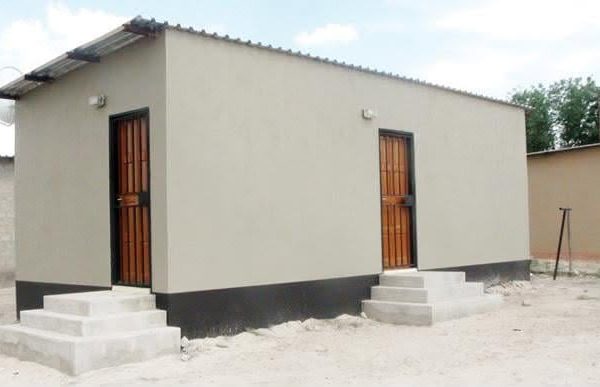
Bauernschmitt explained that alternative investment allocation could have a positive impact in that it could lead to reliable electricity that supports business continuity, secure water access sustaining industrial and urban activity, and adequate housing improving living conditions.
“These investments also generate jobs and enhance long-term economic productivity. For institutional investors, investing in Real Assets, be it infrastructure and/or property assets, provides stable, predictable cash flows with an inflation hedge and a long duration which mimics their liabilities,” he explained.
He added that investments such as those offered by Old Mutual have different funds tailormade to invest in the three key sectors: housing, water and energy, geared to meet investment objectives whilst delivering a positive socio-economic impact.
HOW ARE NAM’S SAVINGS INVESTED?
According to Namfisa, Regulation 9 requires that all medical aid funds invest a minimum of 45.0 percent of their total assets in Namibia.
The medical aid funds held 59.9 percent of their assets in Namibia as at 31 December 2024, showed Namfisa’s 2024 Annual Report.
These medical aid funds held 46.4 percent of their investment in interest-bearing investments such as bonds, followed by 22.6 percent in unit trusts, and 15.9 percent in cash and cash equivalents, which are low-risk instruments that can easily be liquidated.
As for the pension funds, exposure to Namibian assets stood at 50.3 percent as at 31 December 2024, which is higher than the Namibian investment exposure of 50.0 percent reported for 2023.
The level of exposure to Namibian assets was due to the industry’s required compliance with the domestic investment levels as set out in Regulation 13.
Investment managers’ assets under management increased by 12.9 percent to N$284 billion as at 31 December 2024, compared with the previous review period.
Pension funds and unit trust schemes accounted for the biggest inflows, contributing 42.1 percent and 34.5 percent, respectively.
Out of this pool, investment in unlisted equity, unlisted debt, and unlisted property accounted for 1.3 percent of the total assets during the review period.
In terms of the geographic allocation of assets under management, domestic assets constituted 52.1 percent of the total, revealed the Namfisa summary.
The report also revealed that although Regulation 13(2) of the Regulations under the Pension Funds Act increased the minimum domestic asset investments by pension funds to 45 percent as of 31 March 2019, investment managers have held over 50 percent of their total assets in domestic assets since then.
A total of 47.9 percent of investment managers’ assets under management were invested outside Namibia as at the end of the 2024 reporting period.
Of this, 30.7 percent was invested in the CMA, predominantly in South African securities, and 17 percent was invested in offshore markets. A total of 0.2 percent was invested in the rest of Africa.
Moreover, total investments (contributed capital) in unlisted portfolio companies stood at N$3.4 billion as at 31 December 2024, a decrease of 4.2 percent on an annual basis from the previous reporting period ended 31 December 2023.
Namfisa revealed that by the end of 2024, the total committed capital had fallen by 7.1 percent to N$4.6 billion.
According to their analysis, the decrease in committed capital is attributable to the deregistration of a special purpose vehicle and the subsequent termination of the subscription agreement.
The principal sectors targeted for unlisted investments include financial services, construction, and mining and quarrying.
These three sectors accounted for 16.7 percent, 14.0 percent, and 12.1 percent, respectively, of the total investments in unlisted investments as at 31 December 2024.