

By: David Shoombe
Despite challenges faced by street vendors, taxi drivers, salons, barber shops, domestic workers, and small online stores, the government and central bank consented that the Namibian economy cannot thrive without formalising the informal sector.
Data from the country’s Ministry of Finance shows that the informal economy in 2023 was estimated to be 24.7% of GDP, equating to around N$36 billion (at real GDP).
It is also estimated to expand to 26.5% of GDP (around N$40 billion of real GDP).
Speaking at the launch of the Diagnostic of Informality in Namibia report, Michael Humavindu, executive director of the Ministry of Finance, indicated that the report data tells a different and undeniable story about the Namibian informal economy.
“This sector is not a side economy; it is a pillar of our national life,” stated Humavindu.
It is further noted that an estimate of 58% of the workforce in Namibia is employed by the informal economy.
Lack of security, financial exclusion, and regulatory burdens are some of the key challenges noted facing the nation’s informal economy.
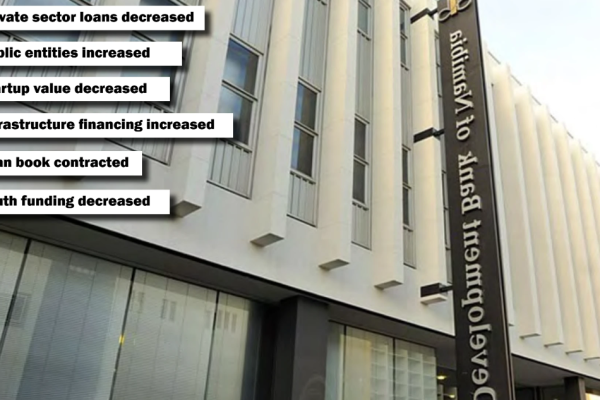
With the country having one of the highest unemployment rates in the SADC region and showing high economic inequality compared to the rest of the world, the Bank of Namibia (BoN) also commented on the necessity of the study and the importance of formalising the informal economy.
To this, BoN deputy governor, Ebson Uanguta, indicated that “the informal economy is a testament to the resilience and entrepreneurial spirit of the Namibian people.”
Uanguta noted that although the informal economy acts as the engine of value creation and a source of livelihood, it operates without safety nets and opportunities.
Hopolang Phororo, United Nations (UN) Resident Coordinator in Namibia, commented on the evidence provided by the report and indicated that the UN is committed to assisting Namibia in reaching its national developmental goals in line with global development aspirations.
“Through the sustainable development framework covering 2025 to 2029, the UN has partnered with the government in promoting inclusive growth and social protection, and decent work for all,” stated Phororo.
In conversation with The Villager, Kenandei Tjivikua, a project lead in the formulation of the report, stated that despite the importance of the informal economy, it remains largely under-recognised.
According to Tjivikua, the informal employment in agriculture, forestry and fisheries is around 88%, food and accommodation services are around 69%, and in rural areas it is around 79%, with urban areas being around 42%.
Maria Mafuta, food vendor at Stop and Shop in Okuryangava, lamented that “we are all equal on paper, but treated differently.”
Mafuta narrated how she suffered moving from one place to another in the city due to restricted zones and unending clashes with authorities over designated areas of trade and the legalisation of her business operations.