




By: Stephanus Pombili
In Namibia’s evolving healthcare sector, the demand for competent, compassionate, and professionally trained nurses continues to grow.
Institutions of higher learning therefore carry a significant responsibility in shaping future healthcare practitioners who will serve communities with dedication and excellence.
Among these institutions, Welwitchia University continues to distinguish itself through quality education, practical training, and student-centred learning.
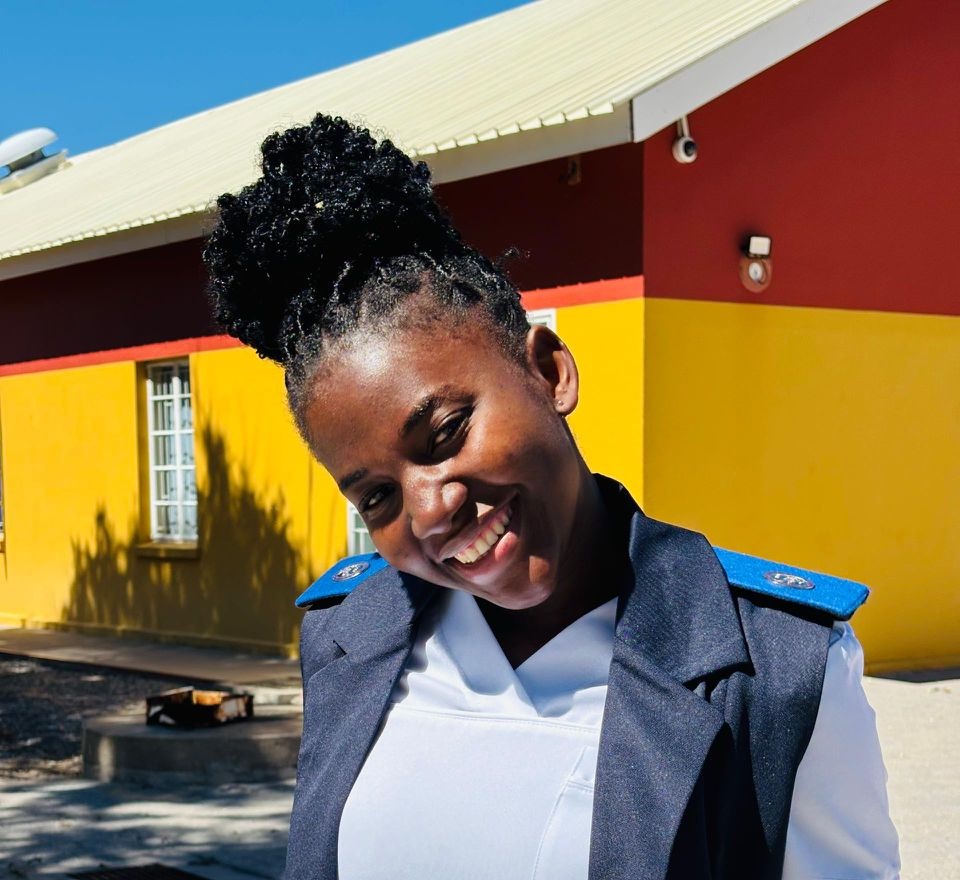
In this edition of Hear from Our Proud Products, we speak to Nurse Portia Shikoyeni, a proud graduate of Welwitchia University, who shared her educational journey, experiences at WU, and words of encouragement for future students aspiring to pursue careers in nursing and health sciences.
According to Shikoyeni, her decision to study at WU was influenced by several important factors.
Firstly, the university offered the exact programme she wanted in Health Sciences, making it a suitable institution to pursue her professional ambitions. However, beyond the programme itself, she was also impressed by the university’s reputation for quality training and academic support.
“I chose WU because it offers the programme I wanted in Health Sciences and it is known for training supportive lecturers, being close to home, and affordable,” she explained.
For many students, accessibility and affordability remain important considerations when choosing a university. Shikoyeni noted that studying closer to home allowed her to focus on her studies while managing financial pressures associated with tertiary education.
This demonstrates how institutions that balance affordability with quality education can make a meaningful difference in students’ lives.
Before enrolling, Shikoyeni took time to research the university and learn more about its academic environment. One of the aspects that attracted her most was the university’s emphasis on practical learning and professional exposure.
“When I researched, I liked that students get hands-on experience during attachments, and the campuses are well-equipped,” she said.
Practical exposure is a critical component in the training of healthcare professionals. Nursing, in particular, requires more than theoretical knowledge; it demands clinical competence, communication skills, empathy, and confidence in handling real-life medical situations.
Through professional attachments and practical sessions, students are given opportunities to apply classroom knowledge in healthcare environments before officially entering the workforce.
Shikoyeni praised the quality of lecturing at WU, describing it as interactive, practical, and theoretical at the same time. She highlighted the dedication and professionalism of lecturers, who continuously ensure that students understand concepts thoroughly.
“The lecturing at WU is interactive, practical, and theoretical. Lecturers are approachable, supportive, and knowledgeable. They make sure we understand concepts by using case studies, laboratory sessions, and group work,” she noted.
This style of learning encourages student participation and critical thinking, while also preparing learners for the realities of professional healthcare environments.
Through case studies and collaborative learning, students are exposed to situations that mirror real-life patient care and medical decision-making. Such teaching methodologies help students develop analytical abilities and confidence in their professional practice.
Additionally, Shikoyeni shared that one of the most helpful aspects of her academic journey was the support system provided by the university, particularly during examination periods.
“What helped me most was the weekly tutorials and extra support before exams,” she explained.
Academic support structures play a vital role in helping students manage the pressures associated with tertiary education.
Tutorials, revision sessions, and accessible lecturers contribute significantly to student performance and overall confidence. These initiatives reflect WU’s commitment not only to academic excellence, but also to student success and well-being.
When asked what advice she would give to prospective students who remain uncertain about where to study, Shikoyeni shared a powerful message centred on personal growth and meaningful education.
“My message is: choose a place where you will actually learn and grow, not just get a certificate,” she urged.
To that, she explained that at WU, she found lecturers who genuinely care about student development, valuable opportunities for professional attachments, and a supportive student community that encourages growth and learning.
According to her, students who are serious about nursing and healthcare careers will find a strong educational foundation at WU.
“If you are serious about nursing, WU gives you the foundation to do that. Visit the campus, talk to current students, and pick the place that feels right for your goals,” she stated.
Indeed, stories such as Shikoyeni’s reflect the broader impact that quality higher education institutions have on national development. By producing skilled healthcare professionals equipped with both theoretical knowledge and practical competence, Welwitchia University continues to contribute meaningfully to Namibia’s healthcare sector and public service.
As the nation continues to invest in healthcare and human capital development, graduates like Nurse Portia Shikoyeni stand as proud examples of how education, determination, and institutional support can shape future leaders in the medical profession.
Visit Welwitchia University campus now to apply! July intake applications are now open. Study at WU and become a nurse like Portia Shikoyeni.
Stephanus Pombili is an author, consultant, and independent researcher. He has appeared on television, radio, and in newspapers discussing contemporary issues. The opinions expressed here are his own.