





By: Annakleta Haikera
The Uvhungu-Vhungu Green Scheme in the Kavango East Region expects to employ up to 100 seasonal workers during this year’s harvesting period, as maize production at the scheme continues to improve.
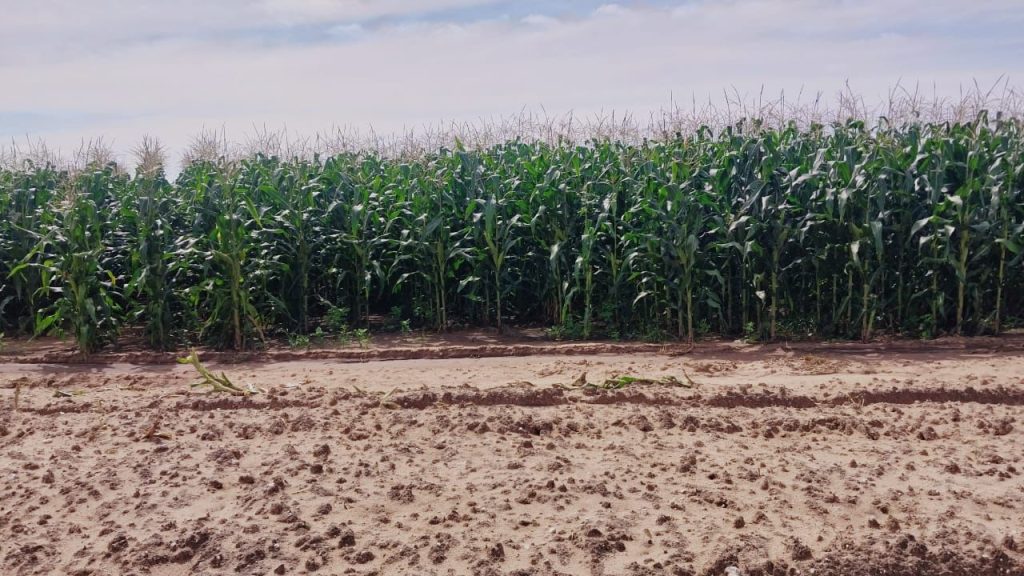
Acting farm manager and crop production officer, Pontianus Kashokora, said the scheme planted 311 hectares of maize during the current season, an increase from 147 hectares in the previous season, sharing optimism about a stronger harvest compared to previous years.
“We planted 311 hectares of maize and the production is looking good. We are now completing planting for the small-scale farmers, with only four farmers remaining,” Kashokora said.
The green scheme covers a total area of 836 hectares, divided between commercial production and small-scale farmers operating within the project.
Kashokora noted that maize yields have steadily increased over the past few seasons. “Last season, we got nine tonnes per hectare, and the previous year eight. This year we are expecting about 10 tonnes,” he indicated.
According to Kashokora, maize produced at the scheme is mainly marketed through Bokomo, where harvests are transported once ready for delivery.
He welcomed recent government support, saying the provision of machinery has significantly improved operations.
“We received a second-hand combine harvester from Mashare which is still in good condition. We also received tractors and implements, bringing our total to seven tractors. These came after the President’s visit,” he mentioned.
However, operational challenges persist, particularly frequent power outages disrupting farm operations.
“Rain or wind causes electricity cuts, sometimes lasting up to two days. This affects irrigation and chemical application,” Kashokora explained.
He added that recent heavy rains caused the destruction of electricity poles, but power was swiftly restored following a contractor’s intervention.
Kashokora also raised concern over a locust outbreak observed around the farm.
“There are many locusts feeding in the grass. If they move into the fields, it will be a serious problem. We need agricultural officials to assist with control measures,” he said.
Currently, the farm employs about 60 casual workers, a number expected to rise during harvest.
“During harvesting, we expect to employ up to 100 seasonal workers,” he said.
Sikondo Green Scheme Shows Signs of Recovery
Meanwhile, the Sikondo Green Scheme in the Kavango West Region has recorded renewed production activity this year, following government-led modernisation efforts aimed at restoring the project to full capacity.
Farm manager Maxwell Nghidinwa said the scheme harvested about 300 tonnes of potatoes this year, contributing to national food supply and reducing reliance on imports.
The scheme continues to produce crops such as potatoes, wheat, maize and vegetables for the local market.
As part of revitalisation efforts, Sikondo is set to receive new agricultural equipment, including tractors, modern planting machinery and agricultural drones for crop monitoring and spraying. Hybrid solar power systems are also planned to address high electricity costs affecting irrigation.
Despite these improvements, challenges remain. Portions of irrigable land remain under-utilised, drawing concern from community members and traditional leaders amid ongoing food insecurity in the region.
Farmers have also cited high input costs, electricity bills and debt burdens as constraints to profitability.
During a visit last year, senior government leaders highlighted the need to address staff integration issues following the dissolution of AgribusDev, improve management efficiency, and enhance working conditions.
The Ministry of Agriculture, Fisheries, Water and Land Reform said efforts are underway to repair irrigation infrastructure, optimise land use and stabilise operations, with a target of planting up to 300 hectares of diversified crops this season.
According to reports, the Sikondo and Uvhungu-Vhungu Green Schemes form part of Namibia’s broader green scheme programme, which government deems vital for food security, employment creation and rural economic development in the Kavango regions.