

By: Annakleta Haikera
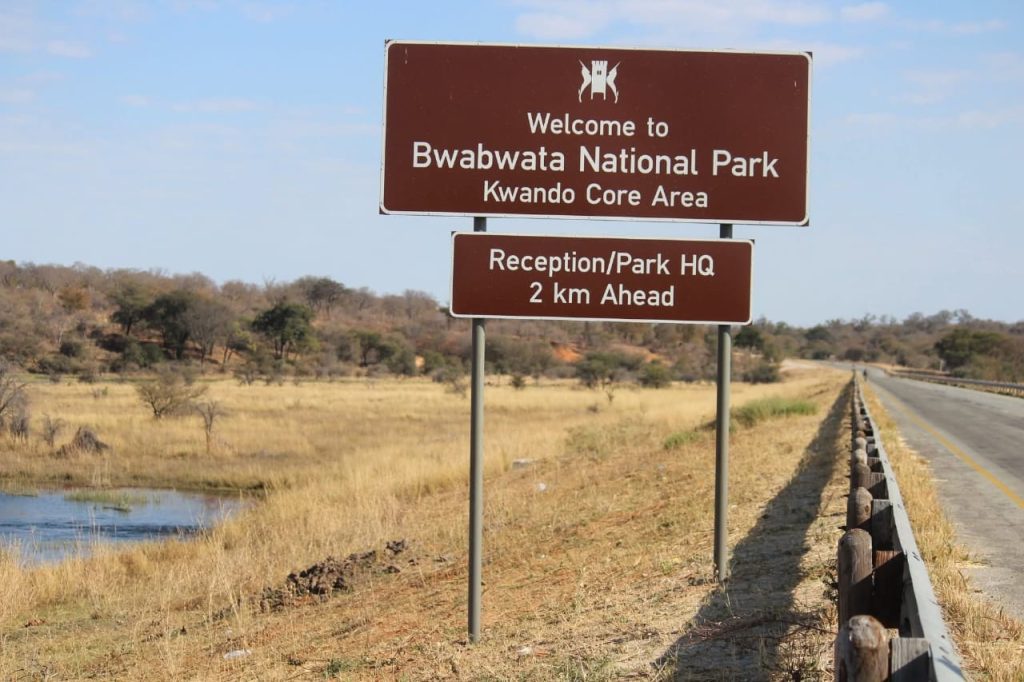
The long-running dispute over the traditional and customary status of Bwabwata National Park has intensified, with the Hambukushu Traditional Authority in Kavango East and traditional authorities in the Zambezi Region maintaining competing claims over the area.
According to reports the dispute mainly involves the Hambukushu, Mashi and Mafwe Traditional Authorities, while the Khwe Community, which has lived inside the park for generations, is also seeking recognition of its traditional leadership and a greater say in matters affecting the area.
Urban and Rural Development Minister, James Sankwasa, called on the competing stakeholders to present written historical evidence to support their claims.
During a consultation meeting held in Rundu this Wednesday, Sankwasa said the process was aimed at establishing under whose traditional jurisdiction Bwabwata falls, amid claims by the Hambukushu, Khwe and traditional authorities from the Zambezi Region.
Stakeholders were expected to submit written responses and historical evidence relating to the area’s traditional boundaries and history.
“If the Hambukushu has got legitimate evidence, they should not fail to present that to a meeting,” Sankwasa said.
He further indicated that stakeholders who failed to attend the consultation could risk forfeiting their opportunity to be heard and that the outcome of the process would be binding.
The Hambukushu Traditional Authority has rejected suggestions that it refused to participate in the government consultation.
In a statement issued to the media on Saturday, the authority said it was willing to engage the government but had requested that the consultation be held in Mukwe, rather than Rundu.
According to the statement, Fumu Erwin Mbambo Munika had invited Sankwasa to engage the Hambukushu community in Mukwe on 25 September 2025 and 6 March 2026, but received no response at the time.
Sankwasa later invited the Fumu and one representative to attend a consultation in Rundu.
The authority said it was willing to participate but requested that the venue be changed to Mukwe.
The Hambukushu Traditional Authority said it had already prepared historical evidence concerning Western Caprivi/Bwabwata, including its links to Kavango, historical boundaries and communities that lived in the area.
It also objected to Sankwasa’s position that stakeholders who failed to attend could “forfeit” their right to be heard and that the meeting’s decision would be binding.
According to the authority, its legal representatives cited Article 18 of the Namibian Constitution, which provides for fair and reasonable administrative action and an opportunity to be heard.
The authority also questioned why traditional leaders from the Zambezi Region were invited while other Kavango traditional authorities, including the Ukwangali and Mbunza Traditional Authorities, were not invited.
The authority said its legal representative wrote to Sankwasa on 11 August 2026, requesting another opportunity to present its evidence in Mukwe.
Meanwhile, traditional leaders in the Zambezi Region have strongly rejected the Hambukushu claim.
The Mashi Traditional Authority, led by Chief Joseph Tembwe Mayuni, and the Mafwe Traditional Authority, led by Chief George Simasiku Mamili VII, have previously maintained that Bwabwata has historically been part of the Zambezi and that the Hambukushu should not extend its jurisdiction across existing boundaries.
Mayuni has said the Mashi Traditional Authority would not give up its jurisdiction over the Bwabwata area.
He has also supported the continued national-park status of Bwabwata, saying the area provides economic benefits through community-based tourism and that coexistence with wildlife forms part of the communities’ heritage.
Mamili has similarly argued that Bwabwata should remain dedicated to conservation, tourism and the San community, while warning against attempts to extend traditional boundaries.
A 2022 Ministry of Environment presentation recorded the Mashi Traditional Authority as being on the eastern side of the Park and the Hambukushu Traditional Authority on the western side.
The Mashi authority said its jurisdiction extended into the park up to Omega One, while Hambukushu claimed jurisdiction across the park towards the Kwando River.
Bwabwata’s history as a protected area dates back to 1963, when the area between the Kavango and Kwando rivers was proclaimed the Caprivi Nature Park.
It was upgraded to the Caprivi Game Park in 1968 and was subsequently treated largely as a military zone during the liberation struggle until Namibia’s independence in 1990.
The Mahango Game Park was proclaimed in 1989.
A 1999 Cabinet decision provided for the Caprivi Game Park to be renamed Bwabwata National Park, with the Caprivi Game Park, Mahango Game Park and Kwando Triangle brought together.
The central part of the park was designated as a multiple-use area allowing for community-based tourism, trophy hunting, human settlement and development.
Bwabwata National Park was formally proclaimed in 2007, covering about 6,274 square kilometres.
The park is also home to thousands of people, mainly members of the Khwe San community, making it different from many other national parks where human settlement is generally prohibited.
While the territorial dispute is largely framed around the Hambukushu and Zambezi traditional authorities, the Khwe community remains central to the debate.
The Khwe have lived in the area for generations and remained in settlements inside the park after the South African military withdrew at independence. The community has also sought recognition of its traditional authority.
The Mashi Traditional Authority has previously argued that the Khwe are the indigenous residents of the park and should continue living there while the area retains its national-park status.
The latest consultation therefore involves more than a dispute over traditional boundaries. It touches on traditional authority, historical land claims, community rights, conservation, tourism and the status of communities living inside Bwabwata.
For Sankwasa, the government wants the competing claims to be tested against historical evidence.
For the Hambukushu Traditional Authority, however, the consultation must also provide a fair opportunity for all relevant Kavango traditional authorities to be heard before any decision is taken.