


By: Annakleta Haikera
More than three decades after Namibia’s independence, residents of Rundu and its surrounding informal settlements continue to live without reliable access to clean water and proper road infrastructure, a situation community members describe as inhumane and deeply frustrating.
A visit by The Villager to several areas in and around Rundu revealed a worsening crisis of unsafe water, dry taps, collapsing roads and failing basic services.
In informal settlements such as Ndama, Sikanduko, Suncity, Tumweneni, Tuhingireni and Ngwangwa, residents say taps remain dry for days, boreholes are non-functional, and many households are forced to drink water from insect-infested ponds.
Residents of Ngwangwa, home to more than 400 people, indicated their frustrations about service delivery.
“We have been patient for so long. We complain daily on radio and social media, but our cries fall on deaf ears. Our children are suffering and our livelihoods are at risk,” said Nekaro Ireneus, a resident.
Another resident, Matunga Festus, said the water consumed by the community is unsafe and has caused serious health problems.
“The water is full of insects. Many people suffer from diarrhoea and other illnesses. We live within urban boundaries, yet we are treated worse than some rural areas that have clean water,” he said.
Festus accused town councillors of only visiting the area during election periods and failing to address the water crisis.
“We are suffering as if we don’t have a natural river that never dries up. Why should we live like this?” he queried.
Residents also pointed out water contamination, alleging that pond water occasionally mixes with sewage flowing from Hilka Park and Tjihinga Valley, increasing health risks.
In Ndama, community leader Anna Ihemba described the daily struggle to water access.
“The tap opens early, but closes quickly. People go home empty-handed because there are too many of us. Last year, a woman almost fainted while waiting in line,” she indicated.
Residents in Tumweneni and Tuhingireni echoed similar concerns, adding that poor road infrastructure stalls development.
“Even if you want to build a proper house, there are no roads for vehicles to bring building materials. Taxis drop us far away, and we walk long distances through sand to reach our homes,” one resident said.
Several others said they walk long distances to fetch water from Kehemu, carrying heavy containers back home.
In Sikanduko, resident Hambili Mathew said the lack of clean water has led to chronic illnesses.
“It’s unbelievable. People are visiting the hospital almost daily. We suffer from mosquito bites from stagnant water and ponds. If you don’t dig your own pond, you end up drinking the same water as animals,” he lamented.
Health facilities in the area have reportedly seen an increase in waterborne diseases as residents turn to untreated river and pond water.
The crisis extends beyond water. Road conditions in areas such as Tutungeni tend to deteriorate during the rainy season. Heavy rains have caused deep erosion trenches, cutting off access roads and placing the affected communities at higher risk of not reaching essential services.
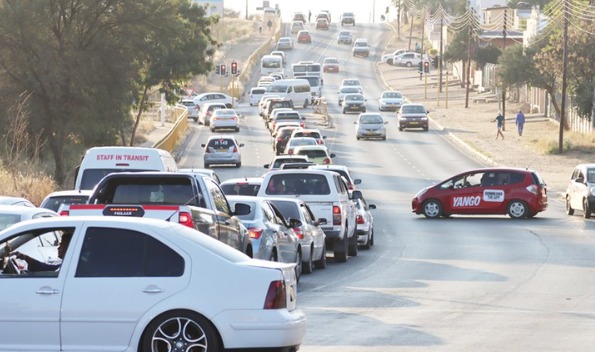
Kavango East Governor, Hamunyera Hambyuka, recently warned that Rundu’s layout lacks proper stormwater channels, forcing residents to use the main tar road when internal roads become impassable.
Motorists say sandy, pothole-ridden roads which are already difficult to navigate during the dry season become nearly impossible to use during the rainy season, delaying access to workplaces, schools, clinics and markets.
Although a new water treatment plant is under construction, residents say long-term projects offer little relief to those suffering today.
“We are not asking for luxury. We are asking for water, roads and dignity,” said one Ndama resident.
Speaking to The Villager, Rundu mayor Andreas Jikerwa acknowledged the challenges and said water demand has exceeded existing supply infrastructure.
He confirmed that the Rundu Town Council will hold a meeting on Wednesday involving councillors and the town CEO, where issues of water, electricity and road infrastructure will be tabled for discussion.
For residents of the affected settlements, however, daily life continues to revolve around unsafe water, impassable roads and fading hope.