


By: David Shoombe
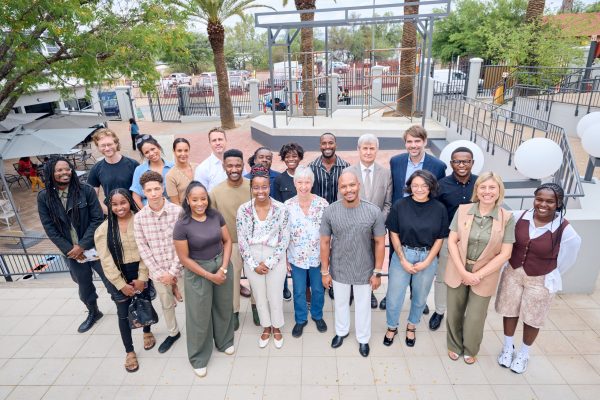
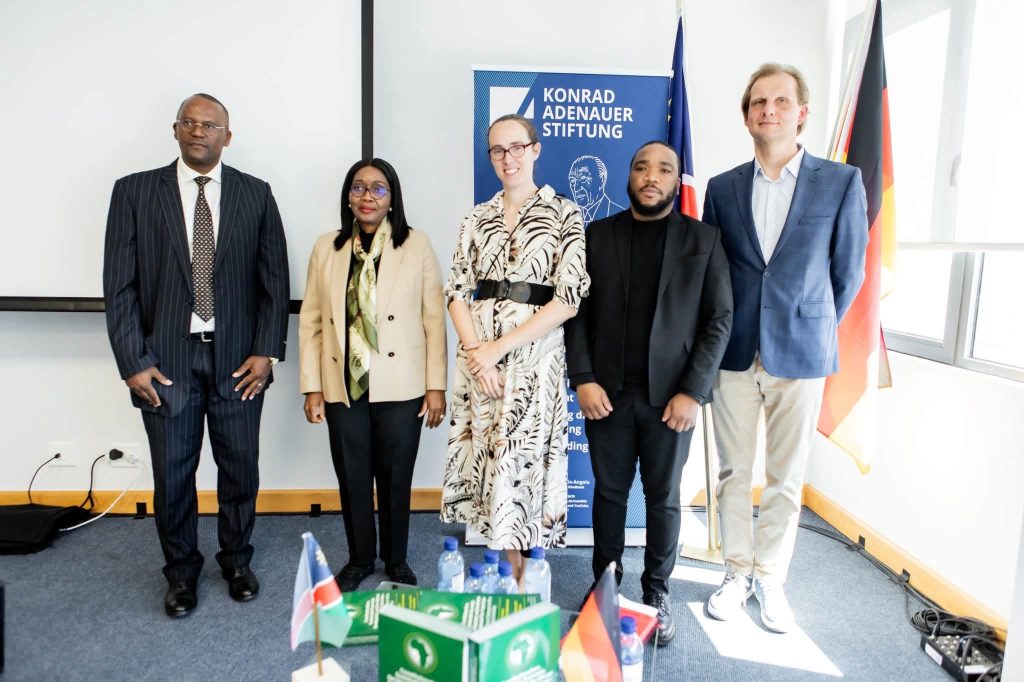
The African Network of Constitutional Lawyers, the University of Namibia, in partnership with Konrad Adenauer Stiftung has launched a 24-chapter book titled “Constitutionalism, Sustainable Economic Development and the African Continental Free Trade Area: Prospects and Challenges for Africa in the 21st Century.”
Speaking at the book launch, the Director of Konrad Adenauer Stiftung, Anna Hoffman-Kwanga, said the contributors to the book explore how constitutional principles can support inclusive growth, economic growth, strengthen institutions, promote accountability, and protect rights.
They also contribute to the creation of the legal certainty necessary for economic development and cross-border trade.
She further indicated the commitment of the foundation in promotion of democracy, governance and the rule of law, as highlighted by their support of continental trade publications that brought African scholars together to find solutions to challenges.
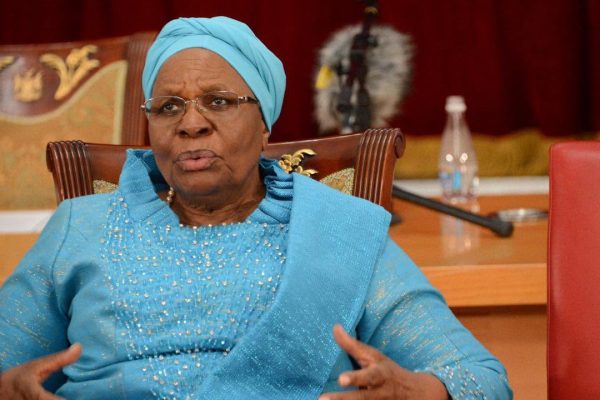
Speaking at the launch of the book, the speaker of parliament, Sara Kuugongelwa Amadhila, noted that the law and economic development are intertwined fields, and clear legal frameworks shall enable the economic development of Africans.
“Sustainable economic development is not an economic problem, it is a constitutional one, where constitutionalism holds, development becomes possible,” she highlighted.
The speaker of Parliament noted that the implementation of the African Continental Free Trade Area, which promises so much, can only be possible if the states which are signatories honor constitutionalism and the rule of law.
“The difficulty facing our continent is rarely the absence of legal instruments, it is the discrepancy between what our instruments provide and what is attained in practice,” said Kuugongelwa-Amadhila.
“The policy is perfect, but the situation on the ground is the opposite,” she said,adding that there are progressive laws alongside inequality.
Kuugongelwa-Amadhila has therefore stated that African trade infrastructure remains below the level required for a single market.
She also points out that the protocol allowing the free movement of people across the continent has not been fully adhered to, as some countries do not permit the free movement of people and are not welcoming to foreigners.
One of the co-authors of the book and Associate Dean of the Faculty of Commerce, Management and Law at the University of Namibia, Kennedy Kariseb, highlighted how intertwined the law and economic development are.
He encouraged citizens to partake in conversations that impact national developments,
Kariseb encouraged citizens not to leave economic discussions to the state alone, but to take an active role in these discussions themselves.
The 24-chapter book covers topics such as sustainable economic development, financial inclusion, constitutionalism, and trade protocols.
It includes case studies from various African countries, including Namibia, Nigeria, Zambia, and South Sudan.