
By: Dwight Links
The sixth National Development Plan (NDP 6) outlines Nutrition and Food Security as key strategies to achieve within the fourth pillar of Human Development and Community Resilience, and the first pillar of Economic Growth.
Clustered under the branch of Population, Health and Development, what Namibians require for everyday sustenance has become a pivotal topic in the country, as national reports from 2023 show the country suffered a concerning rise in malnutrition cases among children under five in health facilities.
From January 2022, outpatient malnutrition cases increased from 8143 to 8765 in 2023, with 36.6% of these cases reported in the Omaheke, Khomas, and Kunene regions, according to the World Health Organisation (WHO) on Namibia’s nutritional crisis.
On the subject of the role that agriculture has to play in the food security aspect, Ben Schernick from the Nutrition and Food Security Alliance of Namibia (NAFSAN) outlined that the agricultural sector is highlighted in two areas of the NDP 6 policy document.
“Agriculture is emphasised greatly in the first pillar of the policy document, where the depiction is based on Economic Growth, where the emphasis seems to be on the perspective of large-scale agriculture or the SME development agriculture, which mainly looks into the economic aspects of it,” Schernick indicates.
Schernick goes on to explain that the economic growth of the agricultural sector is pegged to the ambition of large-scale processing and production of goods from farms, shedding light on the vision of making food as readily available as possible.
“This part speaks to the food security aspect, which is about reaching the availability subject. This speaks to questions of how much the country produces; how much food do we have available? It translates to supporting large-scale food production and supporting value chains associated with this first pillar’s ambition of getting the food from the farms to the markets,” he added.
The second indicator of agriculture’s role in the NDP 6, found in the fourth pillar of Human Development, signals associated strategies to achieve a healthy population. Schernick describes that this second role is for the dietary considerations around nutrition and food security.
“This second aspect is associated with another dimension of food security, which is the utilisation of diet. Like how do we eat, what do we eat, and how do we eat it? And this is also about the access dimension that people have to food, which then stems from how we buy food, where we buy it, and so on,” remarks Schernick.
DIFFERENT DIRECTIONS
Schernick notes that the two-part involvement of the agricultural sector in the NDP 6 is based on the versatility of the sector to play focal roles in each pillar of the Plan.
“Pillar one speaks about food security and the second is about education around the right nutrition and healthy diets,” says Schernick.
Efforts by the various dimensions of the government have been to achieve food security due to the challenges that climate change poses to rural communities and the affordability component for urban populations.
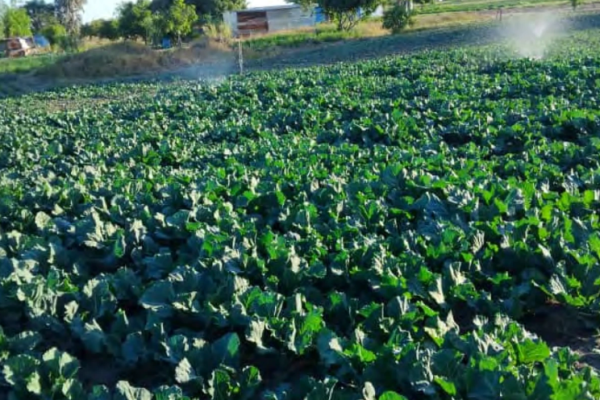
Schernick also spoke to the recent developments of urban residents in the capital, being encouraged to participate in the City of Windhoek’s backyard gardening initiative for localised food security.
“These efforts would translate into a decentralisation of the food production and not be so reliant on the big food farms, but rather look into small-scale or household gardening. This is important for the local authorities as they would be in a position to encourage households to grow their own food to supplement their own diet, as vegetables and fruits are the aim,” he added.
He also advised that since fresh produce carries so many healthy micronutrients, rural areas should receive more focus and attention to improve their access to food.
In contrast, Schernick outlines that a component the newly-launched NDP 6 lacks is the introduction of a basic income grant.
“This basic income grant would enable rural communities to have a minimum amount of money to spend on food and education, and economic development. This would be one powerful tool to strengthen the rural communities,” he explained.
The situational analysis of the food security dimension in the NDP 6 describes that the focus area will deal with the ‘triple burden of malnutrition,ʼ where undernutrition co-exists alongside overnutrition and micronutrient deficiencies.
The focus area will pursue a more integrated multi-sectoral approach to food and nutrition security in Namibia.