



By: Dwight Links
Officials from the ministries of International Relations and Mines & Energy announced on Thursday that Namibia will host the Comprehensive Nuclear-Test-Ban Treaty Organisation’s (CTBTO) Integrated Field Test Exercise next year in October.
This is as Namibia aims to further its participation in the nuclear science development sectors of the world, which is one of the most restricted and regulated sectors on the planet along with the strict regulation of the mineral that the sector is based upon – Uranium.
With the launch of the sixth National Development Plan (NDP 6) in July, Namibia made strong reference to harnessing nuclear power generation, as it is a large exporter of uranium.
The 2026 event will see various member states of the organisation participating in the field test exercise simulating responses to real-life fallout events.
Integrated field exercises are among the most complex activities conducted by the CTBTO. They test almost every aspect of an on-site inspection, including field operations, inspection techniques, data management, and logistics within a scientifically credible scenario that mirrors real conditions.
Government officials, Bufelo Lishetile, Nortin Titus and Julia Imene-Chanduru, outlined the concept for the six-week engagement set to take place from October to November 2026.
Acting executive director at the Ministry of International Relations, Julia Imene-Chanduru, explained that this is a good opportunity for the country.
“Namibia has played very active roles within the CTBTO – like chairing the Working Group A that looks to functions like administration, legal and budgeting,” she noted.
According to Imene-Chanduru, Namibia has been successful in lobbying and disarmament.
“Cabinet has given approval for the hosting of this integrated field test exercise next year and it is a culmination of a long process of negotiations,” she added.
Speaking to the technical background of Namibia’s relationship with the intergovernmental agency, Nortin Titus outlined the core concerns of the CTBTO.
“The comprehensive test ban treaty was open for signature in 1996 and the treaty and organisation was formed after the WW2 nuclear bombs were dropped on civilian targets in Japan,” said Titus, a nuclear physicist for the Ministry of Industries, Mines & Energy. Titus also represents Namibia as a councillor in a permanent mission on nuclear affairs in Vienna, Austria.
Austria is where the CTBTO and the International Atomic Energy Agency are housed in Europe. Both of these organisations require nations to use nuclear energy for peaceful means.
“The concerns arose after the second world war as only certain countries were developing nuclear arms. And one of the ways in which nuclear weapons are tested is usually with nuclear explosions. And the question of whether this is good for the environment also arose,” Titus added.
Titus noted that Namibia is currently a large exporter of uranium, and that the country is strongly against the manufacturing of weapons.
“We would like to see our uranium being used for peaceful purposes. This is why the treaty bans all explosions and this means no new test of this nature is encouraged,” Titus mentioned.
According to Titus, the treaty has to be enforced, even though it was tabled 30 years ago for signature.
“There is a moratorium on nuclear explosions and 187 countries have signed the treaty which means they support the moratorium. This also means that compliance is monitored through the network of 300 plus stations across the world, including Namibia,” he noted.
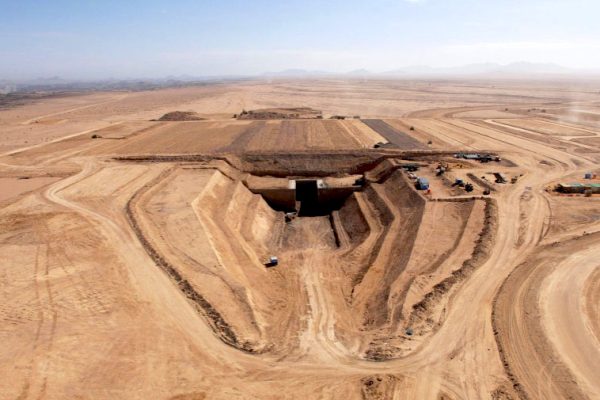
The Erongo Region has been selected as the host for this platform, being the only region producing uranium in the country and holding Africa’s largest open pit uranium mine.
“It will be the third large-scale on-site inspection exercise organised by the Comprehensive Nuclear-Test-Ban Treaty Organisation,” the agency states.
Previous inspection exercises were held in Kazakhstan in 2008 and in Jordan in 2014.
“While we rely on the International Monitoring System (IMS) for detecting nuclear test explosions, the final confirmation must still come from what is found on the ground, which is where on-site inspection will complete the picture. A CTBTO on-site inspection is designed to provide a clear, shared account for all to see, removing any chance of doubt or misinterpretation,” explains CTBTO executive secretary, Robert Floyd.
A state party may request an inspection of an area where it suspects such an event may have occurred, and any request must be approved by the CTBTO executive council. Should that happen, a trained inspection team would be deployed to the inspection area to carry out activities using the techniques and procedures set out in the treaty and its protocol.