


Photo: Gallo Images / Phill Magakoe
By: Peneyambeko Jonas
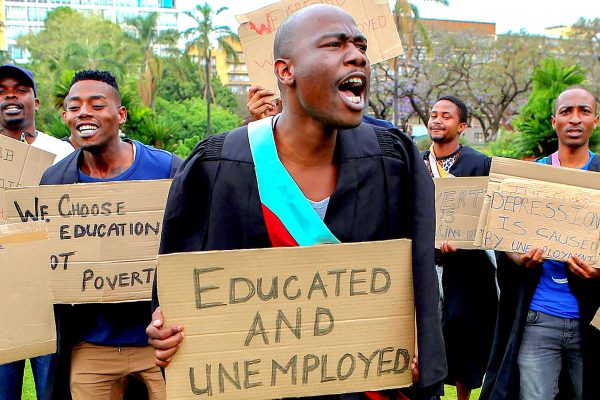
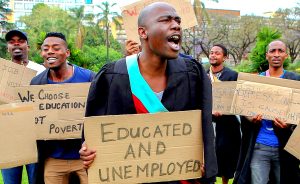
Unemployment is placing financial and emotional pressure on graduates and young people in Namibia, with some turning to social media for connection and distraction while they continue searching for work.
The country has put mental health conversations at the center in recent years.
The Villager interviews with various graduates have revealed that the root cause of their deteriorating mental health is partly due to joblessness.
Namibia is recording more suicides involving young people. However, there are no assessments linking economic-related pressure to suicide.
The Villager’s conversations with various graduates has revealed that prolonged joblessness is affecting household income, financial independence and emotional wellbeing, particularly among young people who are expected to support themselves and their families.
Lovisa Shatiwa, an education graduate who has been seeking a teaching position for 10 years, told The Villager Newspaper that unemployment becomes more difficult when families question the efforts of those who remain jobless.
“Things are hard. Unemployment is another hell on earth, especially when your own family members do not recognise the effort you put into searching for jobs,” she said.
Shatiwa said unemployed graduates often face questions about whether they apply for jobs or attend interviews, with some relatives comparing them to people who have secured employment.
“Do you even apply for jobs or go for interviews? Other people are getting jobs, why not you?” she said, describing the questions unemployed people regularly face.
She added that attending interviews also costs money, creating another challenge for people who have no reliable income.
For jobseekers without financial support, the cost of transport, printing documents, and attending interviews can make the search for employment more difficult.
This creates a cycle in which people need money to pursue work but cannot earn that money because they remain unemployed.
The pressure extends beyond job applications; it also pushes young people who leave rural areas to search for opportunities in towns and cities.
Joseph Shoovaleka, who has been unemployed for five years, said he moved from his village to the city in search of employment but continues to face financial expectations from his family.
“I moved from the village to the city trying to search for employment and other opportunities that come my way, but my parents still demand money from me just because I’m in the city,” he told The Villager Newspaper.
Shoovaleka said limited access to electricity and reliable internet in rural areas makes it difficult for some young people to obtain information about opportunities on time.
“There is no electricity or good internet in the village. How does one get access to information on time?” he asked.
As the eldest son in his family, he said the expectation to provide financial support has added to his burden.
“Being the first son of my siblings, my family expects so much from me, and this pressure is affecting my mental health,” he said.
Ndapewa Tomas, another unemployed graduate, believes social media has become an outlet for people struggling with unemployment and depression.
She said some young people spend hours hosting live videos, while others remain online late into the night.
“The reason why people host live videos, some even sleep online, is because people are depressed. Where could we be if there was no internet?” she asked.
Social media can provide interaction and a sense of connection for people experiencing isolation.
However, it also raises questions about how unemployed people without smartphones or reliable internet access cope with loneliness and obtain information about available jobs.
While online platforms provide opportunities for interaction and job searches, they cannot replace stable employment, a reliable income, or access to professional mental health support.
Meanwhile, Loide Hashoongo encouraged unemployed graduates to consider opportunities outside their fields of study rather than waiting exclusively for positions related to their qualifications.
“If you get a chance to sell something, sell,” she said, encouraging young people to consider opportunities such as police training, Namibia Defence Force recruitment, malaria spraying programmes and other temporary jobs that can help them earn a living.
The graduates have revealed that prolonged unemployment limits the ability of young people to contribute to household income, support dependants and participate in local economic activity.
Moreover, family members who are employed are also facing additional financial pressure when unemployed members depend on relatives for food, accommodation and transport.
Quizzed on the mental toll and its relation to suicide, unemployed graduates have revealed that prolonged unemployment is a potential factor among economic active individuals.
Statistics from the Khomas Region show that 370 cases were recorded between January 2021 and June 2026.
Of the 370 recorded cases, 308 involved males, accounting for 83.2%, while 60 involved females, representing 16.2%. Two cases, or 0.5%, were classified as unclear or unknown.
At the local level, the highest numbers of recorded cases were associated with Havana, Otjomuise, Goreangab, Wanahenda, Ombili and Khomasdal.
Although these figures do not establish how many cases were directly caused by unemployment, they provide important context for examining the pressures facing people in the region.
However, the statistics alone do not establish a direct link between unemployment and mental health difficulties, nor do they explain the reasons behind the difference between male and female cases.
The country’s youth unemployment is around 44.4%, while the economy is expanding mostly in the mining sector, which is capital-intensive.
Sectors that are labour-intensive, such as agriculture in Namibia, are not yet developed; only a few are producing at scale.
penny@eaglefm.com.na