

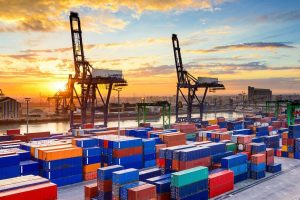
Photo: Contributed
By: Peneyambeko Jonas
Namibia must strengthen local production, processing and export capacity to benefit from China’s zero-tariff policy, speakers at the China-Africa Cooperation Symposium said in Windhoek on Tuesday.
The symposium, held at the Hilton Hotel under the theme China-Africa Partnership at 70: Deepening Collaboration and Exchanges.
It brought together government officials, economists, researchers and business representatives to discuss trade opportunities and ways to increase economic benefits from cooperation with China.
Minister of International Relations and Trade Selma Ashipala-Musavyi said China’s zero-tariff initiative, effective from 1 May 2026 to 30 April 2028 for 20 additional African countries, including Namibia, creates opportunities for export diversification, investment and job creation.
However, she cautioned that tariff-free access alone would not guarantee increased exports.
“However, tariff-free access must be matched by overcoming non-tariff barriers,” she said, referring to requirements such as rules of origin, quality, packaging and phytosanitary standards.
She said Namibia should use the initiative to expand exports beyond traditional products and attract investment into manufacturing, agro-processing, green energy and mineral beneficiation.
The minister pointed to a phytosanitary protocol signed in July 2026 allowing Namibian table grapes to be exported to China as an example of how diplomatic agreements can create market opportunities.
She said similar opportunities should be pursued for processed foods, meat and fisheries.
Chairperson of the Economic Association of Namibia, Jason Kasuto, said the main challenge was whether local businesses could produce goods in sufficient quantities and meet the requirements of Chinese buyers.
“A tariff set to zero is an invitation, and an invitation is only as valuable as the guest’s ability to accept it,” he said.
Kasuto said many Namibian businesses lacked the production scale, certification, working capital and logistics needed to supply the Chinese market consistently.
He argued that Namibia should negotiate for more local processing of minerals, skills transfer, measurable local-content requirements and Namibian participation in ownership.
He also called for clear mining policies and disciplined public finances to ensure that investment in minerals and petroleum creates lasting economic benefits.
Economist Emmanuel Matambo of the Centre for Africa-China Studies said the zero-tariff initiative could help African countries increase exports to China and reduce trade imbalances.
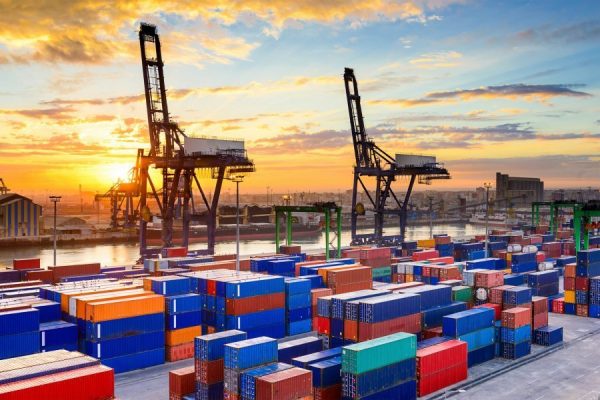
He said Africa-China trade reached US$348 billion in 2025, with African exports accounting for US$123 billion and Chinese exports reaching US$225 billion, leaving Africa with a trade deficit of US$102 billion.
Matambo said African countries needed to diversify their exports, including through agriculture and value-added products, rather than relying mainly on raw materials.
Meanwhile, University of Botswana political scientist Stanley Ehiane said African countries should play a stronger role in determining the terms and outcomes of their economic partnerships with China.
He called for African governments to negotiate collectively through institutions such as the African Union, the Southern African Development Community and the African Continental Free Trade Area.
Ehiane also urged governments to make technology transfer, skills development, transparent agreements and debt management central to cooperation.
He said civil society, universities, trade unions, local communities and the media should participate in decisions involving major investment projects.
The speakers agreed that Namibia’s access to China’s market must be supported by stronger local industries, export-ready businesses and regional cooperation.
For Namibia, the economic test will be whether the policy increases local production, creates jobs and enables businesses to earn more from goods produced within the country.