


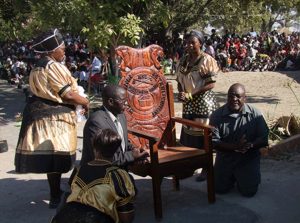
Photo: NAMPA
By: Erastus Andreas
Seventeen of Namibia’s 53 recognised traditional authorities are operating without leaders.
This is according to the Minister responsible for Traditional Authorities, James Sankwasa, who was speaking at the official opening of the 27th Annual Meeting of the Council of Traditional Leaders in Otjiwarongo on Monday.
Sankwasa addressed traditional leadership, communal land management and cooperation between traditional authorities and government during the meeting.
Vice President Lucia Witbooi delivered a statement on behalf of President Netumbo Nandi-Ndaitwah at the opening on 19 October 2026.
In the statement, the President called on traditional leaders to resolve succession disputes through customary law and established traditional procedures.
The President said succession disputes had resulted in legal cases and left some traditional authorities without recognised leaders for prolonged periods. She urged traditional leaders to resolve disputes amicably and avoid the politicisation of traditional offices.
The statement also addressed communal land management, with the President calling on traditional authorities to work with Communal Land Boards to ensure fair and transparent land allocations in accordance with the Communal Land Reform Act.
She raised concerns about illegal fencing, communal boundary disputes and the sale of communal land by individuals treating it as their personal property. She warned that traditional leaders, headmen and headwomen who sell communal land as their own property could face criminal cases.
The President referred to Article 100 of the Constitution, which provides for State ownership of land, water and natural resources that are not otherwise lawfully owned.
She further urged traditional leaders to work with government and law enforcement agencies to address gender-based violence, substance abuse, road accidents, suicide and mental health challenges.
On development, the President called on traditional authorities to support the implementation of the Sixth National Development Plan (NDP6), covering the 2025/2026 to 2029/2030 period.
She urged traditional leaders to support investment in their areas, promote agriculture and food security, and facilitate access to land for youth empowerment initiatives, including sports facilities and vocational training centres.
The President also called for the preservation of cultural heritage and urged traditional authorities to ensure that women and young people are not marginalized in communal land allocations and development programmes.
She said the government would continue supporting traditional authorities through institutional capacity-building, improved administrative tools and infrastructure, in collaboration with government offices, ministries, agencies and the private sector.