




By: Nghiinomenwa-vali Hangala
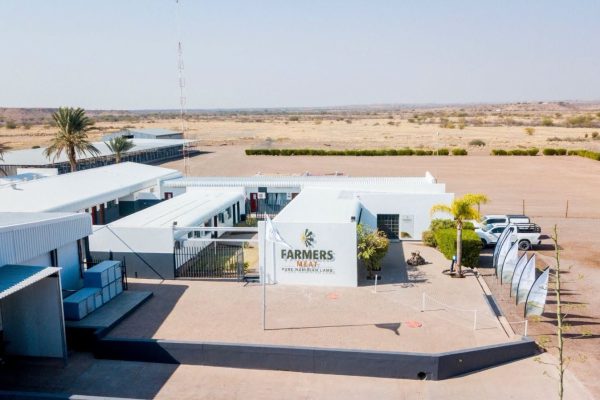
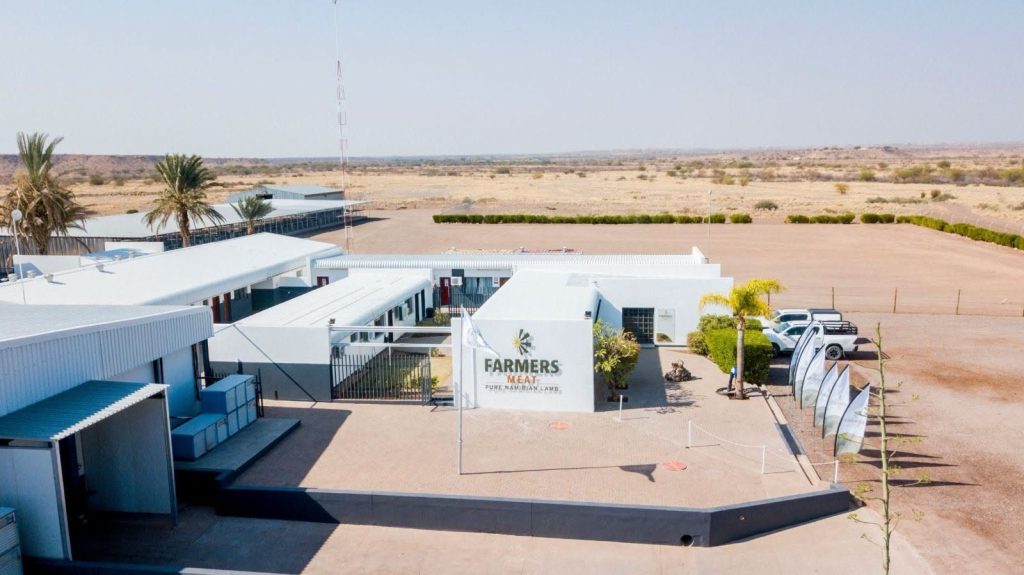
The permanent closing of the Farmer’s Meat Mariental Abattoir will lead to a collapse of the sheep value and supply chain, loss of jobs, and markets that were established.
The OL Group owned abattoir will be closed permanently at the end of September this year due to various operational hardships.
The abattoir has a production (slaughtering) capacity of up to 1,200 animals per day.
According to the insights shared with The Villager by the OL Group, the closure will collapse a value chain that was established through the supply of livestock (sheep) from more than 100 producers.
Most of these producers (78) are EU Market-accredited suppliers, a process which requires sanitary compliance.
This involves producers being registered as a vendor, and their animals must test negative for brucellosis melitensis.
A farm inspection report issued by the state veterinarian must also be submitted before supply can commence.
The FMM abattoir has also established markets for farmers internally, regionally and beyond the continent.
Exports were predominantly destined for Europe, with additional volumes exported to SADC markets including Botswana, Zambia, Lesotho, the Seychelles and Mauritius.
Over the last financial year, EU procurement by the Abattoir averaged between 2,460 and 5,940 animals per month, while local and regional procurement averaged between 120 and 1,480 animals per month.
Daily slaughter volumes averaged 350 to 460 for EU destined stock and 140 to 250 for local and regional stock.
Producers are paid per kilogram, with pricing linked to the grading of each lamb.
The group has also confirmed to The Villager that supply was not a concern at this point.
“In terms of availability, supply was sufficient to meet the facility’s operational needs,” the OL Group said.
The abattoir employed 19 permanent staff and 83 temporary staff.
The 100 producers also employed people to ensure a consistent supply of throughput/animals to the abattoir (access to market).
Due to the closure of the abattoir, uncertainty also looms over the employment and the production by the more than 100 producers who depend on the facility.
According to OL Group spokesperson Carmen Maartens, the challenges facing export-oriented sheep processing in Namibia are complex and extend beyond any single business.
From FMM’s perspective, she said the key commercial challenge has been the growing gap between the cost of procuring export-quality sheep and the prices international customers are willing to pay for lamb products.
“Namibia produces high-quality livestock and enjoys access to established export markets, but processors must compete against alternative marketing channels available to producers, including exports to neighbouring markets,” she said.
She told The Villager that at an operational level, sustainable abattoir operations require sufficient throughput of slaughter-ready animals, efficient processing volumes, competitive procurement costs and consistent market access to support value-added processing.
“Maartens explained that “the absence of any one of these factors places considerable pressure on profitability,” she said.
While at an industry level, she indicated that a long-term solution would require collaboration between producers, processors, industry bodies and government.
This is to strengthen the competitiveness of Namibia’s sheep value chain, position Namibian meat as a premium product, expand market opportunities and promote local value addition.
The FMM Abattoir suffered a major setback in August 2020 when a severe multi-year drought across southern Namibia forced a complete suspension of commercial operations.
The prolonged rainfall shortage caused widespread herd de-stocking, leaving local farmers without enough slaughter-ready sheep to supply the plant.
The Group indicated that, as a result, the abattoir operated drastically below capacity, generating unsustainable financial losses until OL and Hartlief intervened with substantial financial backing.
This was through a N$3 million cash injection for facility upgrades to international export standards and N$40 million in working capital.
The abattoir then resumed commercial operations in November 2022, culminating in its official grand reopening on 3 August 2023.
Sectoral statistics show that as of the end of July 2026, total sheep marketing increased by 21.82% month-on-month (m/m), from 75,770 head in May 2026 to 92,311 head in June 2026, and by 44.33% year-on-year (y/y).
In comparison to 63,959 head marketed in June 2025, according to the Livestock and Livestock Products Board of Namibia.
The increase was driven primarily by live exports, which rose by 27.09% m/m and 58.14% y/y to 77,724 head.
Slaughter activity at sheep abattoirs declined marginally by 0.18% m/m and 1.50% y/y to 14,587 head.
This reflected a 23.23% m/m (13.96% y/y) increase in export abattoir throughput, which was offset by a 17.30% m/m (14.18% y/y) decline in B&C abattoir slaughter.
The increase in live exports indicates continued preference for export marketing channels during the review period.
This also means that with an export approved abattoir closing down, more live export of sheep are expected and less domestic process contradictory to the country’s and government’s aspirations to increase value chain development in the agricultural sector.
erastus@thevillager.com.na