

By: Helmut Mahongo
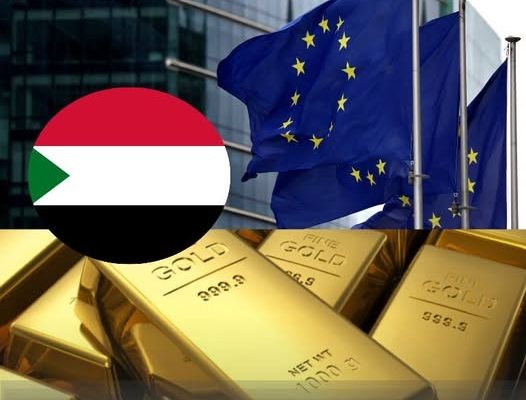
The European Union will no longer buy Sudanese gold, according to a press release published on Monday this week.
The decision to ban the purchase, import or transfer of gold originating from Sudan is intended to strengthen the EU’s restrictive measures concerning Sudan’s war economy.
“The measures are designed to curb sources of financing for the conflict and further increase pressure on those fuelling the war,” the press release read.
According to the press release, the new measures will include the ban of the sale, supply, transfer or export of chemicals are widely used for gold mining or exploration like mercury and cyanide.
Both measures are accompanied by prohibitions on the provision of related services, including technical assistance, brokering services and financial assistance.
Sudan is the 5th largest producer of gold in Africa according to the World Gold Council’s Global Mine Production statistics of June 2026.
Sudan comes 5th after Ghana, South Africa, Burkina Faso and Mali taking the first, second, third and fourth places respectively.
A 2025 report by the British think tank Chatham House, said “gold trade connects Sudan’s civil war to the wider region and highlights the roles that commodities play in perpetuating violent conflict.”
The report claims that, even before the start of the civil war in 2023, the Sudanese Armed Forces (SAF) and the Rapid Support Forces (RSF) were already deep in competition for the country’s natural resources. “In fact, the fight to control gold assets was one of the drivers of the conflict,” the report stated.
The war between the Sudanese military the (SAF) and the paramilitary (RSF) which started in April 2023, has forced an estimated 13 million people from their homes.
This has creating what the United Nation called, “the world’s largest humanitarian crisis” in April when the conflict reached its 4th year running.
Over 50,000 people have been killed since the beginning of the conflict and more than 11,000 remain missing according to the Red Cross.
According to Chatham House’s report, “artisanal and small-scale gold mining (ASGM) makes up the majority of the gold that Sudan produces.”
This gold according to the report ends up either directly or indirectly in the United Arab Emirates (UAE) through neighbouring Chad, Egypt, Eritrea and South Sudan.
The UAE has been implicated in the SAF and RSF war on multiple fronts including the militarily backing of the RSF.
The military backing allegations reached a tipping point when Sudan filed a genocide case against the UAE in the International Court of Justice that was later dismissed in May of 2025 citing lack of jurisdiction on the part of the court.
In October of last year, Swissaid, a Swiss NGO criticised Switzerland’s sanction for having exploitable loopholes.
“Switzerland is directly implicated in Sudan’s “problematic trade,” because it imports gold from the UAE, of which the true origin is unknown,” Swissaid said.
Between January and September 2025, Switzerland imported a total of 316 tonnes of gold from the UAE, which was more than double the annual average since 2015 said head of commodities at Swissaid, Marc Ummel.
“When you look at the increase of the gold imported in Switzerland from the UAE it is really concerning,” Ummel said.
He added that “It is clear that we have a loophole here in the implementation of the sanctions,” in reference to Swiss sanctions.
“There is a risk that this gold has been imported in violation of the sanctions against Sudan and the Swiss authorities should investigate this,” he said.
Gold has become a major source of revenue in sustaining the war between the Sudanese Armed Forces (SAF) and paramilitary Rapid Support Forces (RSF).