


By: Annakleta Haikera
Water shortages and failing sanitation facilities continue to disrupt learning at government schools, with recent incidents in the Kunene and Kavango East regions highlighting the growing infrastructure crisis.
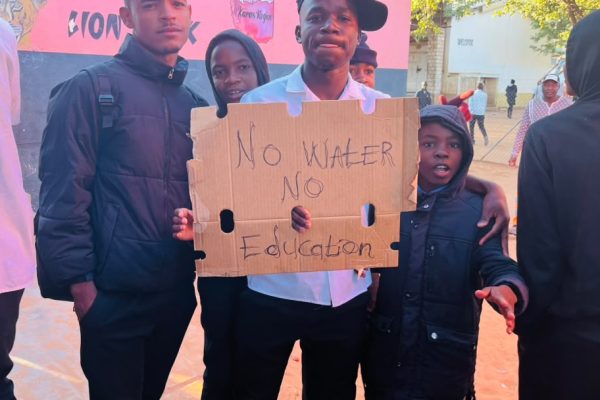
On Tuesday, about 914 learners at Orumana Combined School in the Epupa Circuit staged a peaceful demonstration, refusing to attend classes over a prolonged water shortage and non-functional toilets.
Learners said they will not return to class until the water crisis is resolved.
A teacher, who spoke on condition of anonymity, claimed the school’s dining hall has lacked chairs for years, forcing learners to eat outside, while teachers’ houses have also run out of water.
Kunene Regional Director of Education Sophia Ferdrieck said the ministry has repeatedly responded to the school’s water challenges since she took office in 2024.
She explained that the submersible pump was replaced but later failed because it did not meet the required specifications, while the overcrowded hostel has placed additional pressure on the sewer system, causing recurring blockages.
Ferdrieck said the school board’s request to temporarily close Orumana Combined School due to the water crisis was declined because of the limited number of teaching days remaining in the school term.
She said the directorate approved emergency water deliveries after receiving a formal request from the school last Friday.
Ferdrieck added that the Ministry of Education has secured a project to drill boreholes at 19 schools in the region and is considering redirecting one of the planned boreholes to Orumana Combined School as a long-term solution.
Responding to the learners’ protest, Ferdrieck said she would immediately engage the school leadership to establish whether the approved water deliveries had been carried out, adding that water shortages remain a broader challenge affecting many schools across the Kunene Region.
Chief Viatuka Chris Kavari, Traditional Leader of Orumana Village, said Orumana Combined School has been facing a serious water and sanitation crisis, with learners forced to endure difficult conditions for a long time.
He said the school has had an unreliable water supply since the second term, with kitchen staff walking up to two kilometres daily to fetch water for cooking.
According to Kavari, the shortage has affected bathing, food preparation, sanitation and the general functioning of the school.
He added that the school’s toilets have not been operational for four years, forcing learners to use unsafe alternatives, especially at night.
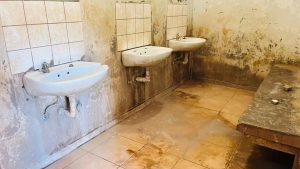
Kavari said the school board has repeatedly written to education authorities and hosted visits from inspectors, regional officials and representatives from head office, but no lasting solution has been implemented.
“The school has received visits, they know about the problem, but despite repeated promises, nothing has been done. Our children cannot continue learning under these conditions,” he said.
He further said the challenge is linked to limited secondary school capacity in the region, as few schools serve a large number of learners requiring hostel accommodation.
Kavari urged authorities to act urgently, especially with Grade 11 examinations approaching in September, saying the matter cannot be delayed any longer.
The situation echoes last year’s crisis at Ndama Junior Primary School in Rundu, where classes were suspended after the school went without water for nearly four weeks.
Kavango East Regional Director of Education, Christine Shilima, said the decision followed an assessment that found blocked toilets, an overflowing septic tank and a lack of water had created a serious health risk, forcing some learners to relieve themselves in the open.
Meanwhile, Education Minister Sanet Steenkamp has stressed that schools must have uninterrupted access to water, saying regional offices are expected to ensure water is available while longer-term infrastructure solutions are implemented.
Water shortages and poor sanitation remain recurring challenges at several government schools across Namibia, particularly in rural areas.
According to reports, schools in regions including Kavango East, Kunene, Ohangwena, Omusati and Oshikoto have reported disruptions caused by dry boreholes, broken water infrastructure, blocked sewer systems and inadequate ablution facilities.