


By: David Shoombe
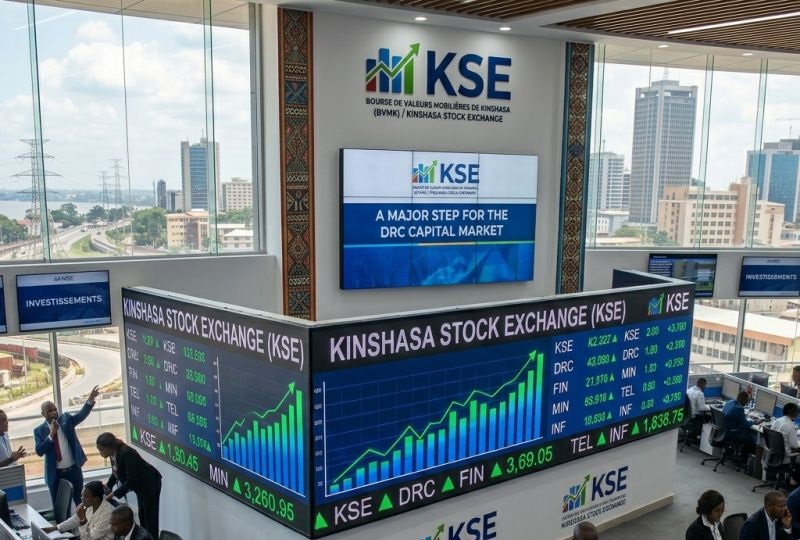
The Democratic Republic of the Congo (DRC) is preparing to launch its first stock exchange, the Kinshasa Stock Exchange (KSE), a move expected to strengthen the country’s financial infrastructure.
The move follows the country’s successful debut Eurobond issuance, where it raised $1.25 billion. The launch of the exchange, aimed at diversifying the nation’s economy, is expected to enhance access to capital, attract investment, and contribute to its long-term growth.
The initiative is expected to provide companies in the DRC with greater opportunities to raise capital from both local and international investors, enabling the nation to expand its mining activities and other development projects.
The agreement was signed in Kinshasa by Finance Minister Doudou Roussel Fwamba Likunde Li-Botayi and International Finance Corporation (IFC) Country Director Malick Fall.
According to the DRC’s financial authorities, the partnership will focus on developing the regulatory framework for the KSE, establishing the necessary market infrastructure, strengthening institutional and technical capacity, and facilitating knowledge transfer.
Fall noted that “Strong capital markets mean access to long-term financing for companies, the opportunity for Congolese citizens to become shareholders in their own economy, and a powerful tool for diversifying sources of growth well beyond natural resources.
Central Bank of the Congo governor, André Wameso, stressed the importance of modernising the country’s financial system. Regarding the central bank’s adoption of Bloomberg’s foreign exchange trading platform, he noted that these reforms form part of broader efforts to strengthen confidence in the Congolese franc and improve the country’s financial market infrastructure.
These modernisation efforts are expected to complement the planned launch of the country’s first stock exchange by creating a more efficient and attractive investment environment.
The DRC is one of the world’s most mineral-rich countries in the world, with vast reserves of cobalt, copper, gold, and other strategic minerals.
It accounts for a significant share of global cobalt production, a critical input in batteries used for electric vehicles and electronic devices.
Regardless of this wealth in natural resources, the country continues to face long-standing challenges, including armed conflict in some regions, governance weaknesses, corruption, and concerns related to money laundering.
The DRC also remains under monitoring by the Financial Action Task Force (FATF). While some progress has been made in strengthening its anti-money laundering and counter-terrorist financing framework, the country has not yet fully met the conditions required for removal from the FATF’s grey list.