


By: Nghiinomenwa-vali Hangala
The country’s Prime Minister has conceded that expenditure restraint and strict prudence will not bring about fiscal improvement if there is no strong economic growth and public investment in public infrastructure.
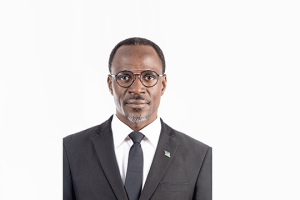
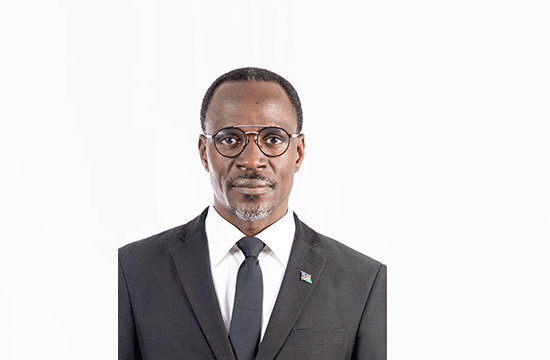
Elijah Ngurare made this admission on the occasion of the official opening of the budget reform roll-out workshop this week.
The admission came at a time when various economists and advocacy bodies such as the Namibia Chamber of Commerce and Industry are calling for an improved entrepreneurial ecosystem and business support for quality economic growth.
The government currently faces an uphill task to create fiscal space as debt goes beyond N$170 billion and annual interest payments are expected to go beyond N$19 billion, more than what the country allocated to the Ministry of Health and Social Services this year.
The government has committed to reducing the fiscal deficit from 5.5 per cent of GDP in 2026/27 to 3.3 per cent by 2028/29.
However, Ngurare informed various government officials and government planning bodies at the workshop that durable fiscal improvement cannot come from restraint alone.
“It must also be supported by stronger economic growth, driven by well-selected and efficiently implemented public investments through prudent allocation within the development budget,” he said.
Ngurare also noted the importance of directing scarce resources towards projects that raise productivity, crowd in private investment, expand economic opportunity, and improve service delivery.
That said, he added that fiscal consolidation and development are not competing objectives.
“When we protect capital expenditure, improve project selection, and ensure timely execution, we support growth, widen the future revenue base, and make debt reduction more achievable and more credible,” Ngurare stated.
He also stated that achieving this adjustment will require discipline across all votes and stricter control over non-priority expenditure, to create room for more productive investments in the future.
The debt trajectory being experienced by the central government requires N$2.3 billion in annual savings during the current MTEF period to come from expenditure restraint.
“These savings must therefore be identified early, protected during execution, and safeguarded against slippages,” Ngurare told the technocrats and implementers.
The public sector’s performance has been measured by what has been spent rather than what has been achieved.
“A hospital’s performance cannot be judged solely by its recurrent budget; it must be judged by patient outcomes. A school’s allocation is not its measure of success; the quality of learning is,” explained the Prime Minister.
Adding that the government is currently piloting Outcome-Based Budgeting in eight (8) selected OMAs.
These are (i) Education, Innovation, Arts and Culture; (ii) Health and Social Services; (iii) Home Affairs, Immigration, Safety and Security; (iv), Agriculture, Fisheries, Water and Land Reform; (v) Ministry of Finance (vi) Industrialisation, Mines and Energy; (vii) Environment, Forestry and Tourism; and (viii) Ministry of Works and Transport.
The targeted OMAs are expected to submit their initial outcome-based budget reports to the Ministry of Finance and the National Planning Commission in the second half of the year.
Moving forward, the implementation will encompass the remaining OMAs from 2027/28, aiming to complete the process within the current MTEF period (2026/27 – 2028/29).