

By: Loise Shiimi
On Friday, a group of youths from Otamanzi in the Omusati Region expressed their challenges to the Deputy Minister of Agriculture, Ruthy Masake, during a youth agricultural engagement session.
The attendees called for initiatives to harvest water, increase the availability of tractors, and greater provision of support.
One participant noted that while the rainy season brings vast water flow into rivers, the dry season leaves them without water. To that, they spoke to the need of harvesting flowing water for agricultural purposes throughout the year.
Omusati hosts one of the biggest flood plains feeding Namibia with water from Angola.
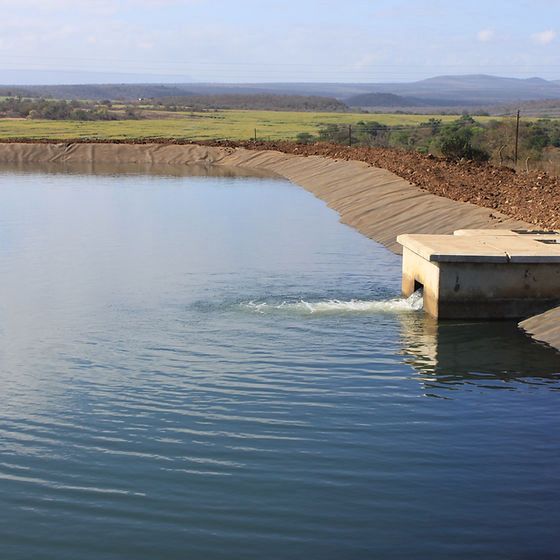
There has been a loud call from the community for the government to increase investments in earth dams to harvest rain water during winter seasons, to enable access to production.
However, government investment has been more on providing tap water through NamWater. This water is said to limit commercial production in rural areas due to the costs and volume limitations.
Moreover, government has also focused on drilling boreholes to tap into underground reserves.
Many parts of Namibia receive plenty of rainfall for a short period, with this water running off or feeding aquifers, leaving rural farmers with limited access to production water. Central and eastern parts of the country tend to flood during rainy seasons, yet no storage is implemented.
Some parts of the country benefitted from sand mining during the construction of main roads, which created several earth dams that sustained many villagers with water for their households, animals and for small scale production such as bricks manufacturing.
However, these earth dams were not strategically positioned to receive flow from Oshanas/flood plains during rainy seasons, and the lack of refurbishment resulted in them not storing water for extended periods.
Beyond the water supply issue, the youth have also highlighted limited support for the creative sector in rural areas.
Erastus Iipinge from Onghani highlighted the absence of financial support for emerging artists in their community.
“I am an aspiring artist with 14 songs, but I lack the necessary support. The government should establish subsidies or funds to assist those of us who are striving to succeed. I require funds to purchase studio equipment,” he shared.
Additionally, Ndapewashali Shapumba from Otamanzi voiced her concerns about the frequent veld fires during the dry season which devastate cattle grazing areas.
“While adequate rainfall leads to good grazing conditions, these are often ruined by fire. I urge the Ministry of Agriculture and the Ministry of Environment to collaborate in preventing veld fires ahead of the dry season,” she stated.
Furthermore, Shapumba requested that the government seeks solutions to remove elephants from their community, citing that they damage fences, crops, and homes.
She also raised the matter of tractors remaining inactive due to a lack of diesel, stating that she urges the government to “address this fuel issue to minimise the time we waste waiting.”
In response to these challenges, Moses Clemens Tjikundi, Omusati regional head for water supply and sanitation coordination, acknowledged the necessity for earth dams in the region.
He noted that Omusati consists of 12 constituencies, eight of which require prioritisation, while four rely on boreholes.
“We recognise that this process is costly, but we plan to begin implementing earth dams annually until we meet the demand. We are prioritising this initiative and making progress,” he stated.
Masake mentioned the availability of various support services through the regional council, pointing out that many youths are hesitant to visit offices to seek the information they need.
“Information is power. We must learn to seek accurate information rather than relying on hearsay. Numerous assistance packages are available,” noted the Deputy Minister.
Regarding the stagnant tractors, she explained that delays in the procurement process had contributed to said tractors running out of diesel. However, she assured that they would all be operational promptly.
Concerning the elephants, Masake advised the community to report sightings to the relevant authorities for appropriate action.
Furthermore, she shared the government’s intention to see improvements in mahangu and legume production through the use of certified seeds and conservation agriculture practices.
“There are goals to enhance poultry and small-stock production to supply schools, clinics, hospitals, and urban centres, as well as to promote horticulture and vegetable production under irrigation near earth dams and water points, and to ensure the production of feed and fodder to bolster livestock resilience during drought cycles,” she indicated.
The Deputy Minister also highlighted the need for advancements in agro-processing, including milling, packaging, and storage, to reduce post-harvest losses, as well as improvements in livestock management and value addition through organised marketing initiatives