

By: Glodine Makapela
While global attention remains fixed on oil prices, missile strikes and geopolitical tension, a quieter but more consequential shift is underway. Beneath the surface of conflict, the systems that underpin the global economy — from supply chains to finance, labour and education — are being rapidly restructured, dividing those prepared for a digital future from those at risk of being left behind.
For Africa, this moment is particularly significant. The continent is not removed from these global shifts, it is deeply affected by them. As economies elsewhere adapt at speed, Africa faces the dual challenge of navigating existing structural constraints while keeping pace with an accelerating digital transformation.
Global instability does not only destroy, it restructures entire systems, redirecting capital flows and redefining the balance of economic power.
Nowhere is this more evident than in global supply chains. Trade routes are being recalibrated, shipping costs are fluctuating unpredictably, and countries are rethinking long-standing dependencies. What once took decades to build is now being rerouted in months. The result is not just disruption, but a permanent shift in how goods, services and capital move across borders.
This shift carries a hidden cost. Insurance markets – often overlooked in public discourse – are rapidly repricing risk. Regions associated with instability become more expensive, or even impossible, to insure. Investment hesitates. Capital withdraws. Entire economies can find themselves excluded not by policy, but by pricing.
Money, meanwhile, is no longer waiting for stability. It is moving ahead of it.
Financial systems are adapting to a world where uncertainty is constant. Forex markets react in seconds, capital flows increasingly bypass traditional channels, and digital financial ecosystems are gaining ground. The movement of money is becoming more fluid, less predictable, and less tied to physical geography than ever before.
At the same time, the battlefield has expanded beyond land and air into digital infrastructure. Cyber threats, data control, and technological dominance are now central to economic resilience. Trust, in systems, information, and institutions, is becoming harder to establish and easier to erode.
But perhaps the most immediate impact is being felt in the labour market.
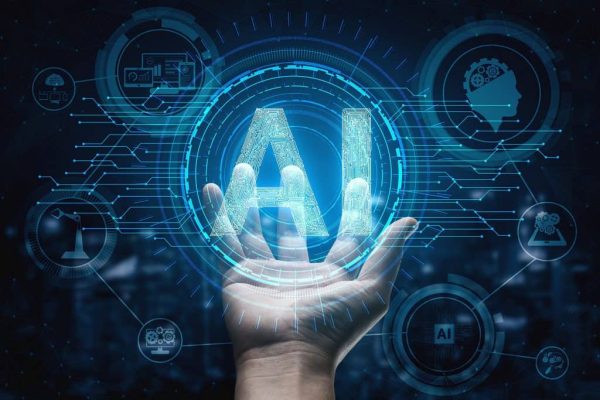
The first casualties of this shift are not soldiers, but workers. As uncertainty rises, businesses are accelerating automation, adopting artificial intelligence, and restructuring workforces to remain competitive. Entry-level roles, once the gateway into the economy, are increasingly being replaced by systems that can operate faster, cheaper and at scale.
This is colliding with an education system that is struggling to keep pace.
Across Africa and beyond, academic institutions continue to prepare students for a model of stability that no longer exists in today’s tech-driven economy. Degrees remain structured around traditional career paths, while the demand for digital, adaptive and technical skills accelerates. Increasingly, individuals are turning to self-directed learning, online platforms and AI tools to acquire skills that formal systems have yet to prioritise.
The gap between what is taught and what is required is widening. And within that gap, a new divide is emerging, one that separates future-ready individuals from those entering an economy that has already moved on without them.
This is no longer simply a question of developed versus developing economies, or even capital versus labour. It is a divide between those who can adapt to a rapidly changing, digitally-driven economic system and those who cannot.
While global tensions play out across our screens in real time, their most lasting impact will not be measured solely in territory or political outcomes. It will be measured in how economies are reshaped, how systems evolve, and how individuals are positioned within this new reality.
The greatest risk is not only that conflict destroys economies, it is that it quietly rebuilds them in ways that deepen inequality, accelerate exclusion, and leave entire regions and workforces struggling to catch up.
In this emerging reality, the true cost of global instability will not be measured only in war, but in who is equipped to participate in the future and who is not.
Glodine Makapela is Media Relations Specialist at OnpointPR