



By: Loise Shiimi and Nghiinomenwa-vali Hangala
A number of private sector players, including commercial banks and value chain players, have committed more than N$12 million to the Foot and Mouth Disease (FMD) Support Fund.
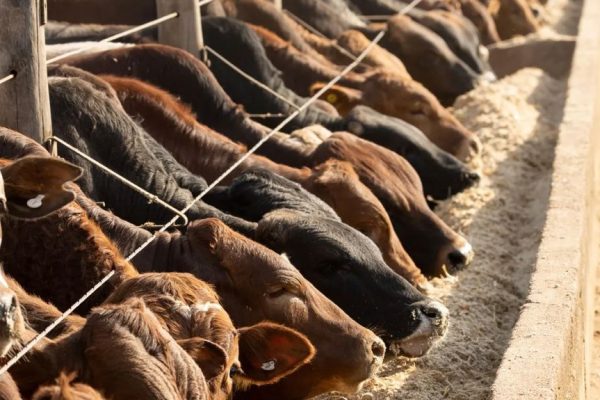
The pledge was made in Windhoek this week given the increased risks posed by regional FMD outbreaks to protect and maintain Namibia’s livestock industry. The industry is valued at N$15 billion, a cornerstone of the national economy supporting the livelihoods of 70% of the population.
The significance of the livestock sector extends beyond beef or meat products. By-products such as hides and animal skins are exported to a number of countries in Africa and overseas.
However, the threat of FMD has escalated in Namibia, primarily due to outbreaks in neighboring countries such as South Africa and Botswana.
The Ministry of Agriculture, Fisheries, Water, and Land Reform launched the FMD National Task Force and FMD Support Fund in efforts to prepare and combat the disease if it spread over to the Namibian side.
During the launch, businesses, institutions and individual entrepreneurs pledged more than N$12 million towards the FMD fund.
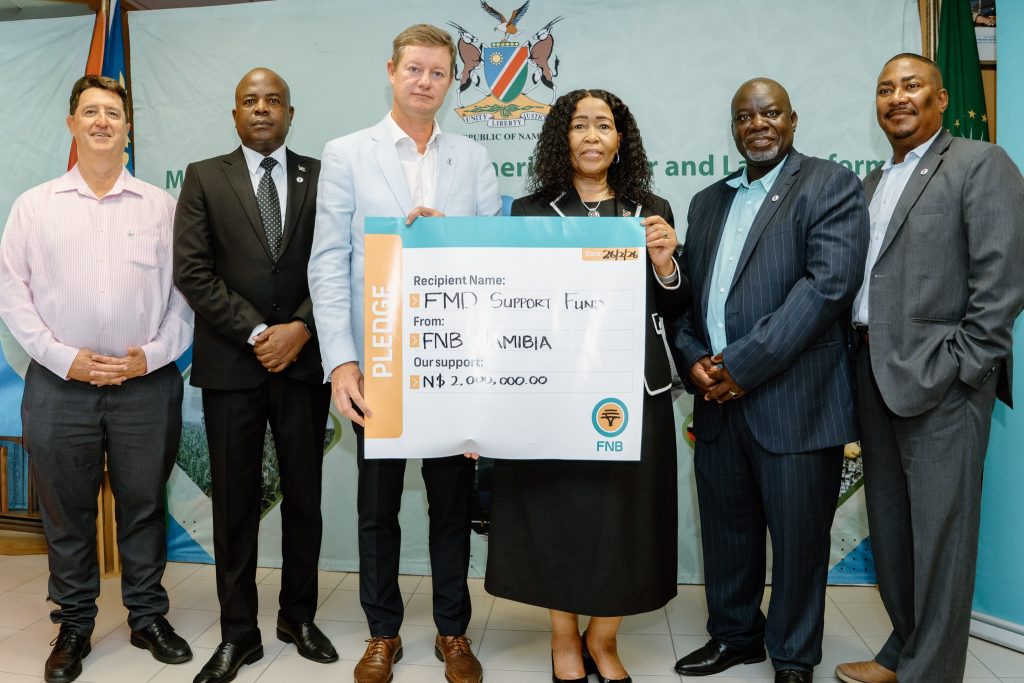
Contributions included Agrimark with N$200,000, Bank Windhoek and FNB Namibia both contributed N$2 million, Reho Group with N$1 million, and FeedMaster contributed N$1,5 million.
Additionally, Namib Mills pledged N$1,5 million, while the Namibia Agricultural Union (NAU) committed N$3,000,000 annually.
Among the individual contributions, a local farmer pledged N$5,000, and Dr. Natangwe Amuthenu pledged N$5,000.
During the launch, Minister of Agriculture Inge Zaamwani emphasised the importance of these two initiatives, stating that they aim to enhance collective efforts to protect the livestock sector, safeguard farmers’ livelihoods, and maintain the nation’s animal health status.
She said the actions are crucial for securing income and sustaining Namibia’s access to high-value international markets.
Minister Zaamwani acknowledged that the FMD Task Force and the FMD Support Fund are essential in light of the increasing risks posed by regional outbreaks and the evolving landscape of livestock production and movement.
“This demonstrates our resilience and ability to respond in a unified manner to defend Namibia’s livestock sector and retain our leadership position in animal health,” she stated.
“The significance of the livestock sector extends beyond commerce and trade; it forms the foundation of food security, rural development, and social well-being,” Zaamwani remarked.
Minister Zaamwani outlined strategies for preventing the entry of FMD into Namibia, highlighting that their first line of defense will be surveillance and early detection.
“Our veterinary teams must therefore conduct intensified patrols and farm inspections, particularly in high-risk areas along our southern and eastern borders. This approach will enhance our capacity for early detection, compliance monitoring, and rapid response,” she noted.
Additionally, she mentioned that enhanced border patrols along the Orange River must be specifically designed to deter and detect illegal animal movements and reduce the risk of FMD incursions.
The support fund will focus on several initiatives, including targeted vaccination campaigns in high-risk zones, upgrading and maintaining veterinary cordon fences, and enhancing border biosecurity through surveillance technology and logistical support.
The fund will also be tasked with developing and distributing educational materials to raise farmer and community awareness, as well as reinforcing infrastructure for quarantine and disease containment.
“The establishment of the National FMD Task Force will serve as Namibia’s central coordinating body in the fight against FMD. Composed of scientific, technical, and operational experts, the Task Force will provide comprehensive guidance for prevention, early detection, rapid response, containment, control, and recovery,” she added.
Meanwhile, Dr. Natangwe Amuthenu, a veterinarian at the Directorate of Veterinary Services, informed Eagle Media House that preventing FMD requires the intervention of every individual, as everyone will be affected should FMD break out in the country.
“FMD spreads rapidly and necessitates immediate prevention efforts before it enters the country, as it could halt all beef exports, significantly impacting the national economy,” he stated.
When asked about how they plan to raise awareness among farmers, Amuthenu revealed that they have already begun engaging with farmers about FMD, and this awareness campaign will continue.