




By: Patemoshela Lukolo and Nghiinomenwa-vali Erastus
The Etunda Feedlot will support the implementation of commodity-based Trade (CBT), a model that allows for meat exports from the NCAs without compromising animal disease controls, according to the updates from the Ministry of Agriculture, Water, and Land Reform.
The move is seen as particularly important in the northern areas where the dreaded Foot and Mouth Disease (FMD) and Lumpy Skin Disease (LSD) remain a concern. As a result, northern farmers are mostly excluded from the lucrative beef market.
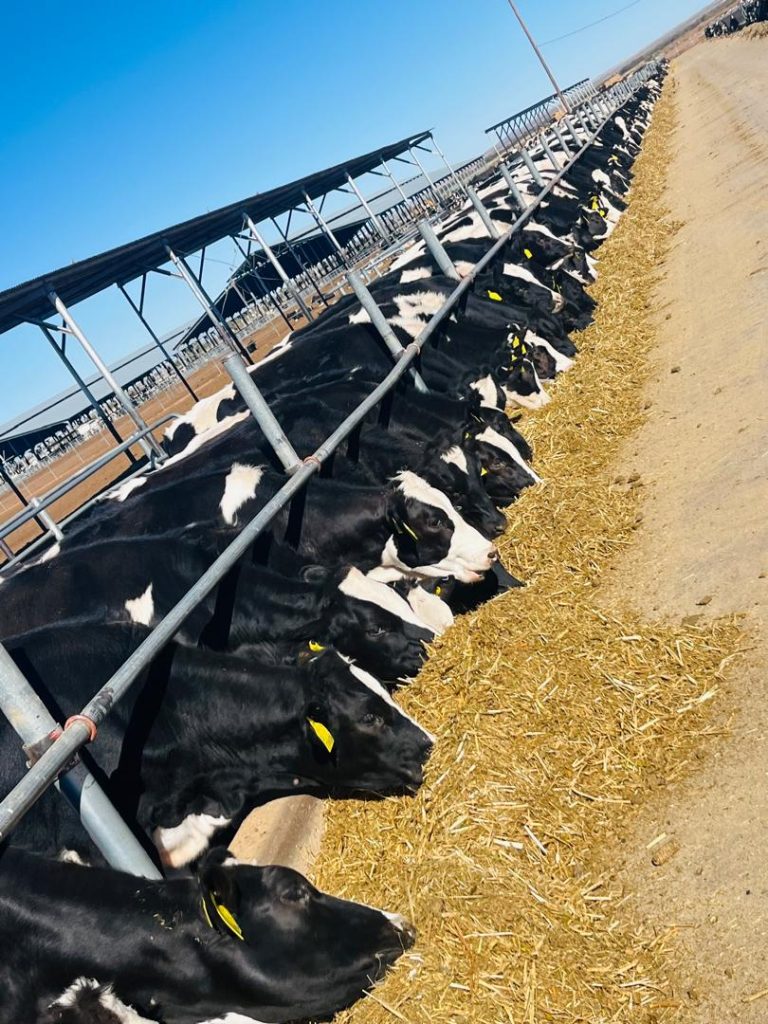
The official groundbreaking of the N$78.9 million public-private investment Etunda Feedlot was done last week and is set to process up to 1,000 cattle per day in the northern communal areas (NCAs).
In addition, the Etunda Feedlot is also expected to resolve structural gaps that have long excluded communal farmers in the NCA from fully participating in the livestock economy, especially for rural producers who cannot afford to raise animals till the slaughter stage and earn income from their farming.
Namibia’s livestock farming sector is estimated to be worth N$6.3 billion, and with the global beef demand growing, more growth is needed in the sector.
Of the estimated 2.5 million cattle in Namibia, half are found in the areas North of the Veterinary Cordon Fence (NVCF), according to the Meatco 2024 annual report.
However, most of the NVCF cattle have no access to the formal market due to the presence of FMD in the northern area, depriving farmers from formalising their cattle farming and earning a living.
Thus, the government adopted the Commodity-based Trade approach in beef production that will enable beef from FMD-prone areas to access formal big markets.
Meatco was given the mandate to implement the CBT in the north of the red line, and it has currently been adopted in the far-eastern abattoirs.
Meatco’s role in the NVCF is to assist the government with stabilising the red meat industry, more specifically to assist NVCF farmers and the operators of those abattoirs.
The other half of the cattle in Namibia are found in the areas South of the Veterinary Cordon Fence (SVCF).
Cattle produced within the SVCF area can be exported to international markets, which maximise the returns to the producers in the south.
According to Meatco reports, Namibia’s cattle head count is just 0.25% of all cattle in the world.
Beef is a highly traded commodity, and many countries import significant amounts of beef to meet the demands of their populations.
Namibia has access to the biggest beef importers, China and the USA, the only country in Africa with such access.
Meatco, in its 2024 annual report, indicated that Namibia is one of the few African countries with the capacity and credibility to export beef to some of the most demanding international markets.
This includes the European Union under the EU-SADC Economic Partnership Agreement, Norway through the SACU-EFTA quota, and China, which has become a key market for high-quality protein.
Namibia is the first and only African country currently exporting beef to the United States of America.
This achievement is made possible by the country’s veterinary services, Livestock Identification and Traceability System (NamLITS), and the country’s commitment to uphold international animal health standards.
However, only the southern farmers mostly benefit from these markets, with Meatco paying around N$1.5 billion to producers during the 2023 and 2024 financial year.
However, given that northern abattoirs slaughter fewer animals, the farmers south of the red line benefit more from the cattle procurement expenditure.
Public policy analyst Charles Kakuru welcomed the investment but cautioned that without “inclusive financing mechanisms,” the feedlot may struggle to attract sufficient cattle from communal farmers.
Kakuru proposed blended financing models combining EU grants with concessional loans from Agribank and the Development Bank of Namibia (DBN).
He also warned that traditional development finance remains “cumbersome and expensive” for small-scale farmers and should be complemented with cooperative lending schemes.
“To make the feedlot sustainable, we need contract farming arrangements between the facility and surrounding farmers,” Kakuru said. That way, farmers can supply livestock at guaranteed prices while also accessing input financing, such as feed and vaccines, through credit in kind models,” Kakuru stated.
He added that veterinary crises, such as the skin disease outbreak three months ago, highlight the need for better access to animal medicines and extension services.
Kakuru also emphasised the importance of cooperatives, saying they can play a central role in improving loan access, facilitating group applications to Agribank, and forming internal revolving funds.
He recommended that the youth funding initiative be expanded to include older farmers up to age 50 or 60, who are often more actively involved in livestock farming.
“The youth want jobs, not just farming. But it’s often the elders who are farming. We must incentivize all categories of farmers if we want to reach the feedlot’s full potential,” Kakuru noted.
Kakuru cited successful models from Cape Town and Kenya, where communal farmers received ongoing business development support linked to agro-processing infrastructure.
He also raised concerns about procurement models.
“We need to clarify how the cattle will be sourced, whether through auctions, cooperative procurement, or feedlot operators directly.
Without education and simplified processes, uptake from communal farmers will be limited.”
“Let’s show that Namibia can supply the African market. But to do that, we must combine financial innovation, institutional support, and monitoring and evaluation, backed by inclusive policies. This is essential not just for rural development, but particularly for youth empowerment,” Kakuru.
The project is funded through the European Union (EU) Namibia Value Chain Facility, with the EU contributing N$60.2 million and the Namibian government providing N$18.7 million.
It forms part of the larger N$255 million livestock value chain initiative aimed at improving market access and income for communal livestock farmers in northern Namibia.
Etunda Feedlot is expected to increase the off-take of communal cattle, provide stable prices, improve animal nutrition, and generate employment across the supply chain.