



By: Annakleta Haikera
Unresolved land compensation remains one of the obstacles hindering the progress of housing delivery in Rundu, revealed the Rundu Town Council.
Fransiska Kupembona, town council acting chief executive officer, made these remarks on Monday during the official opening of a five-day session of the Parliamentary Standing Committee on Urban and Rural Development and Land Reform, which is engaging local authorities to assess progress and challenges in land delivery and housing.
Kupembona explained that when the town council attempts to develop land and relocate residents, many affected individuals refuse to accept the legally prescribed compensation, instead opting to remain on the land, effectively stalling development.
“Where the town wants to bring development and move people, the residents do not want to be compensated with the regular amount that the law dictates, so they choose to stay, and no development takes place,” Kupembona said.
She further revealed that Rundu currently has 28,308 surveyed erven across 85 township extensions, of which 25,069 are residential properties.
However, the town continues to face pressure from rapid urbanisation.
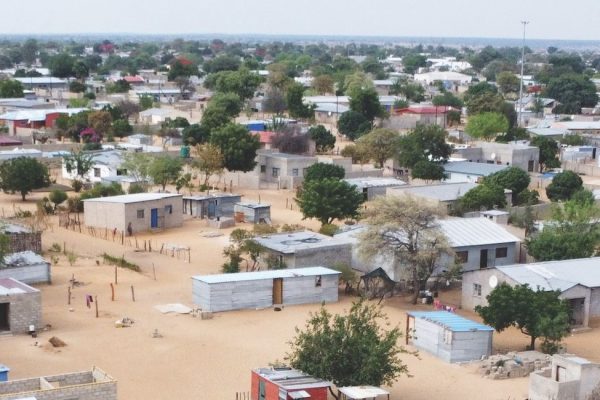
Kupembona noted that Rundu has eight unplanned settlements, including Ngwangwa, Satotwa, Sikanduko, Ndama South, Tumweneni, Tuhingireni, and Kehesosi in Kaisosi South, which continue to drive the growth of informal settlements.
She added that limited financial resources have constrained the council’s ability to service land.
“The annual delivery of serviced plots remains far below demand, and no serviced plots have been delivered in the past ten years,” she said.
Meanwhile, Rundu Town Council member Reginald Ndara said a lack of public awareness has worsened the compensation challenge.
“People were never properly educated or compensated. When they later realised the situation, it was already too late. Some lost their land and were never compensated,” Ndara said.
He further explained that compensation verification primarily relies on traditional authorities, who are responsible for confirming rightful claimants.
“Before government can compensate someone, it must be 100% sure it is compensating the correct person. Verification rests with the traditional authority, and their reluctance to confirm claimants has delayed the process,” he added.
Although the council has encouraged affected residents to submit compensation claims, uptake has remained low.
“Only a few people are submitting claims, and some groups face challenges with verification by traditional leaders,” indicated Ndara.
Parliamentary Standing Committee member, Job Amupanda, noted that the fault does not lie with the compensation policy itself, but rather in its application.
“The problem is not with the law or the compensation policy. The real issue lies in implementation. People sometimes receive very little because land and resources are poorly assessed, while others benefit disproportionately,” Amupanda said.
He further argued that the policy was developed with specific local contexts in mind and may not adequately reflect conditions across the country.
“If someone plants mango trees before a council assessment, they may be compensated for all of them. But if those trees are later removed due to allergies or other reasons, the compensation drops. That is how the policy works in practice,” he explained.
Committee chairperson, Dingara Elifas, acknowledged that land compensation remains a serious concern and that the matter would be addressed accordingly.
“The issue of compensation will be taken up with the Minister, and the matter of legally prescribed compensation must be tabled by the Ministry,” Elifas said.
He added that the five-day engagement will provide local authorities with an opportunity to present their experiences, achievements, and challenges in a structured, transparent, and accountable manner.
According to the official population and housing census, 28.7% of households in Namibia live in informal dwellings or shacks, with 40.2% of these households located in urban areas.